Robots Saudi Arabia
Robots Saudi Arabia covers the humanoid, inspection, industrial, warehouse, hospitality, firefighting and research robots deployed across the Kingdom, from Aramco and SABIC facilities in the Eastern Province to Riyadh's Vision 2030 developments, NEOM and the Red Sea, the Makkah and Madinah hospitality sector, Jeddah and Dammam ports and the KAUST and KFUPM research campuses, together with the SASO and GCC compliance and support framework behind them.
Robots Saudi Arabia
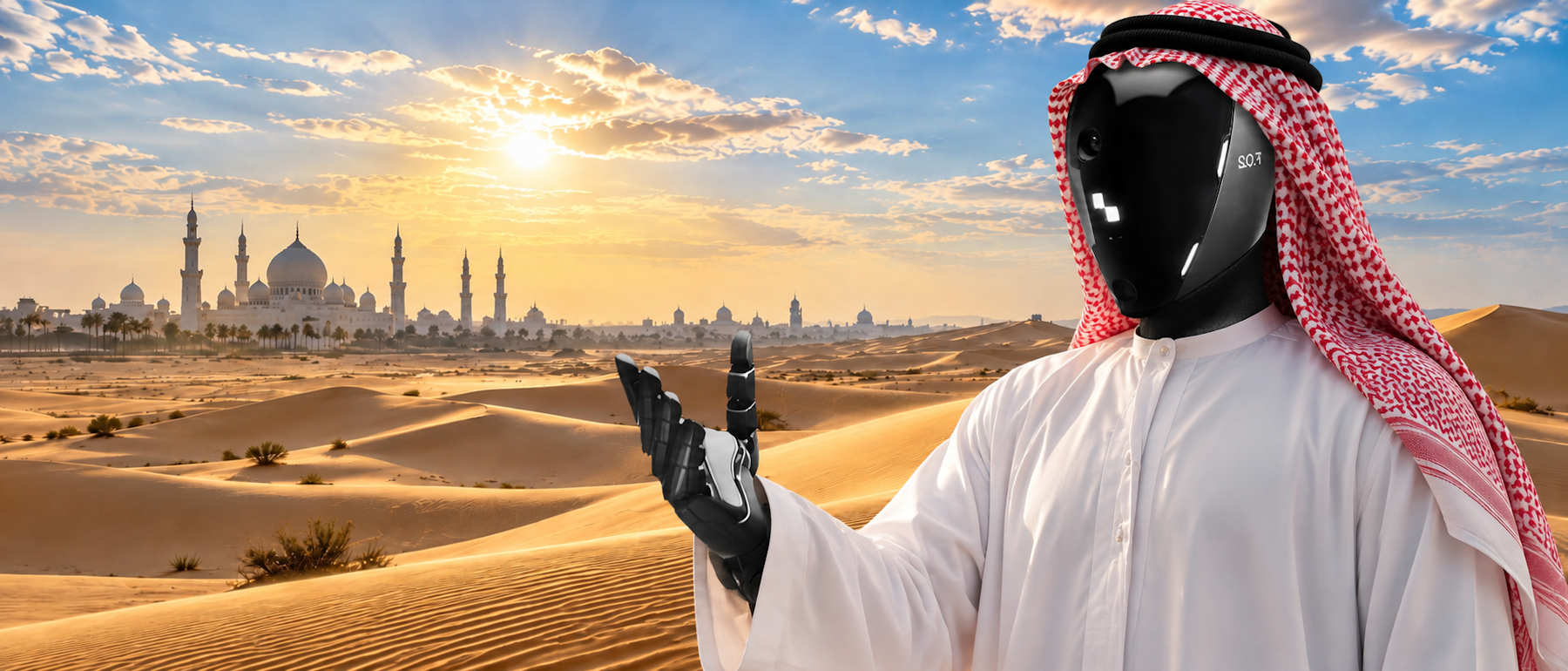
Saudi Arabia is building more at once than any country on earth, and it has decided that robots will do a share of the work. Vision 2030 names robotics and AI as pillars of the post-oil economy, NEOM and the Red Sea were designed from the ground up with autonomous systems in mind, and Aramco, SABIC and Ma'aden run some of the largest industrial sites in the world across a Kingdom the size of Western Europe. Riyadh's growth, the Makkah and Madinah hospitality machine and a research base led by KAUST and KFUPM add demand of their own. Robots Middle East supplies the Kingdom from its Gulf base, with humanoid, inspection, industrial, warehouse, service and research robots for sale, and handles SASO and GCC compliance, delivery to Riyadh, Jeddah and Dammam and after-sales support for Saudi customers.
Robot Categories Available in Saudi Arabia
Inspection and Energy Sector Robots
Aramco's fields, gas plants and refineries at Ras Tanura, Jubail, Yanbu and Jazan, SABIC's petrochemical complexes and Ma'aden's phosphate and aluminium operations at Ras Al Khair present hazardous-area inspection at a scale no other market matches. Quadrupeds such as the wheeled MagicLab MagicDog-W and the Unitree B2 carry thermal, gas-detection and acoustic payloads across process units, tank farms and pipeline corridors, unmanned ground vehicles cover desert access roads, and the inspection robots range extends to power, desalination and the solar and wind projects at Sudair, Dumat Al Jandal and NEOM. Explosion-proof configurations are available for classified zones.
Industrial and Manufacturing Robots
The National Industrial Development and Logistics Program is building manufacturing capacity in Jubail, Yanbu, Riyadh's industrial cities, King Abdullah Economic City and the new automotive cluster where Lucid and Ceer assemble vehicles. Robots Middle East supplies industrial robots from SIASUN, including large payload and ultra high payload arms for handling and palletising, welding robots for steel, automotive and fabrication, SCARA robots for electronics and pharmaceutical assembly, and collaborative robot arms from Fairino for the food, packaging and building materials plants that supply the Kingdom's construction boom.
Warehouse and Logistics Robots
Jeddah Islamic Port, King Abdulaziz Port in Dammam, King Abdullah Port and the Riyadh dry port anchor a logistics network that Vision 2030 aims to make a global hub, and Saudi e-commerce is the largest in the region. Warehouse robots including autonomous forklifts from Seer Robotics, autonomous mobile robots and Geek+ goods-to-person systems run continuous shifts in the fulfilment centres of Riyadh, Jeddah and the Eastern Province and in the bonded zones at the ports.
Humanoid Robots
Riyadh's new districts, the Jeddah waterfront, Boulevard City and Riyadh Season, Diriyah and the Expo 2030 site all put a premium on visible innovation. Humanoid robots such as the wheeled UBTECH Cruzr 1S handle bilingual reception and wayfinding in malls, banks and government service centres, the hyper-bionic UBTECH U1 PRO and UBTECH U1 Ultra suit premium hospitality and brand activations, the RobotEra Q5 and heavy-duty Galbot S1 cover service and logistics floors, and the Unitree H2, Unitree H2 Plus and Unitree Superman are the full-size platforms for events at LEAP, the Global AI Summit and Riyadh Season.
Hospitality, Pilgrimage and Cleaning Robots
Makkah and Madinah host more than thirty million pilgrims a year, and the hotel towers around the Haramain operate at a scale and intensity no other hospitality market approaches. The PUDU BellaBot Pro delivers to dining halls and rooms, and the hotel, restaurant and cleaning robot ranges from Pudu and Keenon cover delivery, reception and the continuous cleaning of lobbies, corridors and large public floors. The same platforms serve the Red Sea and AlUla resorts, Riyadh's hotel pipeline and the Kingdom's malls and hospitals.
Firefighting, Security and Government Robots
The Saudi Civil Defense, Aramco's fire and safety organisation and the industrial city operators cover refineries, tank farms and warehouses where crews cannot approach safely. Firefighting robots such as the Guo Xing RXR-M40D-880T advance under remote control with thermal cameras and high-volume monitors, and the security, police and emergency response ranges cover perimeter patrol for ports, giga-project sites and critical infrastructure through the government robots category.
Research and Educational Robots
KAUST, KFUPM, King Saud University, KACST and SDAIA fund one of the region's largest robotics and AI research programs. The Unitree G1, Unitree R1, Booster K1 Professional and Unitree Go2 ship with open SDKs and ROS 2 support, and the research robots and educational robots ranges add robotic hands, sensors and lab accessories. The Kingdom's schools and technical colleges use the Unitree R1 Basic, Booster K1 GEEK and Go2 Air as entry platforms.
Technology and Specifications
Current platforms ship with onboard AI compute, depth cameras, LiDAR and sensor fusion. Industrial quadrupeds carry IP-rated enclosures against desert dust and the salt air of the Gulf and Red Sea coasts, extended battery packs for multi-kilometre patrol routes and, in explosion-proof configurations, ATEX or IECEx-class certification for refinery and gas plant zones. Industrial arms in the ranges above carry payloads from a few kilograms to several hundred; cobots add safety-rated force limiting. Research humanoids provide 20 to 40+ degrees of freedom with ROS 2 SDKs and simulation support, and service robots map a venue in an afternoon and run eight to twelve hours per charge. Saudi 5G coverage supports cloud fleet management across cities and industrial sites, and operating temperature ratings decide which platforms work outdoors from May to September.
Compliance and Delivery in Saudi Arabia
Robots entering the Kingdom clear Saudi Customs under the GCC unified tariff and require SABER registration against SASO technical regulations, with wireless-enabled units needing type approval from the Communications, Space and Technology Commission and lithium batteries shipped under dangerous goods rules. Deliveries into the Special Economic Zones, KAEC, NEOM and the Riyadh Integrated Logistics Zone follow different procedures from mainland addresses, and Aramco, SABIC and giga-project sites impose their own HSE and vendor registration requirements. Robots Middle East handles export documentation from the UAE and coordinates the Saudi import, shipping by road across the Al Ghuwaifat–Al Batha border to Dammam and Riyadh, by air to Riyadh, Jeddah or Dammam or by sea to the Kingdom's ports, and supports SABER, vendor onboarding and Etimad tender documentation for public-sector and energy buyers.
Applications Across Saudi Arabia
Eastern Province. Inspection quadrupeds, firefighting robots and industrial arms serve Aramco, SABIC, Jubail and Ras Al Khair, with autonomous forklifts at Dammam port.
Riyadh. Reception humanoids, delivery and cleaning robots serve malls, hotels, Riyadh Season and government centres; AMRs run the capital's fulfilment centres.
Makkah, Madinah and Jeddah. Hospitality and cleaning robots serve the pilgrimage hotels and the Jeddah waterfront; autonomous forklifts run the Jeddah Islamic Port logistics zone.
NEOM, the Red Sea and AlUla. Patrol, inspection and service robots support construction, renewable energy and resort operations in the giga-projects.
Research. Humanoid and quadruped platforms with open SDKs serve KAUST, KFUPM, KSU and SDAIA laboratories.
Manufacturing. Industrial arms, welding robots, SCARA and cobots serve the automotive, building materials, pharmaceutical and food sectors.
Robots Middle East also serves the UAE, Qatar, Kuwait, Bahrain, Oman, Jordan and Lebanon, with the regional overview at Robots Middle East.
Advantages of Buying Robots in Saudi Arabia
Vision 2030 alignment. Robotics and AI are named national priorities, and automation supports localisation, tender scoring and giga-project procurement.
Scale. The Kingdom's industrial sites, hotel inventory and fulfilment networks justify fleet deployments rather than single units, with the pricing that follows.
Hazardous-area safety. Inspection and firefighting robots remove crews from refinery, gas plant and tank farm tasks that carry the greatest risk.
Road delivery from the UAE. The Eastern Province and Riyadh are reachable by truck from Robots Middle East's base, with shorter lead times and easier support visits than intercontinental sourcing.
Pricing and Availability
Current pricing for in-stock and pre-order models is shown on each product page in US dollars, from entry-level educational quadrupeds and delivery robots through to industrial arms, inspection platforms, firefighting units and full-size humanoids. Because most Saudi deployments involve SABER registration, site integration, HSE onboarding, training and often multi-unit fleets, a formal quotation reflects the true robots Saudi Arabia cost more accurately than a list price. Use Request a Quote on any product to receive delivered pricing with timelines to Riyadh, Jeddah, Dammam or your site. Payment options include bank wire, cards, Apple Pay, Google Pay and cryptocurrency.
Frequently Asked Questions
Where can I buy robots in Saudi Arabia?
Humanoid, inspection, industrial, warehouse, hospitality, firefighting and research robots for sale in Saudi Arabia are available directly on this page from Robots Middle East, with SASO and GCC compliance, delivery to Riyadh, Jeddah and Dammam and Kingdom-wide after-sales support.
How much do robots cost in Saudi Arabia?
Robots Saudi Arabia price depends on category, configuration and quantity. Educational quadrupeds and delivery robots sit at the entry level, cobots, cleaning robots and wheeled humanoids in the mid range, and industrial arms, inspection platforms, firefighting units and full-size humanoids at the premium tier. Product pages show current list prices, quotations cover delivered, configured deployments, and fleet pricing is available for multi-unit orders.
Which robots suit Aramco and SABIC sites?
IP-rated inspection quadrupeds with thermal and gas-detection payloads, explosion-proof configurations for classified zones and firefighting units for site fire teams. Robots Middle East can advise on certification, payload and operating temperature for a specific facility and supports vendor registration documentation.
Do you handle SABER and SASO registration?
Yes. Robots Middle East prepares the SABER product and shipment certificates against the applicable SASO technical regulations as part of the import process, along with CST type approval for wireless-enabled units.
Do robots sold in Saudi Arabia come with a warranty?
Yes. Robots are supplied with the full manufacturer warranty, and Robots Middle East provides in-house technical support, spare parts assistance and firmware guidance for Saudi customers.
How are robots delivered to Saudi Arabia?
Robots Middle East ships by road from the UAE through the Al Ghuwaifat–Al Batha crossing to Dammam and Riyadh, by air to Riyadh, Jeddah or Dammam or by sea to the Kingdom's ports, handling export documentation, Saudi Customs, SABER and CST type approval.
Summary
Saudi Arabia is the largest robotics opportunity in the Middle East: inspection quadrupeds across Aramco's fields and refineries, industrial arms in Jubail and the automotive cluster, autonomous forklifts at the ports and fulfilment centres, cleaning and delivery robots in the Haramain hotels, reception humanoids in Riyadh's new districts and research platforms at KAUST and KFUPM. Robots Middle East supplies the complete range of robots for sale in Saudi Arabia with SASO and GCC compliance, delivery by road, air and sea and support handled from the Gulf. Request a quotation on this page for current availability and pricing on any configuration.