
SIASUN Commercial Vehicle Assembly Mobile Robot (Commercial Vehicle Assembly Mobile Robot)
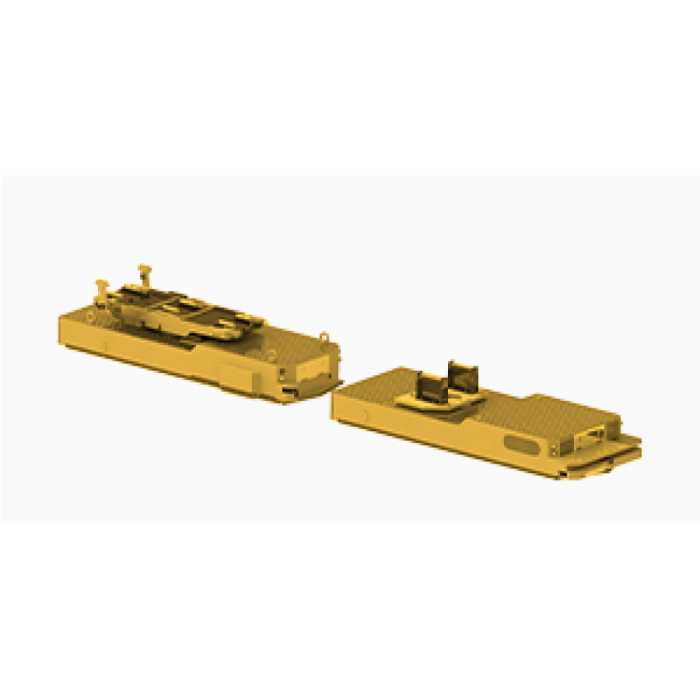
In stock
- BRAND:
- SIASUN
- MODEL:
- Commercial Vehicle Assembly Mobile Robot
- PART #:
- Commercial Vehicle Assembly Mobile Robot
- ORIGIN:
- China
- Warranty:
- 12 MONTHS
- AVAILABILITY:
- SUBJECT TO AVAILABILITY
- SKU:
- SIASUN-Commercial-Vehicle-Assembly-Mobile-Robot
SIASUN Commercial Vehicle Assembly Mobile Robot (Commercial Vehicle Assembly Mobile Robot)
Ask a plant engineer what limits a commercial vehicle line and the answer is seldom the tooling at the stations. It is usually the floor between them: the distance a cab or a chassis must travel, the precision with which it must arrive and the number of people needed to steer it there safely. The SIASUN Commercial Vehicle Assembly Mobile Robot addresses exactly that gap. It is a heavy-load mobile platform built for large-scale final assembly of commercial vehicles, carrying modules of up to 15,000 kg along a guided path and stopping where the next operation begins, while drawing power without physical contact so that it can keep working around the clock.
Robots Middle East supplies the SIASUN Commercial Vehicle Assembly Mobile Robot to manufacturers and integrators across the Middle East. Robots Middle East prepares each quotation against the customer's line layout and assembly sequence, arranges delivery to the site and remains the point of contact for support once the robot is in service.
Background
SIASUN and its place in industrial robotics
SIASUN is a Chinese robotics manufacturer based in Shenyang, with roots in the Chinese Academy of Sciences' Shenyang Institute of Automation. Its portfolio spans industrial robots, mobile robots and complete automation systems for factories, and mobile platforms for heavy handling form a substantial part of that range. The Commercial Vehicle Assembly Mobile Robot belongs to this family of SIASUN heavy-duty mobile robots, which you will find alongside other models in our Mobile Robots category.
A platform dedicated to the commercial vehicle line
Many heavy mobile robots are general carriers adapted to whatever load a site requires. This model is positioned differently: it is dedicated to commercial vehicle production and customised for cab and chassis modules. Its design combines three elements that matter on such a line. Electromagnetic and magnetic navigation keeps the platform on a defined route; precise docking with intelligent scheduling lets it arrive at a station and fit into the rhythm of the line; and a non-contact power supply removes the need to stop for charging or battery changes, supporting continuous 24/7 operation. Together these features reduce manual workload while improving safety and assembly efficiency.
Technical Specifications
| Specification | Value |
|---|---|
| Intended use | Large-scale final assembly of commercial vehicles |
| Payload capacity | 15,000 kg |
| Suitable modules | Large modules such as chassis and cabs |
| Drive system | 1 drive wheel + 2 caster wheels |
| Navigation method | Electromagnetic + magnetic navigation |
| Positioning accuracy | ±5 mm |
| Navigation accuracy | ±10 mm |
| Braking system | Servo motor + mechanical brake |
| Power supply | Non-contact power supply |
| Operating mode | Supports 24/7 continuous operation |
| Docking and scheduling | Precise docking with intelligent scheduling |
| Application area | Automotive manufacturing |
Specifications are as published by the manufacturer and are confirmed against the datasheet at quotation.
The manufacturer has not published the dimensions, weight, travel speed, battery type and capacity, lifting height, IP rating, safety sensors, operating temperature or the contents of the delivery; these are confirmed at quotation.
Why does non-contact power matter on a commercial vehicle line?
On a final assembly line, a carrier that must leave its route to charge is a carrier that is not where the next cab is waiting. Battery-powered fleets usually solve this with spare units or charging windows, both of which add cost and complexity to the schedule. The SIASUN Commercial Vehicle Assembly Mobile Robot takes a different approach: its non-contact power supply allows it to support 24/7 continuous operation, so the platform can remain in the production flow across shifts.
This has consequences beyond uptime. Without connectors to plug in, there is no routine manual intervention to bring the robot back to service, which fits the stated aim of reducing manual workload. For plants running long or continuous shift patterns, continuous operation means the handling of the heaviest modules can follow the same timetable as the rest of the line rather than dictating it.
How precise is the SIASUN Commercial Vehicle Assembly Mobile Robot?
The robot carries two accuracy figures, and they describe different things. Navigation accuracy of ±10 mm concerns how closely the platform follows its route while travelling; positioning accuracy of ±5 mm concerns where it comes to rest at a station. For a module such as a cab, the second figure is the one that determines whether downstream fitting can proceed without manual correction.
Electromagnetic and magnetic navigation underpins both. A guided path of this kind gives the robot a fixed, repeatable reference on the floor, which suits a production line where routes are defined by the layout and change only when the line itself changes. Precise docking with intelligent scheduling builds on that repeatability, so the platform arrives at the agreed point and at the agreed moment in the sequence. The braking system, combining a servo motor with a mechanical brake, complements this by holding a heavy load firmly once it has stopped.
Who is the SIASUN Commercial Vehicle Assembly Mobile Robot for?
The primary buyers are manufacturers of commercial vehicles that are automating final assembly, in particular the stages where cabs and chassis are moved between stations and brought together. For these plants, a platform customised for cab and chassis modules removes the need to adapt a general-purpose carrier to a task it was not designed for.
Automation integrators building or upgrading assembly lines for vehicle manufacturers form a second group. They will value the defined navigation method, the stated accuracy figures and the scheduling capability as building blocks for a line design. Production and safety managers who want to reduce manual handling of very large modules are a third audience, given the robot's stated contribution to safety and reduced manual workload.
Where a site's requirement is heavy handling in a broader sense rather than commercial vehicle assembly specifically, the wider SIASUN range in our Factory Robots category is a sensible place to compare alternatives; Robots Middle East can advise on which model fits a given task.
What is the SIASUN Commercial Vehicle Assembly Mobile Robot used for?
- Cab transport: carrying cab modules along the assembly line to the stations where they are fitted.
- Chassis handling: moving large chassis modules between assembly operations on a guided route.
- Module docking: bringing large modules to a precise stop so that the next assembly step can begin.
- Scheduled line flow: integrating heavy module movements into the line sequence through intelligent scheduling.
- Continuous production: supporting round-the-clock operation thanks to the non-contact power supply.
- Reducing manual handling: taking over the movement of heavy modules to lower manual workload and improve safety.
Pricing and Availability
The SIASUN Commercial Vehicle Assembly Mobile Robot is supplied by quotation, as each installation depends on the line layout, the modules to be handled and the scheduling requirements of the plant. Delivery, customs clearance and support are arranged together with the quotation by Robots Middle East. To begin, please share your application details with our team; a quotation request for the SIASUN Commercial Vehicle Assembly Mobile Robot is available on this page.
Frequently Asked Questions
What payload can the SIASUN Commercial Vehicle Assembly Mobile Robot carry?
The robot has a payload capacity of 15,000 kg. It is intended for large modules such as chassis and cabs.
How does the robot navigate?
It uses electromagnetic and magnetic navigation, with a navigation accuracy of ±10 mm. Positioning accuracy at the stopping point is ±5 mm.
Does the robot need to stop for charging?
The robot uses a non-contact power supply and supports 24/7 continuous operation. This allows it to remain in the production flow across shifts.
What braking system does it use?
Braking combines a servo motor with a mechanical brake.
What is the drive configuration?
The platform uses one drive wheel and two caster wheels.
Which assembly modules is the robot designed for?
The robot is customised for cab and chassis modules in commercial vehicle final assembly. Precise docking with intelligent scheduling lets it deliver these modules to the right station in the line sequence.
Where can I buy the SIASUN Commercial Vehicle Assembly Mobile Robot and what does it cost?
You can obtain the robot from Robots Middle East, which supplies it across the Middle East. The cost depends on your configuration and project scope, so please request a quotation on this page.
Summary
The hardest part of a commercial vehicle line is often the space between stations, where the heaviest modules must travel and arrive exactly where the next operation begins. The SIASUN Commercial Vehicle Assembly Mobile Robot is built for that space: a platform dedicated to cab and chassis modules, with a 15,000 kg payload, electromagnetic and magnetic navigation, ±5 mm positioning accuracy, servo and mechanical braking, and a non-contact power supply that supports continuous operation. Robots Middle East quotes, delivers and supports it throughout the region. For manufacturers and integrators ready to automate the floor between their stations, this page is the starting point.