
SIASUN Industrial Cleaning Mobile Robot (D700C)
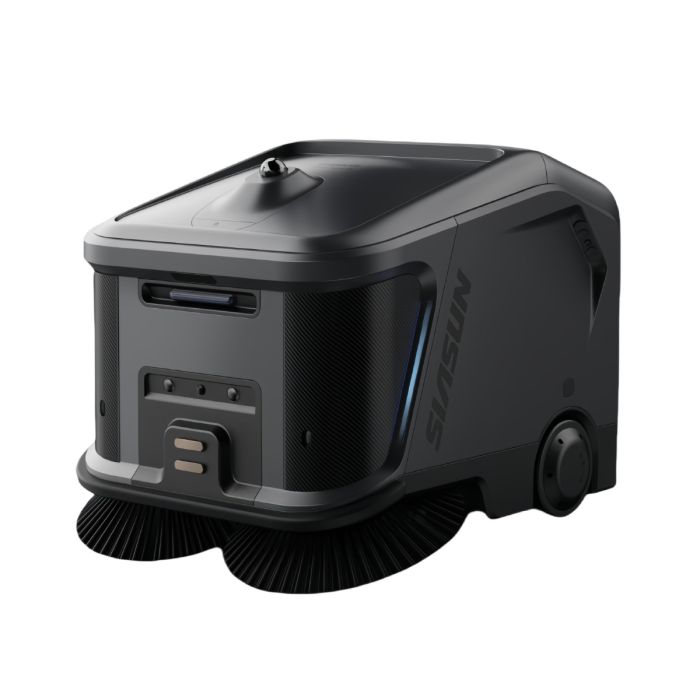
In stock
- BRAND:
- SIASUN
- MODEL:
- D700C
- PART #:
- D700C
- ORIGIN:
- China
- Warranty:
- 12 MONTHS
- AVAILABILITY:
- SUBJECT TO AVAILABILITY
- SKU:
- SIASUN-D700C
SIASUN Industrial Cleaning Mobile Robot (D700C)
Anyone who has cut a knot of lint and thread from a brush roll knows that the most troublesome debris on a factory floor is not always the heaviest. Fine fibres wrap themselves around moving parts, cable offcuts snag, and a single discarded bottle can stall a machine designed only for dust. The SIASUN Industrial Cleaning Mobile Robot (D700C) is designed for that mixed reality. It uses AI recognition to identify cables and debris, from tiny wire scraps to large beverage bottles. An independent airflow design handles lint and fibres without tangling, and a layered sensor suite lets the robot share working aisles with people and vehicles. It is an autonomous cleaner for industrial floors where the waste is varied and the traffic seldom pauses.
Robots Middle East supplies the D700C to manufacturers, logistics operators and facility managers across the Middle East. Robots Middle East prepares each quotation, coordinates delivery to site and provides support after commissioning. Your team therefore deals with a single point of contact, from the first enquiry through to daily operation on the floor.
Background
SIASUN and its mobile-robot heritage
SIASUN is best known for mobile robots that move materials through factories and warehouses. Its industrial cleaning robots draw on more than 20 years of the company's expertise in mobile-robot control, navigation and safety sensing technologies. That lineage matters to a buyer. A cleaning robot on a production floor faces the same demands as a transport vehicle: it must keep to its route, react to people and obstacles, and stay out of the way of the work around it. The D700C applies that experience to floor care rather than load handling. Its integration features, including co-line operation with AGVs, show a design that expects a site already running automated vehicles.
Recognition and airflow as the core technology
Two technologies define the D700C's position. The first is AI recognition, which detects cables and debris across a wide range of sizes. The robot can therefore deal with diverse and bulky waste rather than treating every object as an obstacle to avoid. The second is an independent airflow design that delivers up to 90% cleaning efficiency and 99% dust filtration. It is ideal for textile and apparel environments, where lint and fibres would otherwise tangle conventional cleaning heads. A self-cleaning filter mesh supports both technologies, reducing maintenance costs and extending service life. Together they make the D700C a cleaner built around the character of industrial waste rather than simply the size of the floor.
Technical Specifications
| Specification | Value |
|---|---|
| Dimensions (L×W×H) | 800x600x600(mm) |
| Weight | 85 kg |
| Cleaning width | 700mm |
| Clean/dirty water tank capacity | 45L |
| Max cleaning throughput | 2500㎡/h |
| Max travel speed | 1.2 m/s |
| Cleaning efficiency (independent airflow design) | Up to 90% |
| Dust filtration (independent airflow design) | 99% |
| Safety protection | 3D LiDAR + Vision + Ultrasonic Sensors + Anti-Fall Protection + Bumper (Contact) Sensing |
| System integration | Elevator control, door access control, mobile app operation, cloud-based monitoring |
| Operating modes | Co-line operation alongside AGVs |
Specifications are as published by the manufacturer and are confirmed against the datasheet at quotation.
The manufacturer has not published the battery capacity, runtime, charging time, noise level, IP rating, navigation method, dust bin capacity or climbing ability; these are confirmed at quotation.
What makes the D700C different from a conventional floor cleaner?
A conventional floor cleaner, whether pushed or ridden, depends on an operator to decide what it may safely pass over. The operator also has to stop and clear anything that would jam it. The D700C moves that judgement into the machine. Its AI recognition detects cables and debris and is built to tackle waste ranging from tiny wire scraps to large beverage bottles. That breadth is valuable on mixed industrial floors, where the litter of a single shift may include packaging, offcuts and fine dust all at once.
The second difference concerns fibrous waste. In textile and apparel facilities, lint and loose fibres wrap around rotating parts and force frequent stoppages for clearing. SIASUN's independent airflow design addresses this directly. It handles lint and fibres without tangling while delivering up to 90% cleaning efficiency and 99% dust filtration. The self-cleaning filter mesh means that the filtration stage needs less manual attention, which reduces maintenance costs and extends service life.
The third difference is awareness of the surroundings. The D700C combines 3D LiDAR, vision, ultrasonic sensors, anti-fall protection and bumper contact sensing. Each layer covers a different situation: detecting obstacles at distance, recognising what they are, sensing objects close to the robot, guarding against edges and drops, and responding to physical contact. That layered approach suits floors where people, trolleys and vehicles cross the robot's path throughout the day.
How does the D700C fit into an automated facility?
Many cleaning robots are designed for an empty hall. The D700C is designed to work alongside other automation. Its co-line operation mode lets it work alongside AGVs for synchronised operations, so production and cleaning can run in parallel instead of competing for the same window of time. For a site that has already invested in automated material handling, cleaning becomes part of the same coordinated system rather than an interruption to it.
Building integration extends that reach. The D700C supports elevator control and door access control, so it can move between floors and through controlled doorways as part of its route. Operators manage it through a mobile app, and cloud-based monitoring gives supervisors a view of its activity without needing to be on the floor. Its compact footprint of 800x600x600(mm), together with a 700mm cleaning width, is suited to aisles and corridors between production cells. Robots Middle East reviews your site layout, door systems and elevator interfaces when preparing the proposal, so integration requirements are clear before delivery.
Who is the SIASUN Industrial Cleaning Mobile Robot (D700C) for?
The clearest fit is the textile and apparel sector, for which the D700C's airflow design is ideal. Spinning, weaving, cutting and garment facilities generate continuous lint and fibre waste, and a cleaner that handles this without tangling addresses a daily operational problem.
The second group is manufacturers that already run AGVs. The co-line operation mode lets these plants schedule cleaning alongside material flow rather than around it. Electronics and assembly plants, where cable scraps and small offcuts gather near workstations, also benefit from the robot's recognition of cables and debris.
Facility and operations managers of multi-storey sites form a third group. Elevator and door access control allow one robot to serve several levels, and cloud-based monitoring supports oversight across shifts. Logistics and distribution centres with mixed packaging waste make up a fourth.
Buyers whose floors, waste or cleaning method differ from this profile can compare the D700C with other machines in the SIASUN cleaning robot range, or browse the wider Cleaning Robots category. Robots Middle East will advise on which model matches the site.
What is the SIASUN Industrial Cleaning Mobile Robot (D700C) used for?
- Textile and apparel floors: removing lint and fibres without tangling, using the independent airflow design.
- Electronics and assembly areas: collecting cable scraps and small offcuts that gather around workstations.
- Production aisles shared with AGVs: cleaning in synchronised co-line operation while material handling continues.
- Multi-storey facilities: moving between levels and through controlled doors by means of elevator and door access control.
- Packaging and logistics zones: handling bulky waste such as discarded beverage bottles as well as fine debris.
- Remotely supervised sites: running cleaning routines managed through the mobile app and tracked with cloud-based monitoring.
Pricing and Availability
The D700C is supplied on a quotation basis. The final configuration depends on your floor area, the waste you handle, and the AGV, elevator and door systems the robot must work with. Robots Middle East reviews these requirements with your team and prepares a proposal tailored to the site. Delivery, customs clearance and after-sales support are arranged together with the quotation. To begin, share a brief description of your facility and cleaning requirements using the enquiry options available on this page.
Frequently Asked Questions
What kind of debris can the D700C deal with?
Its AI recognition detects cables and debris and is built to tackle diverse, bulky waste, from tiny wire scraps to large beverage bottles. The independent airflow design also handles lint and fibres without tangling.
Is the D700C suitable for textile factories?
Yes. Its independent airflow design is ideal for textile and apparel environments, with up to 90% cleaning efficiency and 99% dust filtration.
Can the D700C work while AGVs are operating?
Yes. Its co-line operation mode allows it to work alongside AGVs for synchronised operations, so production and cleaning run in parallel.
How does the robot protect people and equipment?
It combines 3D LiDAR, vision, ultrasonic sensors, anti-fall protection and bumper contact sensing. Together these give layered awareness of its surroundings.
Can the D700C move between floors?
The robot supports elevator control and door access control, so it can be integrated with a building's lifts and controlled doorways. Robots Middle East works through the interfaces with your facilities team as part of the project.
How much maintenance does the D700C need?
A self-cleaning filter mesh reduces maintenance costs and extends service life. The independent airflow design also avoids the tangling of lint and fibres that would otherwise call for frequent manual clearing.
Where can I buy the SIASUN Industrial Cleaning Mobile Robot (D700C) and what does it cost?
Robots Middle East supplies the D700C across the Middle East on a quotation basis. The cost depends on the configuration and integration your site requires, so please request a tailored quotation from this page.
Summary
On an industrial floor, difficult debris is more often a matter of variety than of volume: fibres that tangle, cables that snag and bottles that block. The D700C answers that variety with AI recognition of cables and debris, an independent airflow design that handles lint without tangling, and a self-cleaning filter mesh that keeps maintenance down. Layered safety sensing, co-line operation with AGVs, and elevator and door integration let it work inside a running facility rather than after it closes. For manufacturers and facility managers in the Middle East who want cleaning that copes with real industrial waste, Robots Middle East is ready to prepare a quotation, and this page is the starting point.