
SIASUN GCR5-910-W (GCR5-910-W)
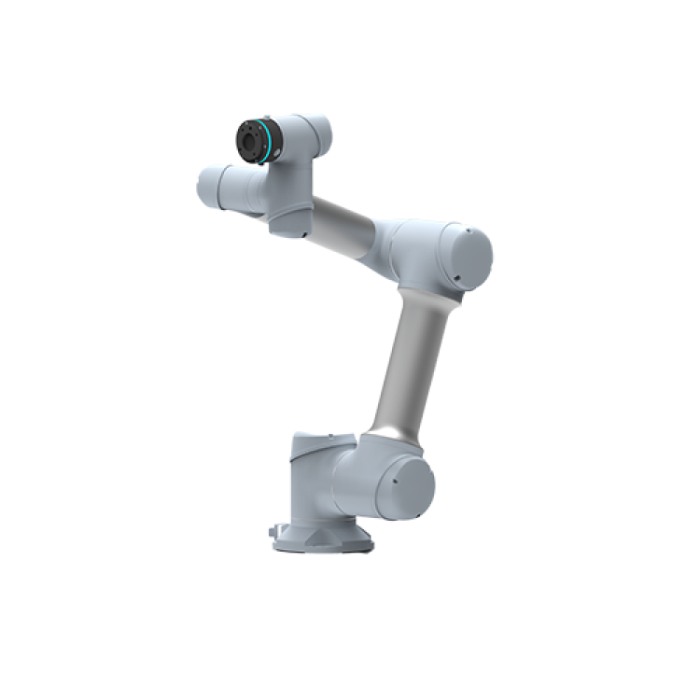
In stock
- BRAND:
- SIASUN
- MODEL:
- GCR5-910-W
- PART #:
- GCR5-910-W
- ORIGIN:
- China
- Warranty:
- 12 MONTHS
- AVAILABILITY:
- SUBJECT TO AVAILABILITY
- SKU:
- SIASUN-GCR5-910-W
SIASUN GCR5-910-W (GCR5-910-W)
A conventional welding cell is planned around the parts it will make for years: fixtures are built, paths are programmed by a specialist, and the investment is recovered over long production runs. Job shops and maintenance workshops rarely enjoy that certainty. One week brings a batch of brackets, the next a frame repair, the week after a run of cladding on worn components. The SIASUN GCR5-910-W (GCR5-910-W) is aimed squarely at that kind of variable workload. It is a six-axis collaborative welding robot that is taught by guiding the arm and configured through a graphical interface, and it arrives with a welding process package that already covers the joints most workshops weld every day. Changing from one job to the next therefore becomes a matter of teaching a new path rather than commissioning a new cell.
Robots Middle East supplies the SIASUN GCR5-910-W to fabricators, system integrators, training centres and industrial operators across the Middle East. Our team prepares each quotation around the configuration you actually need, covering the arm itself, the optional external axis plugin package and the welding equipment you intend to connect, and Robots Middle East coordinates delivery and after-sales support throughout the region.
Background
SIASUN and its collaborative robot range
SIASUN is a Chinese robotics manufacturer whose portfolio extends from industrial robots to collaborative arms and complete automation solutions. Its collaborative robots carry the GCR designation and are operated through the DUCO interface, which gives the welding model its full description as the SIASUN DUCO collaborative welding robot. The sources for this page name three related versions: the GCR5-910-W described here, the GCR3-618-W and the GCR5-910. Each has its own datasheet, and the figures on this page belong to the GCR5-910-W alone.
A robot built around the welding process
Many collaborative arms reach the welding bay as general-purpose machines, leaving the integrator to assemble the process logic from the ground up. The GCR5-910-W takes the opposite approach. Its two core functions are graphical interaction and drag teaching: the operator defines the task on screen and shows the arm where the seam runs by moving it by hand. A standard welding process package then supplies ready-made routines for spot welding, corner welding, oscillation welding, reciprocating welding, cladding, and multi-layer and multi-pass welding. High precision supports consistent weld seam output, precise vision integration enables a variety of functions, and comprehensive development interfaces allow the arm to become the centre of a purpose-built welding workstation.
Technical Specifications
| Specification | Value |
|---|---|
| Product type | SIASUN DUCO collaborative welding robot |
| Degrees of freedom | 6 |
| Max payload | 5kg |
| Reach | 917mm |
| Repeatability | ±0.02mm |
| Max TCP speed | 3.6m/s |
| IP class | IP54/IP65 |
| Weight | 21 kg |
Specifications as published by the manufacturer; they are confirmed against the datasheet at quotation.
SIASUN has not published the dimensions, power supply, power consumption, controller model, operating temperature, tool flange, communication protocols, noise level or the contents of the box, so Robots Middle East confirms each of these with you at quotation.
What makes the GCR5-910-W different from a conventional welding robot?
The difference lies less in the arc than in how the robot learns the job. A traditional industrial welding robot is normally programmed point by point with a teach pendant, often by a specialist who is not the person who knows the weld best. On the GCR5-910-W, drag teaching lets the operator take hold of the arm and lead the torch along the joint, while graphical interaction presents the welding task as a sequence of steps on screen rather than lines of code. The experienced welder's judgement about torch position and travel goes directly into the program, without a separate programmer translating it.
The second difference is that the process knowledge comes with the robot. Because the welding process package is standard, the common joint types and weaving patterns are available from the first day, and the operator selects and adjusts them rather than building them. For a workshop that changes parts frequently, this matters more than raw speed: the time saved is the time between receiving a new drawing and producing the first acceptable seam.
Finally, the arm sits in the collaborative category. Collaborative robots are generally designed to share space with people more readily than caged industrial robots, which suits workshops where an operator loads parts and teaches paths at the same bench. Guarding and safety measures for any specific installation are still determined by the risk assessment of that cell, and Robots Middle East is glad to discuss the layout you have in mind.
Will the GCR5-910-W work with the welding equipment I already use?
SIASUN equips the GCR5-910-W with a wide range of communication interfaces compatible with mainstream brands and welding machine brands, with plug-and-play operation as the stated aim. For many buyers this means the existing power source can stay in service, which keeps the project focused on automation rather than on replacing equipment that already works well. Because the individual communication protocols are not published, we check your specific welding machine against the datasheet when preparing the quotation.
Beyond the welder itself, the robot is designed to grow with the workstation. The optional external axis plugin package extends its capabilities to further welding applications and to custom workstation layouts, for example where a part must be repositioned during the weld. Comprehensive development interfaces support integrators building tailored cells, and the vision integration opens the way to vision-based functions within the welding process. If your requirement is a complete cell rather than an arm, the SIASUN Arc welding robotic solution is the natural point of comparison.
Who is the GCR5-910-W for?
The clearest fit is the small and medium-sized fabricator handling short and varied batches, where the cost of reprogramming a conventional robot for every new part has kept automation out of reach. Drag teaching and the graphical interface allow the welders already on staff to prepare jobs themselves, which preserves their expertise rather than sidelining it.
System integrators form a second group. The development interfaces, the welder compatibility and the optional external axis package give them a dependable base for building welding workstations for their own clients across the region. Training centres and technical colleges will value an arm that demonstrates welding automation without lengthy programming instruction, while maintenance and repair workshops can apply the cladding and multi-pass routines to rebuilding worn surfaces.
Buyers whose parts call for a different payload or reach class should compare the neighbouring models: the SIASUN GCR3-618-W and the SIASUN GCR10-1300-W each have their own datasheet, and Robots Middle East will quote whichever version suits your workpieces. The wider selection is available in our Robot Arms category.
What is the GCR5-910-W used for?
- Spot welding — tacking and joining components at defined points, set up directly from the process package.
- Corner welding — running consistent welds along the corner joints common in frames, brackets and enclosures.
- Oscillation welding — weaving the torch across the joint to fill wider gaps and control bead shape.
- Reciprocating welding — moving back and forth along the seam where the joint geometry demands it.
- Cladding — building up surface layers on components, including the rebuilding of worn parts.
- Multi-layer and multi-pass welding — depositing successive passes on thicker sections that a single run cannot complete.
Pricing and Availability
Robots Middle East quotes the SIASUN GCR5-910-W individually, because the final configuration depends on your welding machine, the optional external axis plugin package and the workstation you plan to build. Tell us about your parts, your joint types and the equipment already in your workshop, and we will prepare a quotation that reflects your actual application. Delivery, customs and support are arranged together with the quotation. The form to request your quotation for the GCR5-910-W is available on this page.
Frequently Asked Questions
What payload and reach does the GCR5-910-W offer?
The GCR5-910-W has a maximum payload of 5kg and a reach of 917mm, on a six-axis arm with a repeatability of ±0.02mm.
Do my operators need robot programming experience?
The robot is designed so that they do not need traditional programming skills. Paths are taught by guiding the arm by hand, and tasks are set up through the graphical interface.
Which welding processes are covered as standard?
The standard welding process package covers spot welding, corner welding, oscillation welding, reciprocating welding, cladding, and multi-layer and multi-pass welding.
Can I connect the welding machine I already own?
The robot offers a wide range of communication interfaces compatible with mainstream welding machine brands for plug-and-play use. Robots Middle East confirms your specific machine against the datasheet when preparing the quotation.
Can the robot be expanded for more complex workstations?
Yes. The optional external axis plugin package adds further welding applications and custom workstation layouts, and comprehensive development interfaces support integrators building tailored cells.
What protection rating does the GCR5-910-W have?
The IP class is IP54/IP65. Robots Middle East can advise on how this relates to the conditions in your welding area.
Where can I buy the SIASUN GCR5-910-W and what does it cost?
You can buy the GCR5-910-W from Robots Middle East, which supplies and supports it across the Middle East. The cost depends on your configuration, so request a quotation on this page and our team will prepare one for your application.
Summary
A workshop whose work changes every week needs a robot that changes with it, and that is the case the SIASUN GCR5-910-W makes. Drag teaching and graphical interaction put job set-up in the hands of the people who know the welds, the standard process package covers everyday joints from spot welds to multi-pass work, and the communication interfaces, development interfaces and optional external axis package let the arm grow from a single bench into a dedicated workstation. With 5kg of payload, 917mm of reach and ±0.02mm repeatability, it is a capable core for varied fabrication work. For a quotation from Robots Middle East, with delivery and support across the region, this page is the starting point.