
Sanctuary AI Phoenix Humanoid Robot
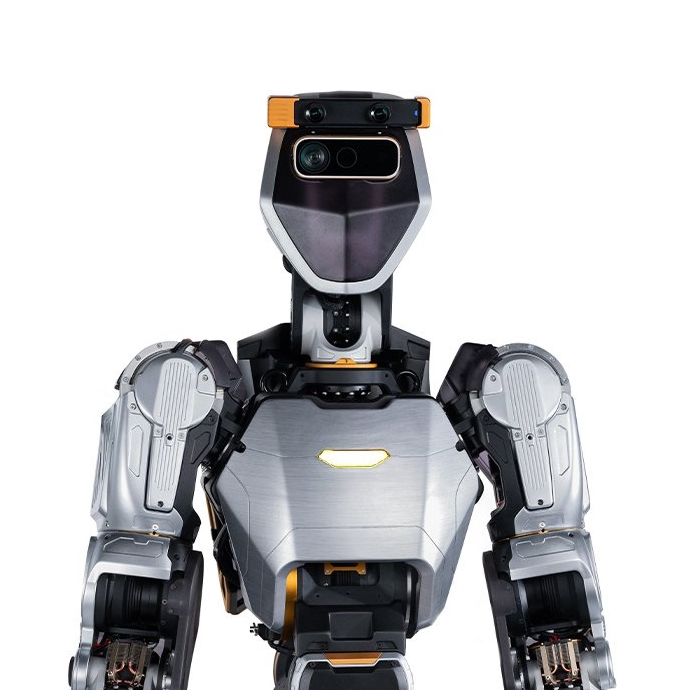
In stock
- BRAND:
- SANCTUARY AI
- MODEL:
- PHOENIX
- ORIGIN:
- Canada
- AVAILABILITY:
- SUBJECT TO AVAILABILITY
- SKU:
- Sanctuary-AI-Phoenix
Sanctuary AI Phoenix Humanoid Robot
Every humanoid robot comes with a question attached: who takes charge when the machine meets a task it has never seen before? With the Sanctuary AI Phoenix Humanoid Robot, Sanctuary AI answers that question openly rather than hiding it behind a promise of full autonomy. Phoenix pairs a human-scale body and finely articulated hands with a control system built around human-in-the-loop supervision, teleoperation and fleet management, so that a person can guide the robot through unfamiliar work while its software learns from the experience. For organisations weighing humanoids seriously, that frankness about how the machine is actually run may prove more useful than any single headline figure.
Robots Middle East supplies Phoenix to businesses, research institutions and public bodies across the Middle East, preparing a formal quotation for each enquiry and coordinating delivery, import formalities and after-sales support from the first conversation onwards. Our team can also help you set Phoenix alongside the other platforms in our Humanoids range, so that your evaluation begins with the tasks you need done rather than with a brochure.
Background
Sanctuary AI and the road to a sixth generation
Phoenix is the work of Sanctuary AI, the trading name of Sanctuary Cognitive Systems Corp., a company based in Vancouver, British Columbia. The firm describes itself as being on a mission to create the world's first humanlike intelligence in general-purpose robots, and that ambition shapes every decision visible in Phoenix. When the company unveiled the robot in 2023, it presented it as a sixth-generation, general-purpose robot powered by its Carbon artificial intelligence control system. The generation number is telling: Phoenix is not a first attempt but the latest step in a sustained programme of development, in which each iteration has been used to refine both the hardware and the intelligence that drives it.
Sanctuary AI designed Phoenix to have human-like intelligence and to carry out a wide range of tasks. Rather than building a specialist machine for one job, the company set out to produce a bipedal humanoid intended for manual labour in the original sense of the word: work that depends on the hands. That focus explains why so much of the published detail about Phoenix concerns dexterity, touch and cognition rather than athletic performance.
Carbon: the cognitive architecture behind Phoenix
The physical robot is only half of the product. Carbon is Sanctuary AI's cognitive architecture and software platform for humanoid general-purpose robots, and it is where the company's mission becomes practical. Carbon integrates modern AI technologies to translate natural language into action in the real world, which means an operator can describe a task in ordinary words rather than writing a motion script. Under the surface, Carbon uses deep learning and reinforcement learning, allowing the system to improve its behaviour as it accumulates experience.
Crucially, Carbon does not assume that the robot will always know what to do. It provides human-in-the-loop supervision, teleoperation and fleet management, so that a skilled person can oversee a robot, step in remotely when needed, and manage several units as a group. In this design the human is not a fallback for failure but part of the method by which the system grows more capable.
Technical Specifications
| Specification | Value |
|---|---|
| Manufacturer | Sanctuary AI (Sanctuary Cognitive Systems Corp.), Vancouver, British Columbia |
| Generation | Sixth-generation, general-purpose robot (unveiled 2023) |
| Form | Bipedal humanoid robot designed for hand-dependent manual labour |
| Height | 5’ 7” |
| Weight | 155 pounds (70.3 kilograms) |
| Maximum payload | 55 pounds (24.9 kg) |
| Maximum speed | 3 miles per hour (4.8 kilometers per hour) |
| Hand degrees of freedom | 20 in total, with proprietary haptic technology that mimics the sense of touch |
| Mobility at launch | Not walking; mobile on a small wheeled autonomous base |
| Control system | Carbon cognitive architecture and software platform |
| AI methods | Deep learning and reinforcement learning; natural language translated into action |
| Operation | Human-in-the-loop supervision, teleoperation and fleet management |
Specifications are as published by the manufacturer and are confirmed against the datasheet at quotation.
Sanctuary AI has not published the battery capacity, runtime, charging time, connectivity, sensor list, IP rating, operating temperature, software SDK, the contents of the box or any dimensions beyond height; these are confirmed at quotation.
Why does Phoenix move on a wheeled base rather than walking?
Phoenix has the form of a bipedal humanoid, yet at its unveiling the robot was mobile thanks to a small wheeled autonomous base rather than its own legs. Buyers sometimes read this as a shortcoming, but it reflects a clear order of priorities. Sanctuary AI built Phoenix for work that depends on the hands, and in most such tasks the hard part is not reaching the workbench but what happens once the robot is there: grasping an unfamiliar object, judging how firmly to hold it and placing it correctly.
A wheeled base offers a stable platform for that manipulation and lets development effort concentrate on dexterity and cognition. For a prospective buyer, the practical point is to plan site trials around the mobility configuration on offer. Floors, aisles and thresholds in your facility should be assessed against the configuration you will actually receive, not against the robot's eventual bipedal design.
What makes Carbon different from conventional robot programming?
Traditional industrial robots are usually programmed for a fixed sequence of movements in a controlled cell, and changing the task generally means changing the program. Carbon takes a different route. Because it translates natural language into action, an instruction can be expressed much as one would brief a colleague. Because it draws on deep learning and reinforcement learning, behaviour can be refined through experience rather than rewritten line by line.
The supervision layer completes the picture. Teleoperation allows a person to guide Phoenix through a task directly, human-in-the-loop supervision keeps an expert involved when the robot is uncertain, and fleet management extends that oversight across several machines. Combined with hands offering 20 degrees of freedom and haptic sensing, this gives Phoenix a route towards varied, hand-dependent work that a fixed program would struggle to cover. It also means that a deployment is as much about people and processes as about hardware, which is worth reflecting in any project plan.
Who is the Sanctuary AI Phoenix Humanoid Robot for?
Phoenix suits organisations that want to explore general-purpose humanoid labour with a human firmly in the loop. Innovation teams in logistics, retail operations and light manufacturing will find it relevant where tasks are varied, hand-dependent and difficult to automate with fixed equipment. Universities and research laboratories working on embodied AI, manipulation or human-robot collaboration can use it to study how natural-language instruction and supervised learning behave in physical tasks.
Government innovation programmes and technology parks across the region may also see value in Phoenix as a demonstrator of how supervised humanoid systems could support future workforces. Organisations whose priority is legged locomotion over rough or uneven ground, however, should compare it carefully with the walking platforms in our Bipedal Humanoids category, since Phoenix moved on a wheeled base at its launch.
What is the Sanctuary AI Phoenix Humanoid Robot used for?
- Object handling: picking, placing and sorting items that call for a careful, human-like grip.
- Stocking and replenishment: moving goods between storage and shelving in spaces laid out for people.
- Packing tasks: assembling orders and placing products into containers with controlled force.
- Light assembly support: handling components and tools at workstations designed for human operators.
- Teleoperation research: studying how remote human guidance can teach a robot new manual skills.
- Embodied AI development: testing natural-language instruction and learning methods on a full humanoid form.
Pricing and Availability
Robots Middle East supplies the Phoenix on a quotation basis, prepared around your organisation, intended application and deployment site. Delivery, customs clearance and support are arranged together with the quotation, so that the full scope of the project is clear before any commitment is made. To begin, please share a brief outline of the tasks you have in mind and where the robot will operate; the request form is available on this page.
Frequently Asked Questions
Who manufactures the Phoenix?
Phoenix is designed by Sanctuary AI, the trading name of Sanctuary Cognitive Systems Corp., based in Vancouver, British Columbia. The company presents it as its sixth-generation, general-purpose robot.
How tall and heavy is Phoenix?
Phoenix stands at 5’ 7” and weighs 155 pounds (70.3 kilograms), placing it on a human scale for work in spaces designed for people.
How much can Phoenix carry?
Phoenix has a maximum payload of 55 pounds (24.9 kg).
How dexterous are the hands?
The hands offer 20 degrees of freedom in total and use proprietary haptic technology that mimics the sense of touch, supporting fine manipulation.
Does Phoenix walk?
Although Phoenix is a bipedal humanoid, at its unveiling it was not walking and moved on a small wheeled autonomous base.
What is Carbon?
Carbon is Sanctuary AI's cognitive architecture and software platform for general-purpose humanoid robots. It translates natural language into action, uses deep learning and reinforcement learning, and supports human-in-the-loop supervision, teleoperation and fleet management.
Where can I buy the Sanctuary AI Phoenix Humanoid Robot and what does it cost?
Robots Middle East supplies Phoenix across the Middle East on a quotation basis. Cost depends on the configuration and the scope of delivery and support, so please request a quotation through this page.
Summary
Phoenix does not pretend that a humanoid robot can simply be switched on and left alone. Sanctuary AI has instead built a sixth-generation, human-scale machine with highly articulated, touch-sensitive hands and given it Carbon, a cognitive architecture that turns spoken instructions into action, learns through deep and reinforcement learning, and keeps a skilled person in the loop through supervision, teleoperation and fleet management. That honest division of labour between human and machine is precisely what makes Phoenix a credible platform for organisations exploring hand-dependent automation. With Robots Middle East handling the quotation, delivery, customs and support, your evaluation can concentrate on the work itself. If you are ready to find out how supervised humanoid labour could fit your operations, this page is the starting point.