
Unitree H2-D Standard I Humanoid Robot
In stock
- BRAND:
- UNITREE ROBOTICS
- MODEL:
- H2-D-Standard-I
- PART #:
- H2-D-Standard-I
- ORIGIN:
- China
- Warranty:
- 12 MONTHS
- AVAILABILITY:
- SUBJECT TO AVAILABILITY
- SKU:
- Unitree-H2-D-Standard-I
Unitree H2-D Standard I Humanoid Robot
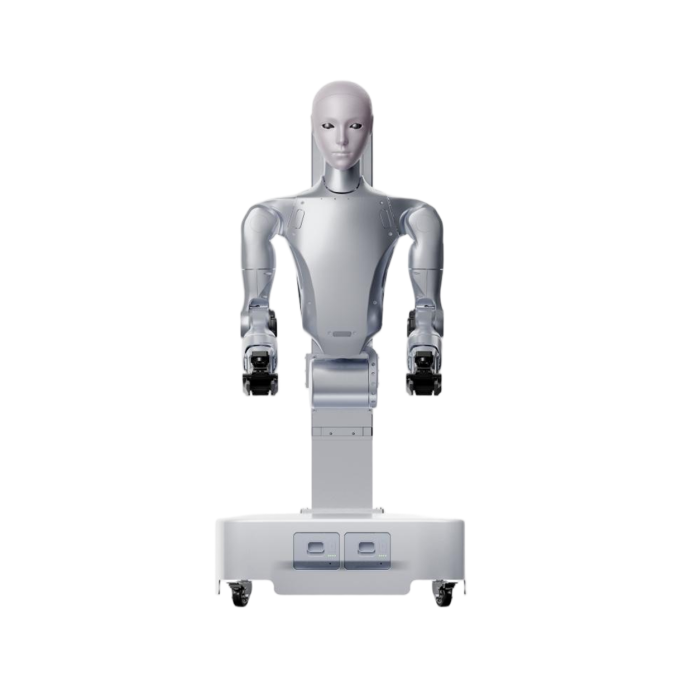
Some robots are bought as projects and others as machines. A project arrives as a set of possibilities and waits for a software team to give it purpose; a machine arrives, is charged and goes to work. The Unitree H2-D Standard I Humanoid Robot belongs to the second camp. It is a full-size bipedal humanoid with a bionic head, binocular vision and a voice system, built on Unitree's standard H2 platform, which deliberately leaves secondary development to its EDU sibling. For an organisation that wants a humanoid presence rather than a humanoid research programme, that boundary is the reason to choose it, not a shortcoming to be worked around.
Robots Middle East sells the Unitree H2-D Standard I Humanoid Robot to companies, institutions and public bodies across the Middle East. Our team prepares the quotation, arranges delivery to your site and provides support after handover. We work alongside buyers throughout the region, from the first enquiry to the robot's first day in service.
Background
Unitree Robotics and the move to full-size humanoids
Unitree Robotics built its reputation on agile legged robots, first with quadrupeds and then with humanoid platforms that brought the same emphasis on motor control and dynamic movement to a two-legged body. The H2 family is the company's full-size humanoid line: a robot proportioned like an adult, intended to stand and move in spaces designed for people. That matters in any setting where the robot must share corridors, counters and stages with visitors, because a smaller machine always reads as a gadget, whereas an adult-proportioned one reads as a participant.
Where the standard H2 sits in the line-up
Unitree lists two variants of the H2: the standard H2 and the H2 EDU, the latter aimed at research and educational development, and both are sold through direct contact with the manufacturer's channel. The standard H2 carries a single computing unit, has no PC dedicated to user development and does not support secondary development. The H2 EDU adds a high-performance computing module of up to Jetson AGX Thor (2070 TOPS) and opens the platform to developers. The Unitree H2-D Standard I Humanoid Robot is a package built on the standard H2, and it sits within the H2-D Standard range, part of the wider Unitree H2-D family.
Technical Specifications
| Specification | Value |
|---|---|
| Standing dimensions | 1820 x 456 x 218 mm |
| Weight with battery | Approximately 70 kg |
| Total degrees of freedom | 31 |
| Degrees of freedom distribution | 6 DoF per leg, 7 DoF per arm, 3 DoF at the waist, 2 DoF at the head |
| Max leg joint torque | 360 N.m |
| Max arm joint torque | 120 N.m |
| Max arm payload | Peak: ~15 kg; nominal: ~7 kg |
| Materials | Aerospace-grade aluminium, titanium alloy and high-strength engineering plastics |
| Battery | 15 Ah (0.972 kWh), removable smart battery |
| Battery life | Approximately 3 h |
| Onboard computing | PC1: Intel Core i5 |
| High-performance computing module | Not available (offered on the H2 EDU) |
| Vision sensor | Wide-angle humanoid binocular camera |
| Voice interaction | Array microphones + high-power speaker |
| Connectivity | Wi-Fi 6, Bluetooth 5.2 |
| Bionic head with facial features | Yes |
| Intelligent OTA | Yes |
| Secondary development | Not supported |
| Included accessories | Removable smart battery, charger, manual remote controller |
Specifications are as published by the manufacturer and are confirmed against the datasheet at quotation.
The manufacturer has not published the top walking speed, the IP rating, the charging time, the operating temperature range or the noise level, nor whether a lidar is fitted; these points are confirmed at quotation.
What does the H2 EDU add over the standard H2?
The difference Unitree publishes between the two variants lies in computing and in access, not in the robot's role as a moving, interacting body. The standard H2 runs on one onboard computer, PC1 with an Intel Core i5, which handles the robot's own functions. There is no second PC set aside for user code, and secondary development is not supported. The H2 EDU, by contrast, can be equipped with a high-performance computing module of up to Jetson AGX Thor (2070 TOPS) and is opened to developers who want to write their own perception, manipulation or behaviour software.
For a buyer, the question is therefore simple: will your organisation write software for this robot? A university laboratory, a research group or an AI start-up training its own models will want the EDU. A hotel, an exhibition operator or a corporate visitor centre that wants the robot to perform within the manufacturer's functions gains nothing from the extra compute and is better served by the standard platform, with fewer components to manage and no development environment to maintain.
Can the standard H2 be operated without a software team?
That is precisely the arrangement the standard H2 is designed around. The package includes a manual remote controller, so the robot can be directed by a trained member of staff rather than by an engineer at a laptop. Intelligent OTA means that software updates arrive over the air from the manufacturer, keeping the robot current without anyone needing to install firmware by hand. The removable smart battery and its charger allow the robot to be returned to service by exchanging packs rather than waiting at a socket.
The physical specification supports demanding everyday use. The legs are rated to a maximum joint torque of 360 N.m and the arms to 120 N.m, with an arm payload of approximately 7 kg nominal and approximately 15 kg at peak. Its 31 degrees of freedom, including 3 at the waist and 2 at the head, allow it to turn, gesture and face the people it addresses, which is what makes a humanoid persuasive in a public setting. The frame combines aerospace-grade aluminium, titanium alloy and high-strength engineering plastics. The source also states that no robotic hands are included in the standard H2.
Who is the Unitree H2-D Standard I Humanoid Robot for?
The clearest fit is any organisation that needs a humanoid to be seen, heard and remembered. Hospitality groups and property developers can place it in lobbies and sales galleries, where its bionic head, array microphones and high-power speaker give it a convincing presence. Exhibition and events companies can use it as a centrepiece that draws visitors to a stand. Museums, science centres and cultural institutions can present it as a living exhibit on the state of robotics, and government entities with innovation agendas can use it to show visitors that emerging technology is in use, not merely discussed.
Universities and schools may also choose the standard H2 for outreach, open days and introductory teaching, where the aim is to show students a full-size humanoid in motion. Where a faculty intends to write its own control or AI software, however, the H2 EDU is the better choice, because the standard platform does not support secondary development; Robots Middle East can prepare a quotation for either. Other packages are listed in the H2-D Standard category, and our team will set them side by side with you before you decide.
What is the Unitree H2-D Standard I Humanoid Robot used for?
- Visitor reception — greeting guests in hotel lobbies, corporate headquarters and showrooms with voice and gesture.
- Exhibition presence — drawing footfall to stands at trade fairs and conferences as a moving centrepiece.
- Museum and science-centre display — presenting the current state of humanoid robotics to the public as a live exhibit.
- Educational outreach — showing students and families a full-size humanoid at open days, school visits and science festivals.
- Corporate innovation showcases — demonstrating an organisation's commitment to new technology in its visitor or experience centre.
- Pre-programme evaluation — letting a team gain hands-on experience with the H2 body before deciding whether a development-capable version is needed.
Pricing and Availability
Robots Middle East supplies the Unitree H2-D Standard I Humanoid Robot on quotation, because the final offer depends on the package, the destination and the level of support you require. Delivery, customs clearance and after-sales support are arranged with your quotation. Tell us where the robot will be used and what it should do there, and we will return an offer that reflects that configuration. To begin, please request a quotation using the enquiry options available on this page.
Frequently Asked Questions
Can I write my own software for this robot?
No. The standard H2 does not support secondary development and has no PC dedicated to user development. If your team intends to programme the robot, the H2 EDU is the appropriate variant.
How long does the battery last?
Battery life is approximately 3 h from a 15 Ah (0.972 kWh) battery. The battery is a removable smart unit, so a charged pack can be exchanged to keep the robot in service.
What is included with the robot?
The standard H2 comes with a removable smart battery, a charger and a manual remote controller.
How large and heavy is the Unitree H2-D Standard I Humanoid Robot?
It measures 1820 x 456 x 218 mm standing and weighs approximately 70 kg with its battery. Your site should allow for a robot of adult proportions, both in use and in storage.
Can the robot see, hear and speak to visitors?
Yes. It carries a wide-angle humanoid binocular camera, array microphones and a high-power speaker, set in a bionic head with facial features.
Does the robot receive software updates?
Yes. The standard H2 supports intelligent OTA updates, and it connects over Wi-Fi 6 and Bluetooth 5.2.
Where can I buy the Unitree H2-D Standard I Humanoid Robot and what does it cost?
You can buy it from Robots Middle East, which supplies it across the Middle East. The cost depends on the configuration, delivery and support, so it is set out in a quotation prepared for your organisation.
Summary
The Unitree H2-D Standard I Humanoid Robot is a machine rather than a project. It offers an adult-proportioned body with 31 degrees of freedom, a bionic head, binocular vision and a voice system, operated by remote controller and kept current through OTA updates, with development access reserved for the H2 EDU. That clarity makes it a strong choice for reception, exhibition, education outreach and showcase roles, where the robot must perform reliably rather than wait for code. Robots Middle East quotes, delivers and supports it across the region; for an organisation ready to put a humanoid to work, this page is the starting point.