
X-Humanoid Tien Kung 2.0 Plus Humanoid Robot
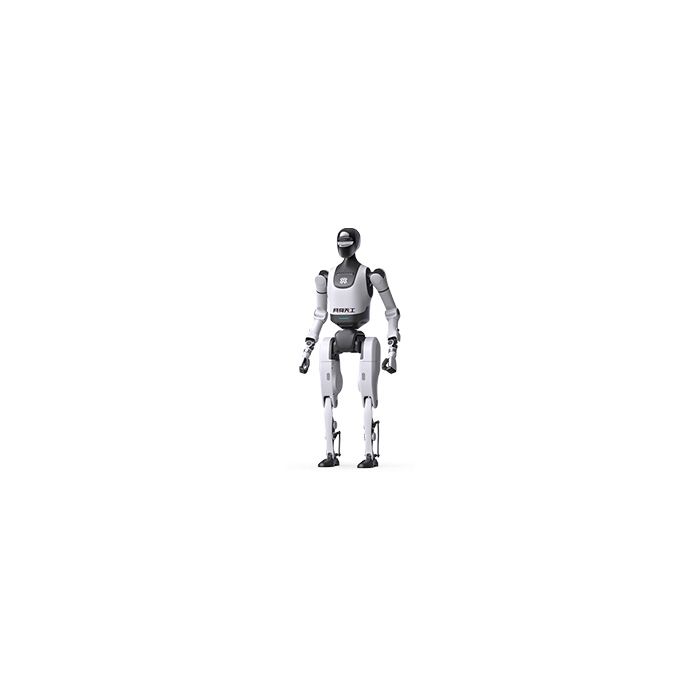
In stock
- BRAND:
- X-HUMANOID
- PART #:
- Tien Kung 2.0 Plus
- ORIGIN:
- China
- AVAILABILITY:
- SUBJECT TO AVAILABILITY
- SKU:
- X-Humanoid-Tien-Kung-2.0-Plus
X-Humanoid Tien Kung 2.0 Plus Humanoid Robot
Sand and stairs are two very different problems for a robot that walks on two legs. Shifting sand gives way under every step, while a staircase punishes any misjudged foot placement. A machine that handles both, keeps its balance when it is knocked, and still has the hands and perception to do useful work when it arrives is a different proposition from a laboratory biped. The X-Humanoid Tien Kung 2.0 Plus Humanoid Robot is built for that combination. It is a full-size humanoid engineered for industrial-grade stability, high-speed bipedal locomotion and dexterous manipulation, and it pairs a dual-brain AI architecture with swappable power and satellite connectivity for work beyond the walls of the lab.
Robots Middle East supplies the X-Humanoid Tien Kung 2.0 Plus Humanoid Robot to universities, research institutes, industrial integrators and public-sector organisations across the Middle East. Our team prepares each quotation to the buyer's project, coordinates delivery and import into the destination country, and remains the point of contact for commissioning questions and after-sales support once the robot is on site.
Background
The Beijing Innovation Center of Humanoid Robotics
The Tien Kung 2.0 Plus was developed by the Beijing Innovation Center of Humanoid Robotics and is sold under the X-HUMANOID brand. The Tien Kung name covers a family of humanoid platforms rather than a single machine, and the range now spans several generations and configurations, including wheeled as well as bipedal designs. The 2.0 Plus sits within the second generation of the bipedal line, where the emphasis has moved from proving that a full-size humanoid can walk to proving that it can work reliably in conditions that are less forgiving than a test floor.
Industrial stability over the laboratory prototype
Many humanoid robots are built as research prototypes: capable in a controlled setting, but not designed for sustained use or difficult ground. The Tien Kung 2.0 Plus is positioned deliberately against that model. Its design stresses industrial stability, endurance through two swappable batteries, and support for open-source control stacks such as ROS2. The core of the system is a dual-brain AI architecture, in which one layer manages real-time motion while another handles higher-level planning. On top of that sits the Wise KaiWu AI platform, running on NVIDIA Jetson Orin compute, which supports fully autonomous tasks such as parts sorting, grasping and multi-language interaction.
Technical Specifications
| Specification | Value |
|---|---|
| Product type | Full-size humanoid robot |
| Height | 170 cm |
| Maximum speed | Up to 12 km/h |
| Degrees of freedom | 20+ |
| Hands | Five-fingered hands |
| Sensors | LiDAR, RGB-D cameras |
| Compute | NVIDIA Jetson Orin |
| AI platform | Wise KaiWu |
| Control architecture | Dual-brain AI architecture (real-time motion and higher-level planning) |
| Software support | Open-source control stacks, including ROS2 |
| Power | Dual swappable batteries |
| Connectivity | Satellite connectivity for remote operations |
| Modularity | Sensor and end-effector customisation |
| Terrain | Stairs, slopes, sand, snow and uneven terrain, with adaptive balancing and impact resistance |
| Developer | Beijing Innovation Center of Humanoid Robotics |
Specifications are as published by the manufacturer and are confirmed against the datasheet at quotation.
The manufacturer has not published the weight, overall dimensions, payload, battery capacity, runtime per charge, IP rating, operating temperature range, degrees of freedom per hand or the contents of the box; we confirm each of these with you at quotation.
What does the dual-brain architecture mean for real deployments?
A walking humanoid has to solve two problems at very different speeds. Balance and foot placement demand corrections many times a second, and any delay shows up as a stumble. Deciding which part to pick up, which route to take through a building, or how to respond to a spoken request is slower, more deliberate work. The Tien Kung 2.0 Plus separates these duties: one layer of its dual-brain AI architecture handles real-time motion, while the other takes care of higher-level planning. In practice, this means the robot's planning can work through a task without compromising the reflexes that keep it upright.
That separation matters most when the robot is asked to combine movement with manipulation. The 2.0 Plus carries more than 20 degrees of freedom, five-fingered hands, LiDAR and RGB-D cameras, and it excels in perception-driven navigation and bimanual coordination. Grasping an object while standing on a slope, or sorting parts at a workstation after walking to it, draws on both layers at once. The Wise KaiWu AI platform and NVIDIA Jetson Orin provide the on-board intelligence for these autonomous tasks, and ROS2 support gives development teams a familiar, open framework for writing and testing their own behaviours rather than working only through a closed interface.
How does the Tien Kung 2.0 Plus cope with difficult ground and remote sites?
Terrain is where the 2.0 Plus departs most clearly from a laboratory humanoid. It navigates stairs, slopes, sand, snow and uneven terrain with adaptive balancing and impact resistance, and it reaches speeds of up to 12 km/h. For organisations in the Middle East, the ability to walk on sand is not an abstract benchmark: test sites, infrastructure projects and emergency scenarios in the region frequently involve loose or irregular ground.
Distance from infrastructure is the second challenge, and here the robot's satellite connectivity is relevant. It supports remote operations in challenging environments where conventional networks may not reach. The dual swappable batteries address the endurance side of the same problem: one pack can be exchanged for another to extend runtime for research, logistics, rescue and service applications. Buyers planning long field trials should discuss their intended duty cycle with us when requesting a quotation. Finally, the modular design allows sensor and end-effector customisation, so a robot destined for a particular site can be fitted with the perception or tooling that site requires.
Who is the X-Humanoid Tien Kung 2.0 Plus Humanoid Robot for?
The first group is research. University laboratories and national research centres working on embodied AI, bipedal locomotion or bimanual manipulation gain a full-size platform with open ROS2 support, sensor options and an architecture that separates motion control from planning, which makes it a natural subject for experiments in both fields.
The second group is industrial. Integrators and manufacturers exploring humanoid automation can evaluate the robot on tasks such as parts sorting and grasping, which it carries out autonomously, with the advantage of a design that prioritises industrial stability and endurance.
The third group covers field and public-service work. Organisations studying rescue, logistics or operations in remote locations will look closely at the terrain capability, the swappable batteries and the satellite connectivity. Service and visitor-facing applications, meanwhile, can draw on the robot's multi-language interaction.
The Tien Kung family includes other configurations, such as the X-Humanoid Tien Kung 2.0 Pro Humanoid Robot and the X-Humanoid Tien Kung 2.0 Lite Humanoid Robot. To see how they compare with the 2.0 Plus for your requirements, we recommend asking us for a side-by-side comparison before you decide. Buyers who want to compare more widely can browse our Bipedal Humanoids and Humanoids categories.
What is the X-Humanoid Tien Kung 2.0 Plus Humanoid Robot used for?
- Embodied AI research — a full-size platform for studying how perception, planning and motion work together in a physical body.
- Parts sorting and grasping — autonomous handling tasks carried out with five-fingered hands and RGB-D vision.
- Logistics trials — moving through buildings and across stairs and slopes, with swappable batteries extending the working session.
- Rescue and emergency research — testing humanoid mobility on sand, snow and uneven ground with adaptive balancing.
- Service and interaction — multi-language interaction for visitor-facing, reception and demonstration settings.
- Remote and field operations — satellite connectivity supporting work in challenging locations away from conventional networks.
Pricing and Availability
Robots Middle East supplies the X-Humanoid Tien Kung 2.0 Plus Humanoid Robot on a quotation basis, because the final configuration depends on the sensors, end-effectors and software support your project requires. Delivery, customs clearance and support are arranged together with your quotation, so that the full scope is agreed before an order is placed. To begin, share your intended application and site conditions with our team; the quotation request form is available on this page.
Frequently Asked Questions
Who developed the Tien Kung 2.0 Plus?
It was developed by the Beijing Innovation Center of Humanoid Robotics and is sold under the X-HUMANOID brand.
How tall is the robot and how fast can it move?
The robot stands 170 cm tall and reaches speeds of up to 12 km/h. It is designed to handle stairs, slopes, sand, snow and uneven terrain.
What computing hardware does it use?
It runs on NVIDIA Jetson Orin and is powered by the Wise KaiWu AI platform, within a dual-brain architecture that separates real-time motion from higher-level planning.
Can I develop my own software for it?
Yes. The robot supports open-source control stacks, including ROS2, which allows research and integration teams to build on a widely used framework.
How is long operating time achieved?
The robot uses dual swappable batteries, so one pack can be exchanged for another to extend runtime for research, logistics, rescue and service work.
Can the robot be customised?
Its modular design allows customisation of sensors and end-effectors, and satellite connectivity supports remote operations. We discuss the available options with you as part of the quotation.
Where can I buy the X-Humanoid Tien Kung 2.0 Plus Humanoid Robot and what does it cost?
You can buy it from Robots Middle East, which supplies the robot across the Middle East. Pricing depends on the configuration, delivery and support you require, so please request a quotation through this page.
Summary
The step from a staircase to a sand dune captures what the X-Humanoid Tien Kung 2.0 Plus Humanoid Robot is designed for: a full-size biped that keeps its footing on difficult ground and still has the perception, planning and dexterous hands to do useful work when it arrives. Its dual-brain architecture, Wise KaiWu platform on NVIDIA Jetson Orin, ROS2 support, swappable batteries, modular sensors and satellite connectivity reflect a design intended for real-world deployment rather than the demonstration floor. For research groups, integrators and field organisations across the Middle East that want to explore that potential with Robots Middle East, this page is the starting point.