
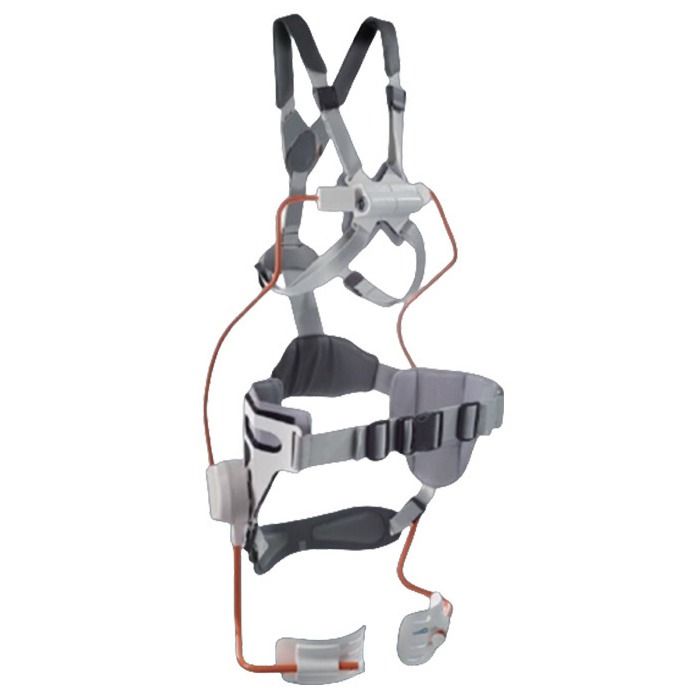
iTR Lumbar Passive Assistor
In stock
- BRAND:
- ITR ROBOT
- AVAILABILITY:
- SUBJECT TO AVAILABILITY
- SKU:
- ITR-LUMBAR-PASSIVE-ASSISTOR
iTR Lumbar Passive Assistor
iTR Lumbar Passive Assistor for Middle East Robotics Projects
iTR Lumbar Passive Assistor is positioned for organizations evaluating industrial and logistics robots for commercial, industrial, municipal, hospitality, education, and research environments across the Middle East. For buyers in the UAE, Saudi Arabia, Qatar, Kuwait, Bahrain, and Oman, the product page should support more than a basic model listing: it should explain where the robot fits, what procurement teams should review, and how deployment conditions in the Gulf affect planning.
The iTR Lumbar Passive Assistor is a wearable passive back support exoskeleton developed by iTR Robot Technology Co., Ltd. (iTR), designed to reduce the physical strain of heavy lifting on the lumbar spine and hip structures of industrial workers in construction, logistics, manufacturing, and warehouse operations. It is the only non-robotic product in iTR's commercial product range and represents the company's extension from autonomous machines that perform work to wearable devices that augment
Application Profile
The iTR Lumbar Passive Assistor belongs to the Industrial Robots > Construction Robots > iTR Robot segment of the robotics catalog. This makes it relevant for teams that need automation to reduce repetitive manual work, improve service consistency, support safer inspections, or introduce robotics into customer-facing and operational workflows. Typical buyers include facility managers, systems integrators, hotels, restaurants, logistics operators, shopping malls, universities, research labs, healthcare campuses, industrial sites, and smart-city programs.
Middle East and GCC Deployment Context
Robotics deployments in the Gulf often involve large venues, mixed indoor and outdoor operating conditions, multilingual staff, public-facing service expectations, and high uptime requirements. A robot selected for Dubai, Abu Dhabi, Riyadh, Jeddah, Doha, Kuwait City, Manama, or Muscat should be reviewed not only for headline specifications, but also for route planning, charging strategy, maintenance access, spare parts, fleet supervision, staff training, and integration with daily operating procedures.
For tenders and commercial projects, the evaluation should also include warranty terms, expected operating hours, consumables, software support, operator training, and whether the robot will work as a single unit or as part of a larger automation program. The iTR Lumbar Passive Assistor can be presented as part of that broader procurement discussion rather than treated as a standalone gadget.
Buyer Evaluation Checklist
Operating environment
Confirm whether the robot will operate indoors, outdoors, in public areas, in narrow corridors, around guests, near workers, or in controlled industrial zones. Floor type, ramps, thresholds, route complexity, temperature, dust exposure, and daily operating schedule should all be reviewed before purchase.
Workflow integration
Successful robotics projects depend on workflow design. Define who starts the robot, who monitors it, where it charges, how exceptions are handled, and how performance will be measured. This is especially important for multi-site customers across the GCC that want repeatable deployment standards.
Support and lifecycle planning
Professional robots require a lifecycle plan. Buyers should ask about spare parts, remote support, preventive maintenance, software updates, staff onboarding, and escalation procedures before finalizing a purchase order.
FAQ
What is iTR Lumbar Passive Assistor used for?
It is used in professional robotics projects where automation, service consistency, inspection, cleaning, delivery, mobility, or research capability is required, depending on the final configuration and use case.
Is iTR Lumbar Passive Assistor suitable for the Middle East?
It can be evaluated for Middle East projects when the operating environment, support model, charging plan, and deployment workflow are matched to the site requirements.
Can this robot be used in GCC commercial facilities?
Yes, it may be considered for commercial, hospitality, retail, education, healthcare, logistics, municipal, or industrial facilities after confirming the specific site conditions.
What should buyers confirm before ordering?
Confirm configuration, accessories, warranty, spare parts, lead time, software features, operator training, and whether the product needs integration with existing workflows.
Can it be part of a larger robotics fleet?
For some projects, yes. Fleet suitability depends on the robot category, management software, route design, charging infrastructure, and support requirements.