AgiBot
Explore AgiBot with a neutral, fact-based summary of technology, applications, benefits and selection criteria for modern robot solutions in the Middle East.
-
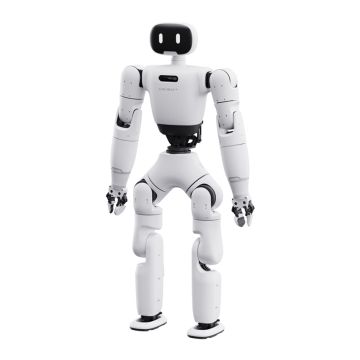
Out of stock
-
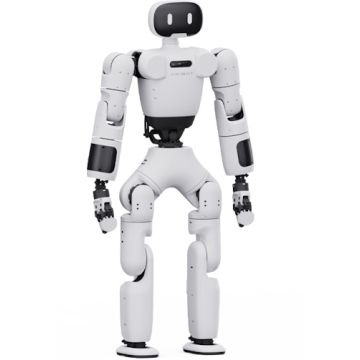
Out of stock
Introduction and overview
Short overview: Explore AgiBot with a neutral, fact-based summary of technology, applications, benefits and selection criteria for modern robot solutions in the Middle East.
AgiBot can support organizations that need practical automation, safer operations, reliable field performance and scalable deployment across the Middle East. Buyers often compare robot design, payload, mobility, sensors, autonomy, software, maintenance needs and total cost of ownership before choosing a platform.
Design and features
Robots in this category may include rugged mechanical systems, electric drives, perception sensors, navigation software, remote control options, mapping tools, payload interfaces and safety functions. The right specification depends on the site, duty cycle, operating environment, connectivity and staff training plan.
Important evaluation points include battery life, charging workflow, heat tolerance, dust resistance, terrain capability, payload capacity, integration options, spare parts availability and local service planning. For enterprise deployments, documentation, warranty terms and operator training can be just as important as headline performance.
Applications and use cases
AgiBot is relevant for inspection, security, logistics, education, research, emergency response, facilities management, cleaning, construction, industrial automation and specialist field work. Middle East customers may need solutions that perform in warehouses, campuses, oil and gas facilities, ports, airports, public venues, smart-city projects and remote infrastructure sites.
Use cases should be matched to measurable outcomes: reducing manual risk, collecting better data, improving response time, extending operating hours, standardizing repetitive tasks or supporting teams in hazardous areas. A pilot project is often the best way to validate performance before a larger purchase.
Advantages and buying considerations
The main advantages of AgiBot are consistency, repeatability, data capture, remote operation and the ability to perform tasks that are tiring, dangerous or difficult for people. Buyers should compare price, cost, availability, support, accessories, software subscriptions and expected maintenance before deciding where to buy.
Procurement teams should also consider import requirements, delivery timelines, training, spare batteries, chargers, payloads, protective cases, service response and future expansion. A well-planned robot purchase usually includes both the platform and the operational process around it.
Implementation planning
Successful robotics projects usually begin with a clear workflow review. Teams should document the current process, identify bottlenecks, define safety constraints, list expected outputs and decide how robot performance will be measured. For Middle East deployments, planning may also include site access, operator language needs, mobile connectivity, electrical standards, climate conditions and practical maintenance routines.
Accessories can change the usefulness of AgiBot. Consider spare batteries, chargers, docking stations, payload mounts, sensors, cameras, protective covers, transport cases, software licences and integration services. These items can affect the real budget as much as the robot itself, so they should be included in any price or cost comparison.
Support, training and lifecycle
Training helps operators use robot systems safely and consistently. A deployment plan should explain who will operate the robot, who will maintain it, how incidents will be reported and how software updates will be managed. Buyers should also confirm documentation, warranty terms, spare-part availability and escalation paths before purchase.
Lifecycle planning is important because robots are long-term assets. Cleaning, inspection, firmware updates, battery replacement, calibration and periodic testing can preserve performance. When AgiBot is selected carefully and supported properly, it can become a reliable part of daily operations rather than a one-time technology experiment.
FAQ
How do I choose AgiBot?
Start with the job to be done, the environment, required runtime, safety requirements, payload needs and support expectations. Then compare robot models against those practical requirements instead of relying only on specifications.
What affects AgiBot price?
Price is influenced by robot size, sensors, autonomy level, payloads, software, accessories, warranty, shipping and support. Exact cost depends on configuration and project requirements.
Can AgiBot be deployed across the Middle East?
Many robot systems can be deployed across Middle East markets when power, connectivity, training, maintenance and logistics are planned correctly. Site conditions should always be reviewed before purchase.
Summary
AgiBot can help businesses, institutions and public-sector teams modernize operations with robotics and automation. Compare features, support, total cost and deployment conditions carefully to select the most suitable robot solution.
Frequently Asked Questions (FAQ)
What is AgiBot? AgiBot, also known as Zhiyuan Robotics (智元机器人), is a Chinese humanoid robotics company founded in February 2023 and headquartered in Shanghai, China. The company designs and manufactures general-purpose humanoid robots and develops embodied artificial intelligence software, including the GO-1 foundation model and the AgiBot World dataset. As of early 2026, it is the world's highest-volume humanoid robot manufacturer by units shipped.
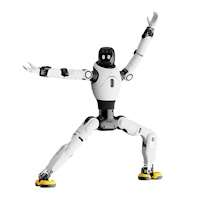
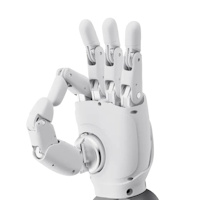
How does AgiBot's humanoid robot work? AgiBot's humanoid robots combine onboard AI processing, multimodal sensors (cameras, LiDAR, microphones, and tactile sensors), and dexterous robotic hands with high degrees of freedom to perceive and interact with physical environments. The robots run on AgiBot's proprietary software stack, including the WorkGPT multimodal AI engine, the GO-1 generalist foundation model, and the AimRT communication middleware. The GO-1 model uses a Vision-Language-Latent-Action (ViLLA) framework that allows robots to understand scenes, plan actions, and execute fine-grained manipulation tasks — and can generalize to new environments from minimal training examples.
Who founded AgiBot and why is it significant? AgiBot was founded by Deng Taihua and Peng Zhihui, both former senior engineers at Huawei. The company is significant because it achieved mass production of humanoid robots faster than any comparable company globally, shipping over 5,000 units in 2025 and crossing the 10,000-unit cumulative production milestone in March 2026. Its GO-1 AI model and AgiBot World dataset represent meaningful contributions to open embodied AI research, and the company's trajectory has placed it at the center of China's national strategy for robotics and advanced manufacturing.
What are the benefits of AgiBot humanoid robots? AgiBot robots offer several practical advantages for industrial and commercial customers. They combine general-purpose adaptability with production-scale availability, meaning buyers can procure multiple units at competitive price points. The onboard edge computing architecture allows the A2 to operate without cloud connectivity, reducing latency and improving reliability in manufacturing environments. The open GO-1 foundation model and AgiBot World dataset enable rapid customization and fine-tuning by enterprise customers and research teams. The robots have received triple-market certification from China, the United States, and the European Union, facilitating cross-border deployment.
How does AgiBot compare to Tesla Optimus? AgiBot has explicitly positioned its A2 as a commercial competitor to Tesla's Optimus robot. The key distinction as of early 2026 is production volume: AgiBot had shipped over 10,000 cumulative units and achieved revenues exceeding one billion yuan in 2025, while Tesla Optimus remained in limited production. AgiBot's robots are currently priced in the $100,000 to $190,000 range, while Tesla has indicated Optimus could eventually cost around $20,000 — suggesting pricing will be an important competitive dimension once Tesla reaches volume production. Industry analysts generally characterize Chinese humanoid companies as leading in mass production and motion control, while US firms maintain advantages in semiconductor supply chains and certain AI capabilities.
What is the AgiBot World dataset? AgiBot World is a large-scale open robotics learning dataset released by AgiBot at the end of 2024. The full version (AgiBot World Beta) contains over one million robot action trajectories collected from 100 robots across more than 100 real-world scenarios in five application domains. It is the largest publicly available humanoid manipulation dataset in the world, developed in collaboration with OpenDriveLab at the University of Hong Kong and the Shanghai AI Lab. The dataset is freely available for non-commercial research use on GitHub and Hugging Face, and it forms the training foundation for AgiBot's GO-1 foundation model.