
Galileo GH1 Humanoid Robot
In stock
- BRAND:
- GALILEO
- MODEL:
- GH1
- ORIGIN:
- China
- Warranty:
- 12 MONTHS
- AVAILABILITY:
- SUBJECT TO AVAILABILITY
- SKU:
- GALILEO-GH1
Galileo GH1 Humanoid Robot
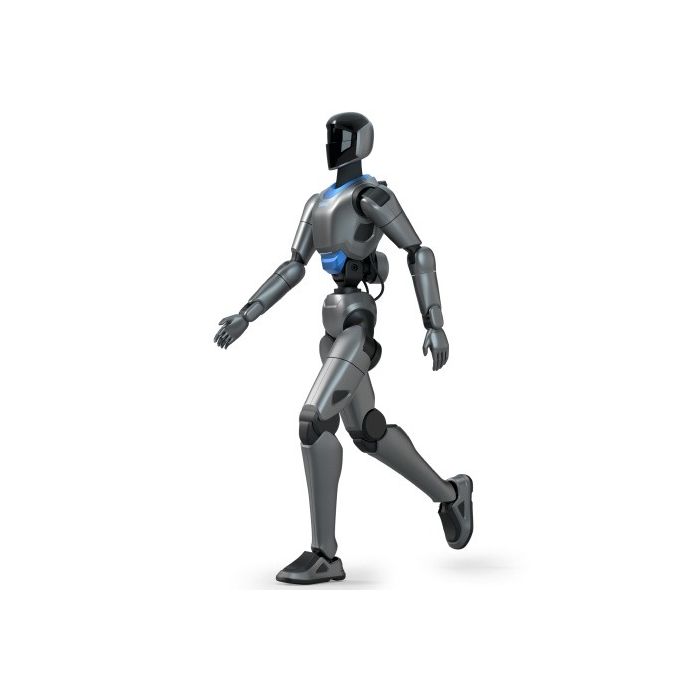
A humanoid robot is rarely judged on the day it arrives. It is judged months later, when an engineer tries to mount a sensor, feed it a language model or send it down a busy corridor, and discovers whether the machine was built to be opened up or only to be admired. The Galileo GH1 Humanoid Robot is designed for that second test. It pairs a fully articulated bipedal body with exposed power rails, wired data ports, an onboard edge computer and an artificial intelligence platform intended to connect to large models, so that the work begins after unpacking rather than ending there.
Robots Middle East supplies the Galileo GH1 Humanoid Robot to universities, research institutes, industrial operators and commercial organisations across the Middle East. Robots Middle East prepares each quotation to the buyer's configuration, arranges delivery into the region and remains the point of contact for technical questions and after-sales support once the robot is in service.
Background
Galileo (Tianjin) Technology Co., Ltd.
The GH1 is made by Galileo (Tianjin) Technology Co., Ltd., a developer whose range spans several forms of mobile robot and sensing equipment. Alongside its humanoids, the company's catalogue includes quadruped robot dogs and 4D millimetre wave radar, which indicates a manufacturer that treats locomotion, perception and embodied intelligence as related disciplines rather than separate products. Within this portfolio, the GH1 is the bipedal humanoid, intended for settings in which a robot must operate in spaces arranged around the human body. Buyers exploring the wider class can browse our Bipedal Humanoids category.
Self-developed motors and an embodied intelligence platform
Two pieces of in-house technology define the GH1. The first is its set of self-developed high torque density joint motors, the core components that drive every articulated joint. In a humanoid, torque density matters because each actuator must deliver strong output while remaining compact and light enough to sit within a limb. The second is a self-developed embodied intelligent brain platform that can be integrated into any large model scenario. Together they give the GH1 its combination of outstanding power output and advanced artificial intelligence capabilities, suited to industrial operation, commercial public services and cutting-edge scientific research.
Technical Specifications
| Specification | Value |
|---|---|
| Weight | 45kg |
| Thigh and calf length | Thigh: 350mm; Calf: 412mm |
| Arm length (single) | 615mm |
| Total degrees of freedom (DOF) | 31 |
| Head DOF | 2 |
| Single arm DOF | 7 (Shoulder: 3; Elbow: 1; Wrist: 3) |
| Single leg DOF | 6 (Hip: 3; Knee: 1; Ankle: 2) |
| Waist DOF | 3 |
| Material | Aluminium alloy + industrial plastic |
| Core joint motors | Self-developed high torque density joint motors |
| Movement speed | 4m/s |
| Environmental perception | High-precision depth camera |
| Computing unit | Onboard edge computing unit |
| Battery capacity | 10Ah (444Wh) |
| Battery charging time | 2h |
| Charger input | 100-240V |
| External power interfaces | 48V; 24V; 5V (USB) |
| External communication interfaces | Ethernet; USB |
| Auto-charging function | Optional |
| Dexterous hand | Optional |
| Interaction | Voice and facial interaction; multilingual and multi-emotional expression |
Specifications are given as published by the manufacturer and are confirmed against the datasheet at quotation.
Galileo has not yet published the height, payload, battery runtime, IP rating, operating temperature range, wireless connectivity, operating system or SDK, or package contents; Robots Middle East confirms each of these with the quotation.
What can the Galileo GH1 connect to?
For an integration team, the most telling part of the GH1 specification is not a motion figure but its list of interfaces. The robot provides external power outputs at 48V, 24V and 5V over USB, which means additional sensors, payload electronics or experimental hardware can draw power from the robot itself rather than from a separate battery pack. Data leaves and enters the robot over Ethernet and USB, the two connections most laboratories and industrial systems already use, so the GH1 can be linked to a workstation, a local network or test equipment without proprietary adaptors.
Processing takes place on an onboard edge computing unit. Running perception and control on the robot keeps response local, which matters for a machine that walks and interacts with people. Above this sits Galileo's embodied intelligent brain platform, which can be integrated into any large model scenario. In practice, that positions the GH1 as a body to which an organisation can bring its chosen language or multimodal model, rather than a closed system with fixed behaviour. The 10Ah (444Wh) battery recharges in 2h from a charger accepting 100-240V, and an auto-charging function is available as an option for deployments where the robot should return to power without an operator.
How does the Galileo GH1 move and perceive its surroundings?
The GH1 carries 31 degrees of freedom, distributed as 2 in the head, 3 in the waist, 7 in each arm and 6 in each leg. Each arm is articulated with 3 degrees of freedom at the shoulder, 1 at the elbow and 3 at the wrist, a layout that mirrors the human arm closely enough for reaching, orienting and presenting objects. Each leg has 3 degrees of freedom at the hip, 1 at the knee and 2 at the ankle, which supports balanced bipedal walking. With a single arm length of 615mm, a thigh of 350mm and a calf of 412mm, the proportions are those of an adult-scale figure, and the frame of aluminium alloy and industrial plastic brings the total weight to 45kg.
Movement speed is 4m/s, driven by the self-developed high torque density joint motors. For perception, the robot relies on a high-precision depth camera, giving it three-dimensional awareness of the space around it. Interaction is handled through voice and facial expression, with support for multilingual and multi-emotional communication that makes exchanges with the robot more human-like. Where tasks call for finer manipulation, a dexterous hand is offered as an option.
Who is the Galileo GH1 Humanoid Robot for?
The GH1 is aimed at three groups, matching its intended fields of use. Research institutions and university laboratories form the first: teams working on locomotion, manipulation, human–robot interaction or embodied artificial intelligence need a platform with full articulation, open interfaces and onboard computing, and the GH1 provides all three. Organisations equipping such work may also find relevant platforms in our Research Robots category.
The second group is industrial operators exploring humanoid automation. A human-shaped robot can work in facilities laid out for people, and the GH1's external power rails and wired data ports make it practical to attach task-specific tooling or sensors during trials.
The third group is commercial and public-service organisations, such as visitor centres, exhibition venues and customer-facing facilities, where multilingual voice interaction and facial expression help a robot greet, guide and inform. The GH-1 is offered in consumer and industrial grades, and Robots Middle East advises which grade suits a given project. Buyers whose sites favour rolling rather than walking may wish to compare the Galileo SH1 Dual Arm Wheeled Humanoid Robot.
What is the Galileo GH1 Humanoid Robot used for?
- Embodied AI research: a physical platform for testing how large models plan and act through a full humanoid body.
- Locomotion studies: six degrees of freedom per leg support work on bipedal gait, balance and control.
- Manipulation development: seven-degree-of-freedom arms, with an optional dexterous hand, for grasping and handling experiments.
- Industrial operation trials: evaluating humanoid automation in facilities designed around human workers.
- Commercial public services: greeting, guidance and information with multilingual voice and facial interaction.
- Sensor and payload integration: attaching experimental hardware powered from the 48V, 24V and 5V outputs.
Pricing and Availability
The Galileo GH1 Humanoid Robot is supplied on quotation, because grade, options such as the dexterous hand and auto-charging, and integration requirements all shape the final configuration. Robots Middle East arranges delivery, customs clearance and technical support together with the quotation. To begin, please use the quotation request available on this page.
Frequently Asked Questions
How many degrees of freedom does the Galileo GH1 have?
The GH1 has 31 degrees of freedom in total: 2 in the head, 3 in the waist, 7 in each arm and 6 in each leg.
How fast can the Galileo GH1 move?
The GH1 has a movement speed of 4m/s.
What sensor does the GH1 use to perceive its environment?
Environmental perception is provided by a high-precision depth camera, with processing carried out on an onboard edge computing unit.
Can the GH1 work with a large language model?
Yes. The robot runs Galileo's self-developed embodied intelligent brain platform, which can be integrated into any large model scenario.
How long does the battery take to charge?
The 10Ah (444Wh) battery charges in 2h, and an auto-charging function is available as an option.
Is a dexterous hand included?
The dexterous hand is listed as optional, so it can be specified as part of the configuration when requesting a quotation.
Where can I buy the Galileo GH1 Humanoid Robot and what does it cost?
Robots Middle East supplies the GH1 across the Middle East on quotation. The cost depends on the chosen grade and options and is set out in a quotation prepared for your project.
Summary
The real measure of a humanoid robot is how well it accepts the work that follows delivery, and the Galileo GH1 Humanoid Robot is built with that in mind. Its 31 degrees of freedom, depth camera and self-developed high torque density motors give it a capable body; its 48V, 24V and 5V power outputs, Ethernet and USB ports and onboard edge computer make that body open to extension; and its embodied intelligence platform invites the integration of large models. For research teams, industrial evaluators and public-facing organisations in the Middle East that want a humanoid they can build upon, a quotation from Robots Middle East on this page is the starting point.