
Kepler Robotics K1 Humanoid Robot
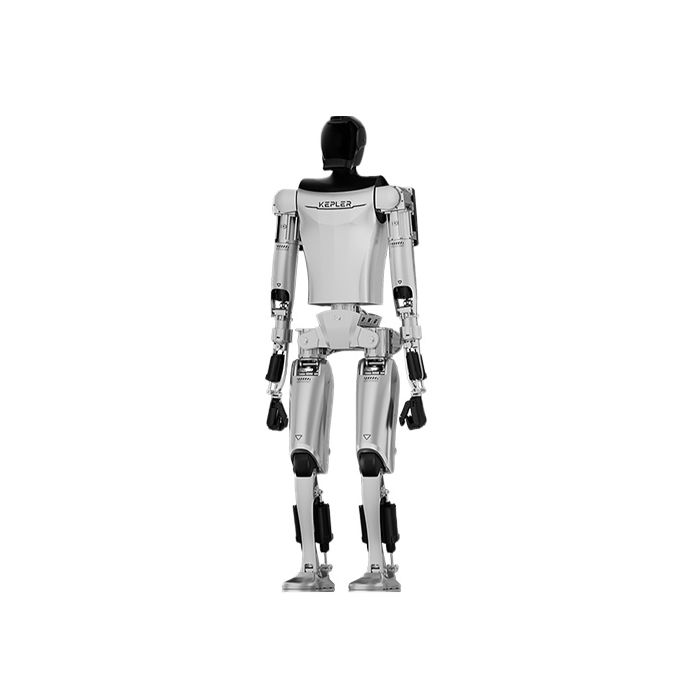
Out of stock
- BRAND:
- KEPLER
- MODEL:
- K1
- ORIGIN:
- China
- AVAILABILITY:
- SUBJECT TO AVAILABILITY
- SKU:
- Kepler-Robotics-K1
Kepler Robotics K1 Humanoid Robot
A worker on a production line is measured less by any single movement than by whether the whole shift gets done: picking, carrying, checking and returning to the start, hour after hour. The Kepler Robotics K1 Humanoid Robot is built around the same measure. Kepler designed it with 8-hour battery endurance, hands with 12 degrees of freedom and a body that runs on in-house actuators, so the question it invites is not whether a humanoid can impress for a few minutes, but whether it can share a working day with the people around it.
Robots Middle East sells the Kepler Robotics K1 Humanoid Robot and supplies it to organisations across the Middle East, from industrial operators and logistics groups to universities and research laboratories. Robots Middle East prepares each quotation, arranges delivery to the customer's site and remains the point of contact for support once the robot is in service.
Background
Kepler and the Forerunner lineage
Kepler is a Shanghai-based robotics company and one of a growing number of Chinese firms committing serious engineering resources to general-purpose humanoids. Its first humanoid line was the Forerunner series, which consists of three distinct models: K1, S1 and D1. The original Forerunner is the machine now called the K1, and it was launched in November 2023. The robot is the result of three years of intensive research and four product iterations, which places the K1 well beyond a first prototype: it is the outcome of a development programme that was refined several times before release.
Since then Kepler has continued to expand its range, and the later K2 generation appears separately in our catalogue. The K1 remains the reference point from which that family grew, and buyers who wish to understand the company's approach to humanoid design will find its core ideas already present here.
Actuation and a divided intelligence
Two decisions define the K1's engineering. The first concerns movement. Rather than relying on purchased drive units, Kepler fitted in-house roller-screw actuators in the arms and legs, together with custom rotary actuators for the waist and shoulder joints, and the legs use linear actuators. Controlling its own actuation allows a manufacturer to tune force, response and durability to the demands of a humanoid body instead of adapting components designed for other machines.
The second concerns thinking. The Forerunner series integrates a motherboard with a processor providing 100 TOPS of computing performance into Kepler's NEBULA system, supporting four primary functions: visual recognition, visual SLAM (Simultaneous Localization and Mapping), multimodal interaction and hand-eye coordination. On top of this, Kepler pairs a cloud-based multimodal large model with a smaller, industry-specific model deployed on the robot itself, so that routine decisions are taken locally for quicker response times while broader reasoning draws on the cloud.
Technical Specifications
| Specification | Value |
|---|---|
| Height | 5 ft., 10 in. (178 cm) |
| Weight | 187 lb. (85kg) |
| Body degrees of freedom | 40 DoF |
| Hand degrees of freedom | 12 degrees of freedom |
| Leg actuation | Linear actuators |
| Arm and leg actuators | In-house roller-screw actuators |
| Waist and shoulder actuators | Custom rotary actuators |
| Computing performance (Forerunner series) | 100 TOPS |
| Onboard functions | Visual recognition, visual SLAM, multimodal interaction, hand-eye coordination |
| AI models | Cloud-based multimodal large model plus a smaller industry-specific model on the robot |
| Total payload | Up to 25 kg (55 lb) |
| Battery endurance | 8-hour |
| Launch | November 2023 |
Specifications are as published by the manufacturer and are confirmed against the datasheet at quotation.
Kepler has not published the battery capacity, walking speed, charging time, IP rating, operating temperature, connectivity, included accessories, software SDK, camera and sensor models or operating system; these are confirmed at quotation.
Why does the K1 split its intelligence between the cloud and the robot?
A humanoid working near people cannot afford to hesitate. If every grasp or step had to wait for a remote server, a weak network connection would turn into a stalled robot. Kepler's answer is to keep a smaller, industry-specific model on the K1 itself, so that the decisions which matter moment to moment are handled on board, backed by the 100 TOPS processor at the heart of the NEBULA system.
The cloud-based multimodal large model serves a different purpose. It gives the robot access to broader understanding, the kind of reasoning that benefits from far more capacity than any onboard computer can carry. For a buyer, this architecture has practical consequences: the responsiveness of the robot on the floor depends mainly on the onboard model, while the depth of its interaction depends on the connection to the cloud. Sites with strict data policies or limited connectivity should therefore raise these points early in their discussions with Robots Middle East.
What do 40 degrees of freedom and dexterous hands mean in practice?
Degrees of freedom describe how many independent ways a robot can move. With 40 DoF across the body and hands offering 12 degrees of freedom, the K1 is designed to adopt postures and grips close to those of a person, rather than the single, repeated motion of a fixed industrial arm. Its hands are sensor-packed and human-like, intended for grasping objects of varied shapes.
That dexterity becomes useful because of what supports it. A total payload of up to 25 kg (55 lb) means the robot is intended to handle genuine work items, not merely demonstration props, and hand-eye coordination ties what the robot sees to what its hands do. Combined with the 8-hour battery endurance, these characteristics point towards sustained, practical tasks: moving containers, handling parts and carrying out checks within spaces originally laid out for human staff.
Who is the Kepler Robotics K1 Humanoid Robot for?
Manufacturers exploring how humanoids could take on repetitive or physically demanding stations are a natural audience. The K1's human proportions allow it to be evaluated in existing work cells, which makes it well suited to pilot projects that test feasibility before larger investment. Logistics and warehousing operators form a second group, particularly where goods are handled in aisles and on shelving designed for people.
Universities, technical colleges and research institutes are a third. Education and research are among the K1's target applications, and a platform with in-house actuation, onboard AI and a cloud model offers rich material for teaching and experimentation in locomotion, manipulation and human–robot interaction. Inspection teams, finally, may see value in a mobile robot with visual recognition and visual SLAM that can move through facilities and observe equipment.
Buyers who would like to compare the K1 with Kepler's later generation can review the Kepler K2 Bumblebee Humanoid Robot, the Kepler K2 Hornet Humanoid Robot and the Kepler K2 Hornet Wheeled Humanoid Robot. A broader view of the market is available in our Bipedal Humanoids and Humanoids categories.
What is the Kepler Robotics K1 Humanoid Robot used for?
- Manufacturing support: handling parts and assisting at stations laid out for human operators.
- Logistics handling: moving loads and containers within warehouses and distribution centres.
- Education: giving students hands-on experience with a complete humanoid platform.
- Research: studying bipedal locomotion, dexterous grasping and multimodal interaction.
- Inspection tasks: moving through facilities and using visual recognition to observe equipment and conditions.
- Automation pilots: testing how a humanoid fits into existing workflows before wider deployment.
Pricing and Availability
The Kepler Robotics K1 Humanoid Robot is supplied on quotation, which allows Robots Middle East to reflect the configuration, intended application and site requirements of each project. Delivery, customs and support are arranged together with the quotation, so that every practical step is agreed before the order is confirmed. To begin, please share a short description of your intended use and location; a personalised quotation for the Kepler Robotics K1 Humanoid Robot is available on this page.
Frequently Asked Questions
How long can the K1 operate on a single charge?
The K1 offers 8-hour battery endurance, enough to cover a typical working shift.
How much can the K1 carry?
The K1 works with total payloads of up to 25 kg (55 lb), using its sensor-packed, human-like hands for grasping objects.
How tall and heavy is the K1?
The K1 stands 5 ft., 10 in. (178 cm) and weighs 187 lb. (85kg), proportions close to those of an adult person.
Does the K1 depend entirely on the cloud?
No. It combines a cloud-based multimodal large model with a smaller, industry-specific model running on the robot itself for quicker response times.
What type of actuators does the K1 use?
It uses in-house roller-screw actuators in the arms and legs, linear actuators for the legs and custom rotary actuators for the waist and shoulder joints.
What computing power does the K1 carry?
The Forerunner series, to which the K1 belongs, integrates a processor providing 100 TOPS of computing performance into the NEBULA system. This supports visual recognition, visual SLAM, multimodal interaction and hand-eye coordination.
Where can I buy the Kepler Robotics K1 Humanoid Robot and what does it cost?
You can buy the Kepler Robotics K1 Humanoid Robot from Robots Middle East, which supplies it across the Middle East. The cost depends on your configuration and project, so it is given in a personalised quotation requested from this page.
Summary
The Kepler Robotics K1 Humanoid Robot is best judged as a candidate for the working day rather than the showroom. Kepler's original Forerunner brings 8-hour battery endurance, a 40 DoF body, dexterous hands, in-house actuation and an intelligence that is split between an onboard model and the cloud, all shaped by three years of research and four iterations. For manufacturers, logistics operators, educators, researchers and inspection teams in the Middle East who wish to explore what a humanoid could contribute over a full shift, this page is the starting point.