
Unitree H2-A Standard H Humanoid Robot
In stock
- BRAND:
- UNITREE ROBOTICS
- MODEL:
- H2-A-Standard-H
- PART #:
- H2-A-Standard-H
- ORIGIN:
- China
- Warranty:
- 12 MONTHS
- AVAILABILITY:
- SUBJECT TO AVAILABILITY
- SKU:
- Unitree-H2-A-Standard-H
Unitree H2-A Standard H Humanoid Robot
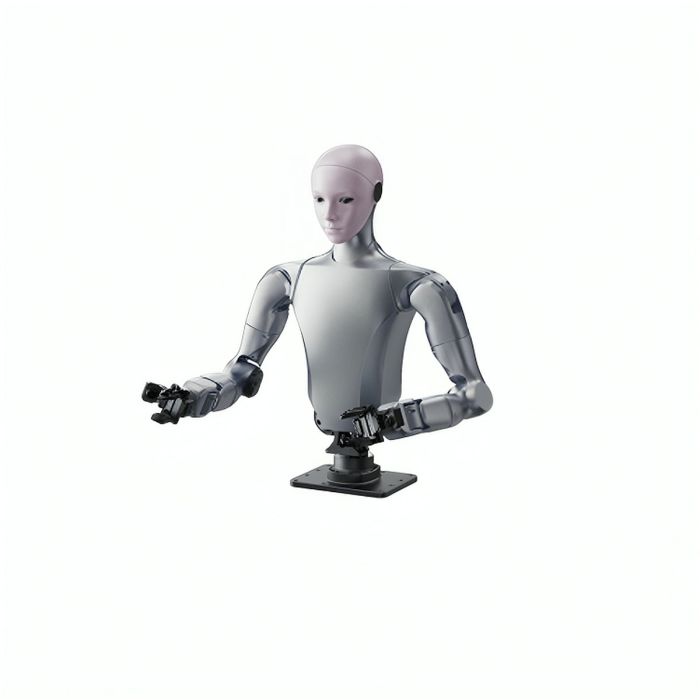
Every humanoid robot is a negotiation between force and finesse. The legs must carry the whole machine across real floors, the arms must handle objects without crushing them, and the head must give the people nearby something they can read. The Unitree H2-A Standard H Humanoid Robot settles that negotiation in concrete terms: leg joints with a maximum torque of 360N.m, arms with seven degrees of freedom each and a maximum arm joint torque of 120N.m, and a bionic head with facial features on a 180 cm humanoid frame. This article explains how those elements fit together, how the two published versions of the H2 platform differ, and what a buyer should settle before placing an order.
Robots Middle East sells the Unitree H2-A Standard H Humanoid Robot to universities, research laboratories, system integrators and corporate innovation teams throughout the Middle East. Robots Middle East prepares each quotation for the configuration requested, arranges delivery to the customer's site and remains the point of contact for technical support once the robot is in service.
Background
Unitree Robotics and its route to full-size humanoids
Unitree Robotics built its reputation on legged machines, first with quadruped robots and then with humanoid platforms intended for research, education and applied robotics. The H2 family sits at the full-size end of that range: a robot designed to share the proportions of an adult, so that it can be studied, programmed and demonstrated in spaces that were planned around people. The company's approach has consistently paired in-house actuators and motion-control software, and the H2 continues that pattern with a body built from aircraft-grade aluminium, titanium alloy and high-strength engineering plastics.
Motion control as the core technology
Unitree presents the H2 around its motion-control algorithms: 31 degrees of freedom, 360N.m of joint torque and precise replication of dynamic movement. The algorithms evolve continuously through over-the-air (OTA) updates, which means the robot's movement behaviour is not fixed at the point of delivery. The degrees of freedom are distributed as six per leg, seven per arm, three in the waist and two in the head. That waist articulation matters in practice, because it lets the upper body turn and lean independently of the legs, while the head's two degrees of freedom allow the bionic face and binocular camera to be directed towards a person or an object.
Technical Specifications
| Specification | H2 | H2 EDU |
|---|---|---|
| Height, width and thickness (standing) | 1820 x 456 x 218mm | 1820 x 456 x 218mm |
| Weight (with battery) | About 70kg | About 70kg |
| Degrees of freedom (total joints) | 31 | 31 |
| Single leg degrees of freedom | 6 | 6 |
| Single arm degrees of freedom | 7 | 7 |
| Waist degrees of freedom | 3 | 3 |
| Head degrees of freedom | 2 | 2 |
| Bionic head with facial features | Yes | Yes |
| Maximum torque of leg joint | 360N.m | 360N.m |
| Maximum torque of arm joint | 120N.m | 120N.m |
| Arm maximum payload | Peak: ~15 kg; Rated: ~7 kg | Peak: ~15 kg; Rated: ~7 kg |
| Battery capacity | 15Ah(0.972KWh) | 15Ah(0.972KWh) |
| Battery voltage | Maximum Voltage: 75.6 V | Maximum Voltage: 75.6 V |
| Battery life | About 3h | About 3h |
| Materials | Aircraft-Grade Aluminum + Titanium Alloy + High-Strength Engineering Plastics | Aircraft-Grade Aluminum + Titanium Alloy + High-Strength Engineering Plastics |
| Basic computing | PC1: Intel Core i5 (Platform Capabilities) | PC1: Intel Core i5 (Platform Capabilities); PC2: Intel Core i7 (Custom Development) |
| Sensing | Humanoid Binocular Camera with Wide Field of View | Humanoid Binocular Camera with Wide Field of View |
| Voice interaction | Array Microphone and High-Power Speaker | Array Microphone and High-Power Speaker |
| WiFi 6, Bluetooth 5.2 | Yes | Yes |
| Smart battery (quick release) | Yes | Yes |
| Charger | Yes | Yes |
| Manual controller | Yes | Yes |
| Secondary development | Not available | Yes |
Specifications as published by the manufacturer; they are confirmed against the datasheet at quotation.
The manufacturer has not published the top speed, the ingress protection rating, the operating temperature range, the camera resolution, the charging time, the charger's power rating, the packaged dimensions and weight or the operating system, so Robots Middle East confirms these at quotation.
What does the H2 EDU add over the H2?
Mechanically, the two published versions are identical. They share the same standing dimensions, the same weight with battery, the same 31 degrees of freedom, the same joint torques and the same arm payload. They also share the binocular camera, the microphone array and speaker, WiFi 6 and Bluetooth 5.2, and the same quick-release smart battery, charger and manual controller in the box.
The difference lies in what the buyer is permitted to build on top. The H2 carries one computer, PC1 with an Intel Core i5, which runs the platform's own capabilities. The H2 EDU keeps that PC1 and adds PC2, an Intel Core i7 reserved for custom development, and it is the version marked as supporting secondary development. For an organisation that wants to write its own perception, manipulation or interaction software, that second computer and the development access that comes with it are the decisive factor. For an organisation that intends to use the robot with Unitree's own functions, the H2 covers the same physical capability. Unitree also lists a high-power compute module option up to Jetson AGX Thor (2070 TOPS) for the H2 platform; which version and package that option applies to is a point Robots Middle East settles in the quotation.
How long does the robot work on a single battery?
The H2 platform runs on a 15Ah(0.972KWh) battery with a maximum voltage of 75.6 V, and Unitree gives the battery life as about 3h. That figure frames how a session is planned: a morning of locomotion trials, a demonstration block at an exhibition, or a teaching session with time left for data review. Because the smart battery is a quick-release design, the pack is built to be changed without dismantling the robot, which suits facilities that want to keep the robot available across a longer day. Teams planning continuous use should discuss additional batteries and charging arrangements when requesting a quotation, since the charging time is not published.
Who is the Unitree H2-A Standard H Humanoid Robot for?
The most natural buyers are research laboratories studying bipedal locomotion, whole-body control and human-robot interaction. A platform with 31 degrees of freedom, a three-axis waist and seven-axis arms gives such groups enough articulation to test realistic movement rather than simplified gaits. University departments in robotics, mechatronics and artificial intelligence form a second group; for them the presence of secondary development is usually essential, which points towards the H2 EDU configuration with its dedicated Intel Core i7 development computer.
A third group consists of organisations that want a full-size humanoid to represent innovation in public: visitor centres, corporate headquarters, exhibitions and events. Here the bionic head with facial features, the array microphone and the high-power speaker carry as much weight as the joint torques, and the standard H2 configuration may well be sufficient. System integrators evaluating humanoids for future deployment make up a fourth group, interested in the arm payload, the materials and the OTA-updated motion control.
The H2-A range is offered in several packages, including the Unitree H2-A Standard A Humanoid Robot, the Unitree H2-A Standard B Humanoid Robot and the Unitree H2-A Standard C Humanoid Robot. The published sources do not set out what distinguishes each package, so Robots Middle East compares the packages against your requirements before quoting.
What is the Unitree H2-A Standard H Humanoid Robot used for?
- Locomotion research: studying balance, gait and dynamic movement on a full-size bipedal body.
- Human-robot interaction: testing how people respond to a robot with a bionic face, voice and human proportions.
- Teaching and coursework: giving students a real humanoid on which to learn control, perception and software integration.
- Manipulation trials: evaluating grasping and carrying tasks within the published arm payload.
- Embodied AI development: running custom models on the development computer of the EDU configuration.
- Public engagement: presenting a lifelike humanoid at exhibitions, reception areas and innovation showcases.
Pricing and Availability
Robots Middle East prices the Unitree H2-A Standard H Humanoid Robot by quotation, because the final figure depends on the version, the compute options, any additional batteries and the support package you require. Delivery, customs clearance and after-sales support are arranged together with the quotation. To begin, tell us how you intend to use the robot and whether you need secondary development; the request form is available on this page.
Frequently Asked Questions
How tall is the Unitree H2-A Standard H Humanoid Robot?
Unitree describes the H2 as a 180 cm humanoid design, and its standing dimensions are given as 1820 x 456 x 218mm. It weighs about 70kg with the battery fitted.
How long does the battery last?
Battery life is about 3h from a 15Ah(0.972KWh) smart battery. The battery is a quick-release design.
Can I develop my own software for the robot?
Secondary development is available on the H2 EDU, which adds a PC2 with an Intel Core i7 for custom development. The H2 version is not marked for secondary development.
How much can the arms carry?
The arm maximum payload is given as a peak of ~15 kg and a rated value of ~7 kg. Each arm has seven degrees of freedom and a maximum joint torque of 120N.m.
What comes in the box?
Both versions include a quick-release smart battery, a charger and a manual controller. Robots Middle East confirms the full packing list in the quotation.
How does the robot connect and communicate?
It supports WiFi 6 and Bluetooth 5.2, and it uses an array microphone with a high-power speaker for voice interaction. Its vision comes from a humanoid binocular camera with a wide field of view.
Where can I buy the Unitree H2-A Standard H Humanoid Robot and what does it cost?
You can buy it from Robots Middle East, which supplies it across the Middle East. The cost is set by quotation according to the configuration and services you choose.
Summary
The Unitree H2-A Standard H Humanoid Robot resolves the tension between force and finesse with a clear division of labour: powerful legs to carry a full-size body, articulated arms for handling, a flexible waist, and a bionic head that turns the machine into something people can engage with. The choice that remains with the buyer concerns software rather than mechanics, since the H2 and H2 EDU share the same body while only the EDU opens the platform to secondary development. For organisations in the Middle East weighing a first full-size humanoid, a conversation with Robots Middle East about that choice is the sensible first step, and this page is the starting point.