
Unitree H2-A Standard J Humanoid Robot
In stock
- BRAND:
- UNITREE ROBOTICS
- MODEL:
- H2-A-Standard-J
- PART #:
- H2-A-Standard-J
- ORIGIN:
- China
- Warranty:
- 12 MONTHS
- AVAILABILITY:
- SUBJECT TO AVAILABILITY
- SKU:
- Unitree-H2-A-Standard-J
Unitree H2-A Standard J Humanoid Robot
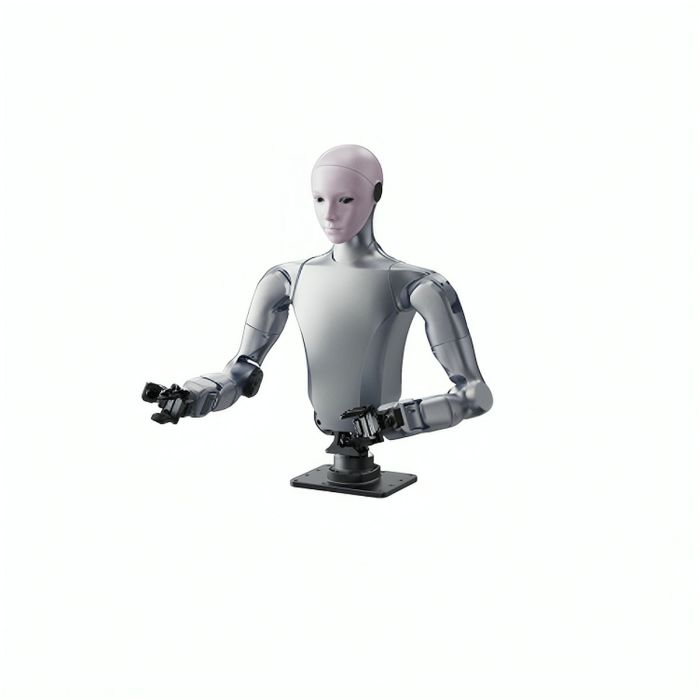
Some buyers want a humanoid they can reprogram line by line. Many more want one that arrives already suited to its role. The Unitree H2-A Standard J Humanoid Robot belongs firmly to the second group. It is a full adult-sized machine with a bionic head bearing facial features, a binocular camera with a wide field of view, an array microphone and a high-power speaker. Its intelligence runs on a platform computer that Unitree improves through over-the-air updates, not on an open developer board. For a venue, a showroom or a corporate innovation office, that trade of less freedom to rewrite for more readiness to stand in front of people is often exactly the point.
Robots Middle East supplies the Unitree H2-A Standard J Humanoid Robot to companies, public bodies and institutions across the Middle East. Our team prepares each quotation for this configuration and coordinates delivery to your site. We remain your point of contact for support after the robot enters service, so questions about the package, the documentation or the update cycle have one address in the region.
Background
Unitree Robotics and its path to full-size humanoids
Unitree Robotics, based in Hangzhou, China, built its reputation on agile quadruped robots before extending its work to bipedal humanoids. That lineage shows in the company's focus on joint actuators and dynamic locomotion control. The engineering that keeps a four-legged robot steady on uneven ground carries over to a machine that must balance on two. The H2 family is the company's full-height humanoid line. The sources name three versions: H2 (Basic/Standard), H2 EDU and H2 Plus. The Standard J offered here belongs to the Standard tier of that family.
A humanoid arranged around presence and interaction
Many humanoids are positioned as research rigs. The Standard configuration of the H2 is arranged around how it meets people. The bionic head with facial features gives visitors a face to address, and the wide-field binocular camera gives the robot a human-like line of sight. The array microphone and high-power speaker handle spoken exchange. The waist, with three degrees of freedom, lets the upper body turn and lean in conversation and in handling tasks. The structure combines aircraft-grade aluminium, titanium alloy and high-strength engineering plastics, and the complete robot weighs about 70kg with its battery fitted. WiFi 6 and Bluetooth 5.2 connect it to the surrounding network and devices.
Technical Specifications
| Specification | Value |
|---|---|
| Dimensions (standing, height x width x thickness) | 1820 x 456 x 218mm |
| Weight (with battery) | About 70kg |
| Total degrees of freedom | 31 |
| Degrees of freedom per leg | 6 |
| Degrees of freedom per arm | 7 |
| Waist degrees of freedom | 3 |
| Maximum arm joint torque | 120N.m |
| Maximum leg joint torque | 360N.m |
| Arm maximum payload | Peak: ~15 kg; Rated: ~7 kg |
| Materials | Aircraft-grade aluminium, titanium alloy and high-strength engineering plastics |
| Sensing | Humanoid binocular camera with wide field of view |
| Voice interaction | Array microphone and high-power speaker |
| Bionic head | Bionic head with facial features |
| Wireless connectivity | WiFi 6, Bluetooth 5.2 |
| Battery life | About 3h |
| Battery capacity | 15Ah (0.972 kWh) |
| Battery voltage | 75.6 V |
| Onboard computing | PC1 (platform function): Intel Core i5; PC2 (user development): not supported |
| Secondary development | Not supported |
| Software updates | Algorithms evolve continuously via OTA |
Specifications are as published by the manufacturer and are confirmed against the datasheet at quotation.
The manufacturer has not published the top speed, the IP rating, the camera resolution, the operating temperature range, the charging time or the weight of the battery; these are confirmed at quotation.
What does it mean that the H2-A Standard J does not support secondary development?
The computing arrangement settles this question. The Standard configuration carries one platform computer, PC1, built on an Intel Core i5, which runs the functions Unitree provides. A second computer for user development, PC2, is not supported, and secondary development is listed as not supported. In practice, your organisation operates the robot through the manufacturer's own capabilities rather than writing its own control software, perception pipelines or custom behaviours.
That is not a static position. Unitree states that the robot's algorithms evolve continuously through over-the-air updates, so the platform improves without your team maintaining a codebase. For a hotel, a retailer or an exhibition organiser, this is usually an advantage. There is no development backlog and no engineering staff to retain, and the robot runs a supported software stack rather than a local fork. For a laboratory or a software team that intends to build its own applications, the restriction matters. Those buyers should discuss the H2 EDU version with our team before committing; the sources list it alongside the Standard.
How much can the H2-A Standard J carry, and for how long?
Each arm has seven degrees of freedom and a maximum joint torque of 120N.m. The rated arm payload is ~7 kg, with a peak of ~15 kg. The rated value is the one to plan routine tasks around, such as handing over items, carrying a tray or holding a display. The peak value describes what the arm can manage briefly. The legs, with six degrees of freedom each and a maximum joint torque of 360N.m, support a machine of about 70kg standing 1820mm tall.
Endurance is about 3h per battery, from a pack rated at 15Ah (0.972 kWh) at 75.6 V. For a reception desk or an exhibition stand, that suggests planning the day in sessions with charging between them. Robots Middle East can advise on scheduling those sessions so that the robot stays in service across a full working day.
Who is the Unitree H2-A Standard J Humanoid Robot for?
The clearest fit is any organisation whose main requirement is a human-scale presence that people can talk to. Hospitality groups, shopping destinations, banks and government service centres can place the robot at a point of first contact, where the bionic head and voice interaction matter more than custom code. Exhibition and event organisers, a significant market across the Gulf, gain a full-height humanoid that draws visitors without a programming team on site. Corporate innovation units and museums can use it to show the public and their own leadership what current humanoid robotics looks like at full size.
Buyers whose plans depend on writing their own software are better served elsewhere in the family. On this Standard configuration, secondary development is not supported and the user-development computer is absent, so universities, research institutes and integrators should ask about the H2 EDU version. Robots Middle East also lists neighbouring Standard packages, including the Unitree H2-A Standard A Humanoid Robot, the Unitree H2-A Standard B Humanoid Robot and the Unitree H2-A Standard C Humanoid Robot. We recommend comparing the contents of each lettered package with our team before you decide which one matches your project.
What is the Unitree H2-A Standard J Humanoid Robot used for?
- Reception and visitor welcome: greeting guests in lobbies and service halls through its voice interaction hardware and expressive bionic head.
- Exhibitions and trade events: drawing visitors to a stand with a full adult-sized humanoid that requires no on-site programming.
- Retail and brand experiences: giving flagship stores and showrooms an attraction that engages customers in conversation.
- Public engagement in museums and science centres: demonstrating humanoid robotics to schools, families and visiting delegations.
- Corporate innovation showcases: letting leadership teams and partners assess a current humanoid platform in their own premises.
- Light handling demonstrations: showing items being carried or handed over within the rated arm payload.
Pricing and Availability
The Unitree H2-A Standard J Humanoid Robot is supplied on quotation, prepared for your organisation and your intended use. Robots Middle East sets out the exact package contents and documentation in that quotation, so you are comparing a defined configuration rather than a general listing. Delivery, customs clearance and after-sales support are arranged together with the quotation. To begin, send us a brief description of your site and application; the request form for a quotation is available on this page.
Frequently Asked Questions
How large and heavy is the Unitree H2-A Standard J Humanoid Robot?
Standing, it measures 1820 x 456 x 218mm (height, width and thickness). It weighs about 70kg with its battery fitted.
How long does the battery last?
Battery life is about 3h from a 15Ah (0.972 kWh) pack at 75.6 V. For a full day of use, plan operation in sessions with charging between them.
Can my team program the robot or install its own software?
No. Secondary development is not supported on this Standard configuration, and the user-development computer is not included. The robot runs Unitree's platform functions, which are improved through over-the-air updates.
How does the robot interact with people?
It combines a bionic head with facial features, a binocular camera with a wide field of view, an array microphone and a high-power speaker for voice interaction.
What can its arms carry?
The rated arm payload is ~7 kg and the peak is ~15 kg, with a maximum arm joint torque of 120N.m. Routine tasks should be planned around the rated figure.
How does the robot connect to our network?
It supports WiFi 6 and Bluetooth 5.2. This allows it to join your site network and pair with nearby devices.
Where can I buy the Unitree H2-A Standard J Humanoid Robot and what does it cost?
You can buy it from Robots Middle East, which supplies it across the Middle East. The cost is given in a quotation prepared for your configuration, delivery destination and support requirements, so please request one through this page.
Summary
The Unitree H2-A Standard J Humanoid Robot is built for organisations that want a humanoid ready for its audience rather than a development kit. It offers 31 degrees of freedom, a waist that turns and leans, seven-joint arms, a bionic head and voice interaction hardware in a frame of aluminium, titanium alloy and engineering plastics. Unitree keeps its software moving forward over the air. The closed platform is the defining choice: it suits venues, events and showcases, while development teams should look towards the EDU version. Robots Middle East prepares the quotation, arranges delivery and customs, and supports the robot after it enters service. For a human-scale robot that people can approach and talk to, this page is the starting point.