
BMR Floor Screeding Robot
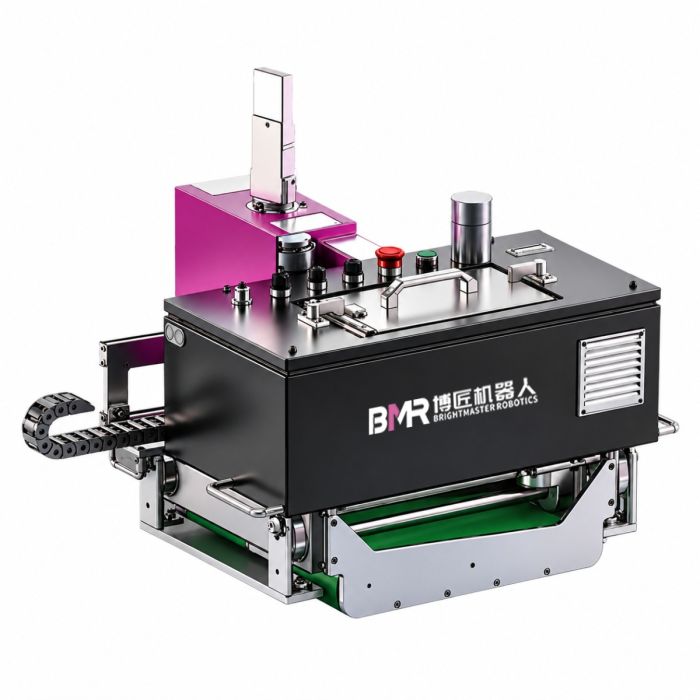
In stock
- ماركة:
- BMR
- ORIGIN:
- الصين
- Warranty:
- 12 MONTHS
- AVAILABILITY:
- SUBJECT TO AVAILABILITY
- SKU:
- BMR-Floor-Screeding-Robot
Floor Screeding Robot
The floor a building's occupants walk on is almost never the floor its structure provides. Between the structural slab and the tile, timber, vinyl or resin above it lies the screed — a bed of mortar, often laid semi-dry from dry-mix material, whose entire job is to be flat: the sacrificial layer where levels are corrected, falls are formed, heating pipes are buried, and the tolerance the finish demands is manufactured by hand. And "by hand" is the operative phrase: screeding is the kneeling trade — rails set, mortar barrowed, straightedges dragged metre by metre by workers folded double across every square metre of every storey, with the floor's final quality resting on how steady the hundredth pull is compared to the first. The BMR Floor Screeding Robot stands that trade upright. Taking its place in BrightMaster Robotics' concrete construction line between the leveling robot that strikes the wet slab and the finishing robot that trowels it, the screeding robot mechanises the layer in between: laying and leveling the mortar screed bed to a set plane, machine-consistent across the floor plate, within the dry-mix mortar flooring workflows the manufacturer's own application engineering centres on. The flatness that once depended on a craftsman's lumbar endurance becomes a parameter the machine holds from the first room to the last — and the trade that wore out backs and knees becomes a supervised operation in BMR's coordinated, data-reporting robot fleet.
The Floor Screeding Robot is available for purchase internationally through this page, with delivery, customs clearance and after-sales support arranged for buyers across Europe, the Americas, the Middle East, Asia-Pacific and worldwide.
Background
The layer where flatness is actually made
Specifiers write flatness tolerances against the finished floor, but structural concrete is poured to structural tolerances — which is why the screed exists: it is the correction layer, the plane-maker, the surface the floor covering actually meets. That makes screeding quality disproportionately consequential. A screed laid wavy telegraphs through every finish above it — lippage in tile, voids under vinyl, rejected resin floors — and correcting it after curing means grinding or relaying at multiples of the original cost. It is also the layer modern buildings keep loading with function: underfloor heating circuits, acoustic separation, falls to drainage — each raising the precision stakes of the same stooped manual process. Mechanising exactly this layer is therefore not a marginal automation; it is quality control inserted at the point where the finished floor's geometry is decided, with the manual trade's chief variables — fatigue, inconsistency between operatives, and the day's two-thousandth straightedge pull — removed from the equation.
One machine in a sequenced concrete line
Shenzhen BrightMaster Robotics — the industry's market-share leader, global exclusive agent of the Bozhilin construction-robot portfolio, with more than 5,200 robots delivered, over 1,600 projects deployed and a cumulative built area beyond 40 million square metres across 13 international markets — builds the Floor Screeding Robot as a stage in a machine-run workflow rather than a standalone gadget. Upstream, the intelligent placing pump distributes and the concrete leveling robot strikes the structural slab; the screeding robot then establishes the finished plane; the floor grinding and coating robots prepare and seal where resin systems follow; and the measuring robot closes the loop, scanning the result against tolerance at millimetre accuracy and routing deviations back as work orders. The company's dry-mix mortar application engineering — the subject of its own recent technical publications — frames the screeding robot's home territory: factory-batched screed materials whose consistency finally matches the consistency a machine can lay them with.
Technical Overview
| Aspect | BMR Floor Screeding Robot |
|---|---|
| Type | automated screed-laying and leveling robot |
| Product line | BMR Concrete Construction series (with the Concrete Leveling Robot, Concrete Finishing Robot and Intelligent Follow-up Concrete Placing Pump) |
| Function | laying and leveling mortar screed layers to a set plane |
| Material focus | dry-mix and mortar screeds, per BMR's dry-mix mortar flooring application engineering |
| Workflow position | after structural-slab leveling and finishing; before floor grinding, coating and finish installation |
| Quality loop | compatible with BMR measuring-robot verification and multi-robot coordination under the company's cloud management layer |
| Applications | residential, commercial, industrial and public-building flooring; screed beds beneath tile, timber, vinyl and resin systems |
| Manufacturer | Shenzhen BrightMaster Robotics — 5,200+ robots delivered, 1,600+ projects, 40,000,000+ m² built; global exclusive agent of the Bozhilin portfolio |
BMR publishes the machine's detailed engineering parameters — working width, laying efficiency, plane accuracy, power and endurance — through its datasheet channel; figures are confirmed against the current datasheet at quotation.
Why automate screeding rather than just the slab?
Because the slab's robots stop one layer too early to protect the finish. A perfectly leveled and troweled structural slab still hands the flooring trades a surface laid to structural tolerance; the screed is where finish tolerance is created, and leaving that layer manual means the project's most automated concrete work is still graded, in the end, by its least automated step. Automating the screed closes the gap three ways. Consistency: a machine lays the same bed density and plane in room two hundred as in room one — the uniformity on which large tile formats, thin resin systems and heated-floor coverings all depend. Schedule: screeding is a serial, crew-limited trade whose pace sets fit-out start dates floor by floor; machine laying decouples that pace from gang availability. And labour: the trade's ergonomic cost — the knees, the backs, the churn of workers who leave it — is precisely the kind of repetitive physical burden BMR's whole portfolio exists to retire. On a project already running the leveling, finishing and measuring robots, the screeding robot is the missing storey of the same argument.
Who is the Floor Screeding Robot for?
For screeding and flooring contractors laying mortar beds at residential, hotel and apartment scale, where hundreds of near-identical rooms reward machine repetition most; for general contractors and developers whose fit-out schedules queue behind screed gangs, and whose finish warranties queue behind screed quality; for underfloor-heating and acoustic-floor specialists, whose systems demand plane accuracy over embedded services; for industrial and commercial builders preparing beds beneath large-format tile and resin floors, in combination with BMR's grinding and coating robots downstream; and for operators of the wider BMR fleet, for whom the screeding robot completes the slab-to-finish chain under one coordination layer and one supplier. Projects whose leveling need sits in the wet structural pour itself are served by the Concrete Leveling Robot beside it in the line — the two machines are stages, not substitutes.
What is the Floor Screeding Robot used for?
- Mortar screed laying: machine-consistent spreading and leveling of dry-mix and mortar screed beds.
- Finish-plane creation: establishing the set plane that tile, timber, vinyl and resin floors are laid against.
- Residential and hotel flooring: repetitive room-by-room screeding across towers and developments.
- Screeds over services: plane-accurate beds above underfloor heating and embedded installations.
- Commercial and industrial floors: screed preparation beneath large-format and high-specification finishes.
- Multi-robot concrete workflows: the screed stage within BMR's coordinated slab-to-finish construction line.
Pricing and Availability
The Floor Screeding Robot is available for purchase and international delivery through this page, as a single machine for a screeding contractor or within coordinated BMR packages alongside the concrete leveling, finishing, placing, grinding, coating and measuring robots. Price and cost depend on configuration, consumables and wear-part provisioning, training and commissioning scope, and quantity, so buyers should request a current quotation for their project profile — which also confirms the machine's full engineering datasheet; delivery, customs clearance and after-sales support are arranged worldwide. Purchase enquiries, datasheets and availability details for the Floor Screeding Robot are available on this page.
Frequently Asked Questions
What is the BMR Floor Screeding Robot?
An automated screed-laying machine from BrightMaster Robotics' concrete construction line that levels dry-mix and mortar screed layers to a set plane — mechanising the trade that creates the finished floor plane between the structural slab and the final floor covering.
How is it different from the Concrete Leveling Robot?
By layer and material: the Concrete Leveling Robot strikes and levels fresh wet concrete during the structural pour, while the Screeding Robot lays and levels the mortar screed bed above the cured slab — a different stage, a different material, and the layer where finish-grade flatness is actually made.
Why does screed quality matter so much?
Because every floor finish inherits it: lippage in tile, voids under vinyl and failures in thin resin systems all trace back to screed flatness, and correcting a cured screed costs multiples of laying it right — which is exactly what machine consistency protects.
Which materials does it work with?
Dry-mix and mortar screed systems are its engineered territory — the factory-batched materials BMR's own application publications centre on — with specific mixes confirmed by specification at quotation.
Does it work with BMR's other robots?
By design: it takes the slab from the leveling and finishing robots, hands its plane to the grinding and coating robots where resin floors follow, and is verified by the measuring robot — all coordinated under BMR's multi-robot management layer.
Who manufactures it?
Shenzhen BrightMaster Robotics — the market-share leader in intelligent construction, global exclusive agent of the Bozhilin construction-robot portfolio, with more than 5,200 robots delivered, 1,600-plus projects and over 40 million square metres built across 13 markets.
Where can I buy the Floor Screeding Robot and what does it cost?
The Floor Screeding Robot is available through this page, with delivery, customs clearance and after-sales support arranged for buyers worldwide. Because cost varies with configuration, consumables and quantity, buyers should request an individual quotation — which also provides the current full datasheet. All purchasing details are available on this page.
Summary
The Floor Screeding Robot automates the layer where floors are truly made: the mortar bed between structure and finish, where flatness is manufactured, services are buried and the kneeling trade has always paid the price. Machine-laid to a set plane and slotted into BMR's slab-to-finish robot line — placed, leveled, screeded, ground, coated and measured under one coordination layer — it converts the finish schedule's most body-breaking bottleneck into supervised, repeatable machine time, backed by the manufacturer with the industry's deepest deployment record. For contractors who know every floor is judged by its last centimetres, this page is the starting point.