
Humanoid Robots
Humanoid Robots: The Definitive Guide to the Technology Reshaping Civilization (2026)
Overview and Definition
A humanoid robot is a robotic system constructed with a body morphology that approximates the structure of the human body — typically featuring a head, torso, two arms, two hands, and two legs — and designed to operate in environments, use tools, and interact with objects built for human beings. The fundamental premise of humanoid robot design is anthropomorphic compatibility: by replicating the physical form of humans, these machines can, in principle, navigate any space a human can navigate, operate any tool a human can operate, and interact with any human-built infrastructure without requiring specialized modifications.
The term encompasses a broad spectrum of platforms — from compact educational robots with limited mobility to full-size industrial humanoids capable of continuous manufacturing-floor deployment — and distinguishes itself from other robot types by the primacy of human-form design as both a functional and social imperative.
The global humanoid robot market size was valued at USD 4.89 billion in 2025 and is projected to grow from USD 6.24 billion in 2026 to reach USD 165.13 billion by 2034, exhibiting a CAGR of 50.60%. According to IDC, global shipments of humanoid robots surged to around 18,000 units in 2025, up 508 percent year on year, with Chinese firms dominating the market share.
The year 2025 marked the transition of humanoid robotics from a largely experimental technology to a commercially deployed industrial tool — a milestone that many roboticists and industry analysts describe as the most consequential inflection point in the field's six-decade history.
History and Evolution
Early Foundations (1960s–1990s)
The intellectual origins of humanoid robotics trace to mid-20th century cybernetics, science fiction, and the first academic research programs in legged locomotion. The earliest documented humanoid robot was WABOT-1, developed at Waseda University in Japan in 1973 — a full-size bipedal robot capable of walking on two legs, manipulating objects with hand-and-arm systems, and measuring environmental distances with external receptors.
Japan emerged as the dominant early force in humanoid robotics research, motivated by demographic factors — particularly an aging population and cultural affinity for anthropomorphic machines — that created both technical and commercial incentives for the field. Throughout the 1980s and early 1990s, Japanese universities and corporations including Honda, Sony, Waseda University, and later Toyota and Kawada Robotics sustained the field through systematic, long-horizon investment programs that most Western institutions could not match.
The ASIMO Era (2000–2010)
Honda's ASIMO (Advanced Step in Innovative Mobility), first unveiled in 2000 and developed through multiple successive iterations until 2011, represented the global benchmark for humanoid locomotion capability for over a decade. ASIMO demonstrated reliable bipedal walking, stair climbing, running (at up to 9 km/h), and basic manipulation — establishing a hardware and controls foundation that influenced virtually every subsequent research platform.
This era was characterized by research-driven development funded primarily by automotive manufacturers and government bodies, with limited ambition toward commercial deployment. Robots of this period were expensive to build (often millions of dollars per unit), mechanically fragile, operationally limited to highly structured environments, and entirely dependent on pre-programmed behaviors rather than adaptive intelligence.
The DARPA Robotics Challenge and the Age of Learning (2012–2020)
The DARPA Robotics Challenge (DRC) of 2012–2015 served as a global catalyst for humanoid robot development. Organized in response to the Fukushima Daiichi nuclear disaster, the DRC required teams to build robots capable of driving vehicles, opening doors, cutting walls, operating valves, and climbing stairs — tasks that required the integration of manipulation, mobility, and environmental perception at unprecedented levels of complexity.
Boston Dynamics — spun out of MIT in 1992 and developing robots under DARPA funding since the late 1990s — emerged from this period with its Atlas platform, which had begun as a hydraulically actuated research robot and evolved through multiple generations into what became, by 2024, the world's most capable bipedal humanoid in terms of dynamic mobility.
Simultaneously, the maturation of deep learning, computer vision, and reinforcement learning during this decade provided humanoid robotics with a new cognitive infrastructure. Where earlier platforms relied on handcrafted behaviors, new systems began to learn locomotion, manipulation, and navigation from data — an architectural shift with profound implications for the scalability and adaptability of humanoid robots in unstructured environments.
Commercial Deployment Era (2020–Present)
The commercial humanoid robotics era began in earnest with the launch of Boston Dynamics Spot for commercial sale in June 2020 at $74,500 — though Spot is a quadruped rather than a bipedal humanoid, its commercial availability established the market precedent that robotic platforms of this capability tier could be sold as enterprise products rather than research assets.
The announcement of Tesla's Optimus program in August 2021, followed by UBTECH's Walker series factory deployments at NIO and Zeekr in 2023–2024, AgiBot's mass production launch in late 2024, and the global scale-up of 2025 collectively mark the transition to what the industry now calls the commercial deployment era — characterized by genuine production lines, enterprise purchasing contracts, verifiable operational data, and accelerating price erosion driven by manufacturing scale.
3. How Humanoid Robots Work
A humanoid robot integrates hardware and software across five primary subsystems that must operate in continuous, real-time coordination:
Mechanical Structure and Actuation
The skeletal and muscular analogue of a humanoid robot consists of rigid structural members (limbs, torso, head) connected at joints driven by actuators — devices that convert electrical energy into mechanical motion. The quality and characteristics of these actuators are the single most important determinant of a humanoid robot's performance, cost, and operational longevity.
Modern humanoid robots use one of three primary actuator types:
Electric rotary actuators (the dominant approach in commercial platforms): Permanent magnet synchronous motors (PMSMs) integrated with gear reduction systems and high-resolution encoders. These provide precise position and torque control, quiet operation, relatively low maintenance, and the ability to implement force feedback — critical for tasks requiring sensitive contact management.
Hydraulic actuators (historically dominant, now declining): Fluid-powered systems capable of extremely high force output. Used in Boston Dynamics' early Atlas platform, hydraulics offer power density advantages but require fluid management, are noisy, prone to leakage, and less amenable to electric energy recovery.
Cable-driven tendon systems: Actuators driving cables that replicate tendon function, used in some platforms to reduce distal limb mass. Mechanically complex but enable high dexterity in hands and fingers.
Degrees of Freedom
A humanoid robot's dexterity is measured in degrees of freedom (DOF) — the number of independently controllable movement axes in the system. A full adult human body has approximately 244 DOF (including the face and spine). Commercial humanoid robots typically implement between 12 and 52 DOF, with trade-offs between mechanical complexity, cost, weight, and power consumption determining the appropriate number for each application.
Sensing and Perception
Humanoid robots perceive their environment through an array of sensors including stereo cameras for depth perception, LiDAR for 3D point-cloud mapping, inertial measurement units (IMUs) for orientation and balance, microphone arrays for audio input, force-torque sensors at joints and end-effectors for contact awareness, and increasingly, tactile sensor arrays distributed across hands and fingertips for fine manipulation.
Computation and Control
Real-time control of a humanoid robot requires multiple layers of computing: low-level joint controllers running at kilohertz frequencies to manage individual motor commands; locomotion controllers running at hundreds of hertz to manage balance, gait, and whole-body dynamics; and high-level planning and perception systems running at lower frequencies to interpret sensor data, plan motion, and execute task sequences. Modern platforms supplement onboard computing with cloud connectivity for tasks that benefit from additional computational resources.
Power Systems
Commercial humanoid robots are powered by lithium-ion battery packs ranging from approximately 600 Wh (Boston Dynamics Spot) to 2,000 Wh (AgiBot A2-W industrial variant). Battery endurance typically ranges from 90 minutes to 5+ hours depending on the platform and operational intensity. Hot-swappable battery systems — pioneered for humanoids by UBTECH's Walker S2 — enable continuous operation without system shutdown.
4. Design and Physical Architecture
The Anthropomorphic Principle
The defining design premise of humanoid robots is the anthropomorphic principle: a robot shaped like a human being can, in principle, operate in any environment built for humans — using standard doorways, staircases, workbenches, vehicles, tools, and consumer products — without requiring infrastructure modification. This compatibility with human-built environments is the central economic and practical argument for humanoid form factors over purpose-built alternatives.
Full-size models exceeding 140 cm accounted for 32.60% of 2025 shipments, anchoring their lead in the humanoids market. User studies show employees accept machines that mirror average adult stature more readily than child-sized units. Tesla's 5'8″, 57 kg specification is rapidly emerging as the quasi-standard around which tool handles, drawer heights, and control-panel reach zones are tuned.
Form Factor Categories
The humanoid robot market encompasses four primary form factor categories:
Full-size bipedal humanoids (typically 160–185 cm, 30–90 kg): Designed for human-environment compatibility and maximum task versatility. Examples include AgiBot A2, Tesla Optimus, UBTECH Walker S2, Boston Dynamics Atlas NG, and Figure 02. These platforms carry the highest price points and the broadest application scope.
Wheeled humanoids (upper-body humanoid torso on a wheeled mobile base): A hybrid locomotion approach that sacrifices stair-climbing capability for energy efficiency, stability, and operational endurance. Examples include AgiBot G2 and Agility Robotics' Digit (in certain configurations). Particularly suited for factory floor environments with predictable flat terrain.
Compact bipedal humanoids (typically 100–140 cm): Scaled-down platforms optimized for education, research, entertainment, and interactive applications where full human-scale capability is unnecessary. Examples include AgiBot X2, Unitree G1, and NAO (SoftBank Robotics).
Torso-only / upper-body systems: Stationary or mobile platforms focusing on manipulation and interaction rather than locomotion. Used in specific manufacturing cells and customer service applications.
Materials and Construction
Leading commercial humanoid robots use aerospace-grade aluminum alloy structural frames with engineering-grade polymer panels — a material pairing that maximizes structural stiffness per unit weight. The most advanced platforms achieve robot weight-to-payload ratios that enable meaningful manipulation of real-world objects (typically 5–20 kg per arm) without requiring disproportionately massive frames.
5. Artificial Intelligence and Software
The gap between mechanical capability and intelligent behavior represents the central technical frontier in humanoid robotics. Hardware now exists that can physically execute the motions required for most industrial and service tasks; the challenge is programming robots to perceive, decide, and act appropriately in the full diversity of real-world situations.
Foundation Models for Physical Intelligence
The most significant technical development in humanoid robotics between 2023 and 2026 has been the emergence of foundation models for physical intelligence — large AI models trained on vast datasets of robot-environment interaction that can generalize learned behaviors to new tasks and environments without task-specific retraining.
Analogous to how large language models (LLMs) like GPT-4 generalize across language tasks, embodied foundation models aim to create a single trained system that can perform a wide variety of physical manipulation, navigation, and interaction tasks. Leading examples include:
- AgiBot GO-1: Trained on over 1 million robot interaction trajectories across 217 tasks; demonstrates 30% improvement over Google's Open X-Embodiment benchmark and 32% improvement over the previous state-of-the-art RDT policy.
- NVIDIA Isaac GR00T: NVIDIA's platform for training humanoid robot foundation models, adopted by Boston Dynamics, AgiBot, Figure AI, Agility Robotics, and others.
- Figure n1: Figure AI's internal embodied AI system developed following the company's early partnership with OpenAI.
- Tesla FSD-derived architecture: Tesla's autonomous vehicle AI applied to the Optimus robot's perception and decision-making systems.
Reinforcement Learning for Locomotion
Modern humanoid locomotion controllers are trained through large-scale reinforcement learning in simulation — a process where a digital twin of the robot in a physics-accurate virtual environment learns to walk, climb, recover from falls, and navigate obstacles through trial-and-error over billions of simulated timesteps. The trained policy is then transferred to the physical robot through a process called sim-to-real transfer.
This approach, pioneered for legged robots by researchers at ETH Zurich, Carnegie Mellon University, and several Chinese universities, has enabled locomotion capabilities that far exceed what traditional hand-engineered controllers could achieve — including dynamic running, jumping, back-flips, and recovery from aggressive perturbations.
Robot Middleware and Operating Systems
ROS2 (Robot Operating System 2) remains the dominant middleware framework in academic and research robotics. Commercial platforms increasingly develop proprietary alternatives optimized for their specific hardware — including AgiBot's AimRT (C++20, demonstrably lower latency than ROS2) and Boston Dynamics' internal control stack — while maintaining ROS2 compatibility for ecosystem integration.
6. Sensors and Perception Systems
A humanoid robot's ability to interact safely and effectively with its environment depends on the richness and reliability of its sensor suite:
Vision Systems
- Stereo RGB cameras: Provide depth perception through triangulation; the standard baseline for navigation and object recognition. Modern platforms like AgiBot use pure RGB binocular stereo with deep learning-based depth estimation, eliminating the infrared projection hardware required by RGB-D sensors.
- RGB-D cameras (RGB + Depth): Active depth cameras using infrared structured light or time-of-flight measurement. Provide direct depth maps without algorithmic processing overhead; limited by ambient infrared interference in outdoor environments.
- 4K / HD cameras: High-resolution visual inspection, remote teleoperation, and scene documentation.
LiDAR (Light Detection and Ranging)
LiDAR systems emit laser pulses and measure return times to build precise 3D point clouds of the robot's environment. Industrial humanoid robots typically use multi-line rotating LiDAR (ranging from 16-line units in entry-level systems to 128-line units in premium platforms), providing 360° environmental awareness with centimeter-level accuracy at ranges of 10–100+ meters.
Proprioceptive Sensing
Inertial Measurement Units (IMUs) provide real-time orientation, acceleration, and angular velocity data — the equivalent of a human's vestibular system. Joint encoders (typically dual-encoder configurations in premium platforms) provide precise position feedback. Force-torque sensors at joints and end-effectors enable contact-aware manipulation and safe human-robot coexistence.
Tactile and Touch Sensing
Emerging MEMS-based tactile sensor arrays distributed across robotic hands and fingertips provide distributed touch sensing — enabling grip force modulation, texture discrimination, and slip detection. AgiBot reports their latest-generation hands achieve tactile sensitivity 23% above the current industry norm, enabling manipulation of fragile objects that would be damaged by force-blind grasping.
7. Technical Specifications: Key Performance Benchmarks
The following table presents representative specifications across the commercial humanoid robot field as of 2026:
| Specification | Entry-Level | Mid-Range | Industrial-Grade | Research Elite |
|---|---|---|---|---|
| Height | 100–130 cm | 130–160 cm | 160–180 cm | 150–200 cm |
| Weight (with battery) | 15–35 kg | 35–60 kg | 55–185 kg | 60–90 kg |
| DOF (total) | 12–20 | 20–40 | 26–52 | 28–44 |
| Arm Payload | 1–5 kg | 5–10 kg | 10–20 kg | 20–25 kg |
| Walking Speed | 0.5–1.5 m/s | 1.5–3.0 m/s | 3.0–5.0 m/s | 1.6–3.0 m/s |
| Battery Life | 45–90 min | 90–180 min | 2–5+ hours | 90 min |
| AI Compute | 20–50 TOPS | 50–100 TOPS | 100–2,070 TOPS | 150–300 TOPS |
| Price Range | $5,000–$30,000 | $30,000–$75,000 | $75,000–$200,000 | $50,000–$250,000 |
8. Leading Humanoid Robot Platforms (2025–2026)
AgiBot A2 and G2 (China — AgiBot/Zhiyuan Robotics)
AgiBot ranked first in global humanoid robot shipments in 2025 with about 5,200 units, including 1,300 full-size humanoid robots, according to the IDC's report. The A2 (169 cm, 55 kg, 40+ DOF, 15 kg arm payload) is the world's most widely deployed full-size humanoid robot. The G2 (wheeled industrial variant, 26-DOF, submillimeter manipulation accuracy, NVIDIA Jetson Thor compute) is deployed in consumer electronics production lines with documented >99.9% task success rates. Triple safety certification: China, USA, EU (May 2025).
Tesla Optimus (USA — Tesla Inc.)
Tesla's Optimus program, announced in August 2021, represents the most ambitious production-scale humanoid initiative in the Western world. Tesla is converting its Fremont manufacturing facility (previously used for Model S/X production) to Optimus manufacturing, targeting an eventual price of $20,000–$30,000 per unit. Optimus features approximately 28 degrees of freedom, a 20 kg arm payload, and AI derived from Tesla's Full Self-Driving (FSD) autonomous vehicle platform. As of 2026, Optimus remains in internal deployment at Tesla facilities with no confirmed public sale date.
Boston Dynamics Atlas NG (USA — Boston Dynamics/Hyundai)
The next-generation Atlas — the first fully electric redesign of Boston Dynamics' long-running Atlas research platform — represents the state of the art in dynamic bipedal locomotion. With a 25 kg payload capacity and Boston Dynamics' 30+ years of locomotion control expertise, Atlas NG is designed for industrial deployment in Hyundai manufacturing facilities. It is not commercially available for purchase by third parties as of early 2026, functioning as an internal robotics development tool.
UBTECH Walker S2 (China — UBTECH Robotics)
The Walker S2 features 52 degrees of freedom — the highest among commercially deployed humanoid robots — and the world's first autonomous hot-swap battery system, enabling continuous 24/7 operation without human intervention for recharging. UBTECH had begun mass production and delivery of the first batch of Walker S2 units, deploying them in phases across frontline industrial applications. Deployed at BYD, Foxconn, Geely, FAW-Volkswagen, Airbus, and Texas Instruments.
Figure 02 (USA — Figure AI)
Figure 02 (approximately 167 cm, 70 kg, 16 DOF) is Figure AI's commercial platform, developed following the company's early partnership with OpenAI. Figure AI completed a $675 million Series B round in February 2024 at a $2.6 billion valuation. BMW deployed Figure 02 units at its Spartanburg, South Carolina facility, where two robots contributed to 30,000 BMW X3 production, processing over 90,000 individual parts with 5 mm precision. Figure 02 is not publicly available for purchase.
Unitree H2 and G1 (China — Unitree Robotics)
Unitree Robotics offers the most price-competitive humanoid platforms in the global market. The Unitree G1 starts at $16,000 USD — one of the lowest prices for a functional bipedal humanoid robot commercially available — while the H2 offers enhanced industrial capability at approximately $40,900. Unitree Robotics announced its humanoid robot shipments exceeded 5,500 units in 2025.
Agility Robotics Digit (USA — Agility Robotics/Amazon)
Digit — backed by Amazon, which has deployed units in its logistics facilities — is among the first Western commercial humanoid robots with a genuine operational track record in logistics warehousing. At approximately $250,000 per unit, it carries the highest price point of any commercially available humanoid robot, reflecting its domestic-origin production costs and mature safety testing documentation.
SoftBank Pepper and NAO (Japan/France — SoftBank Robotics)
SoftBank's NAO (compact, 58 cm) and Pepper (wheeled upper-body, 121 cm) represent the previous generation of commercial service humanoids — designed for customer interaction rather than physical manipulation. With over 10,000 NAO units deployed in educational institutions globally and 2,000+ Pepper units in retail and hospitality, these platforms pioneered commercial humanoid robot deployment in service sectors beginning in 2014.
9. Global Market Size and Growth
The humanoid robot market has entered a period of extraordinary growth driven by the convergence of AI capability, manufacturing scale, and enterprise adoption:
Market Size (2025–2034)
| Year | Market Size | Key Metric |
|---|---|---|
| 2024 | ~$1.5–2.9 billion | ~3,000 units shipped |
| 2025 | $2.9–4.89 billion | ~16,000–18,000 units shipped (+508% YoY) |
| 2026 | $3.93–6.24 billion | 20,000–30,000 units projected |
| 2030 | $4.04–15.26 billion | 100,000+ cumulative units |
| 2034 | up to $165.13 billion | Mass market phase |
Note: Market size estimates vary significantly across research firms depending on whether software, services, and non-industrial platforms are included. Hardware-only estimates are more conservative; total ecosystem estimates are larger.
Regional Distribution (2025)
Asia Pacific dominated the humanoid robot market with a market share of 42.60% in 2025, reaching USD 1.91 billion. North America accounted for USD 1.31 billion, representing 29.30% of the global market. Europe was valued at USD 0.77 billion, capturing 17.10% of global revenue.
Key Market Drivers
Labor shortage: Germany faces a projected shortfall of 7 million skilled workers by 2035. Japan's working-age population has been shrinking for two decades. China's manufacturing workforce peaked in 2017. The structural, non-cyclical nature of these shortages creates sustained demand for robotic substitutes.
AI capability acceleration: The emergence of foundation models for physical intelligence — enabling robots to generalize behaviors learned in training to novel real-world situations — removes the most significant software barrier to practical humanoid deployment.
Manufacturing cost reduction: Goldman Sachs projects a 15–20% annual cost decline in humanoid robot production; early evidence suggests the actual pace of cost reduction may exceed this, with entry-level platforms reaching below $10,000.
Government policy support: China's "Humanoid Robot Innovation and Development Guidance" policy (2023) explicitly targeted mass production by 2025 — a goal that was met or exceeded. South Korea's Humanoid 2025 initiative and US DARPA and NSF funding provide additional policy momentum globally.
10. Applications and Use Cases
Industrial Manufacturing
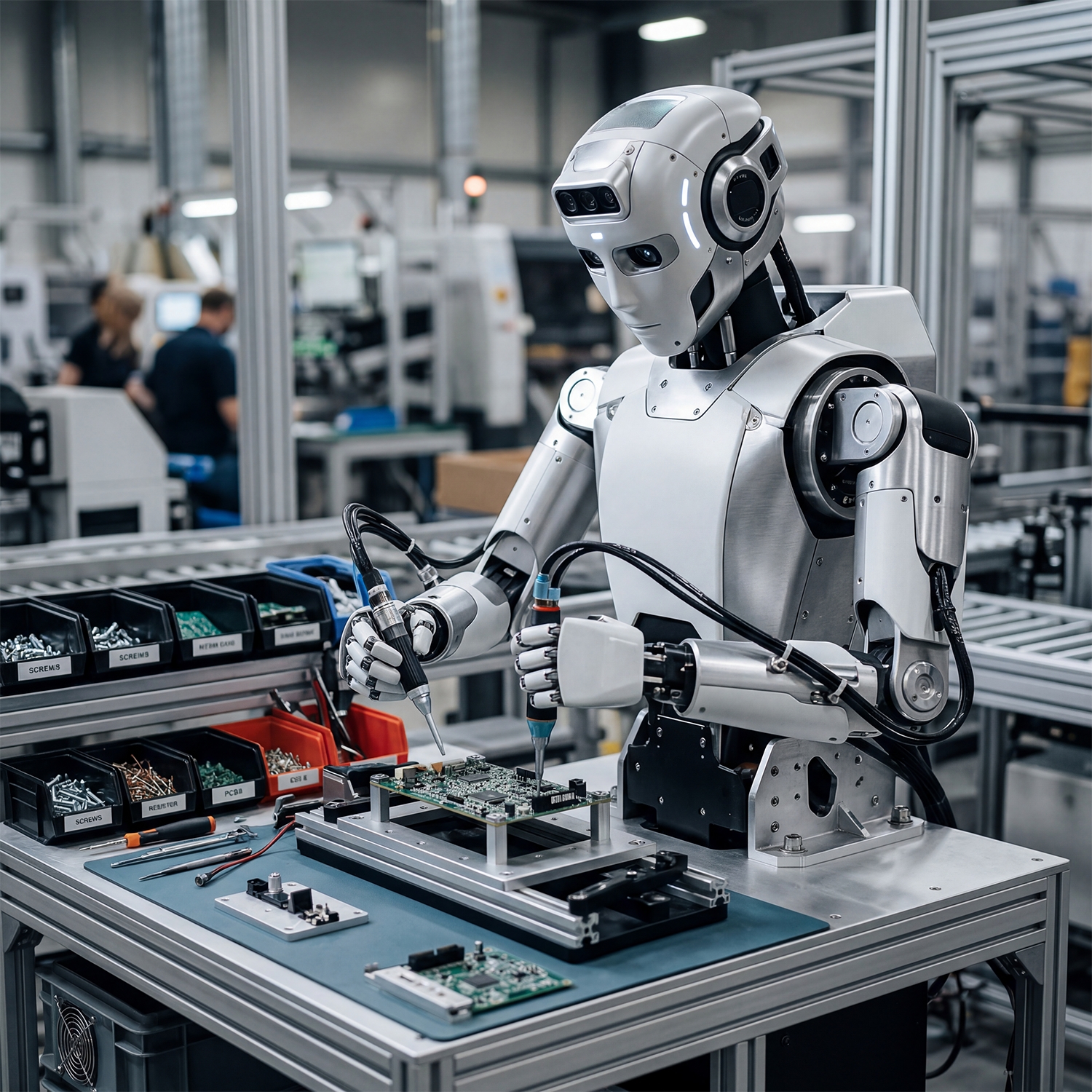
The primary near-term deployment sector for humanoid robots is industrial manufacturing — particularly automotive assembly, electronics production, and precision component manufacturing. Humanoid robots address the "automation gap" in manufacturing: tasks that involve flexible, irregular parts handling, complex multi-step assembly sequences, or environments too varied to justify purpose-built fixed automation.
In 2025, robots used for entertainment and commercial performances accounted for the largest share of shipments, followed by those for research and education, data collection, exhibition and reception, industrial intelligent manufacturing and warehousing and logistics.
Documented manufacturing deployments include AgiBot G2 at Longcheer Technology (electronics, >310 units/hour throughput, >99.9% success rate), UBTECH Walker S2 at BYD and Foxconn (automotive and electronics assembly), and Figure 02 at BMW Spartanburg (30,000+ vehicles supported).
Logistics and Warehousing
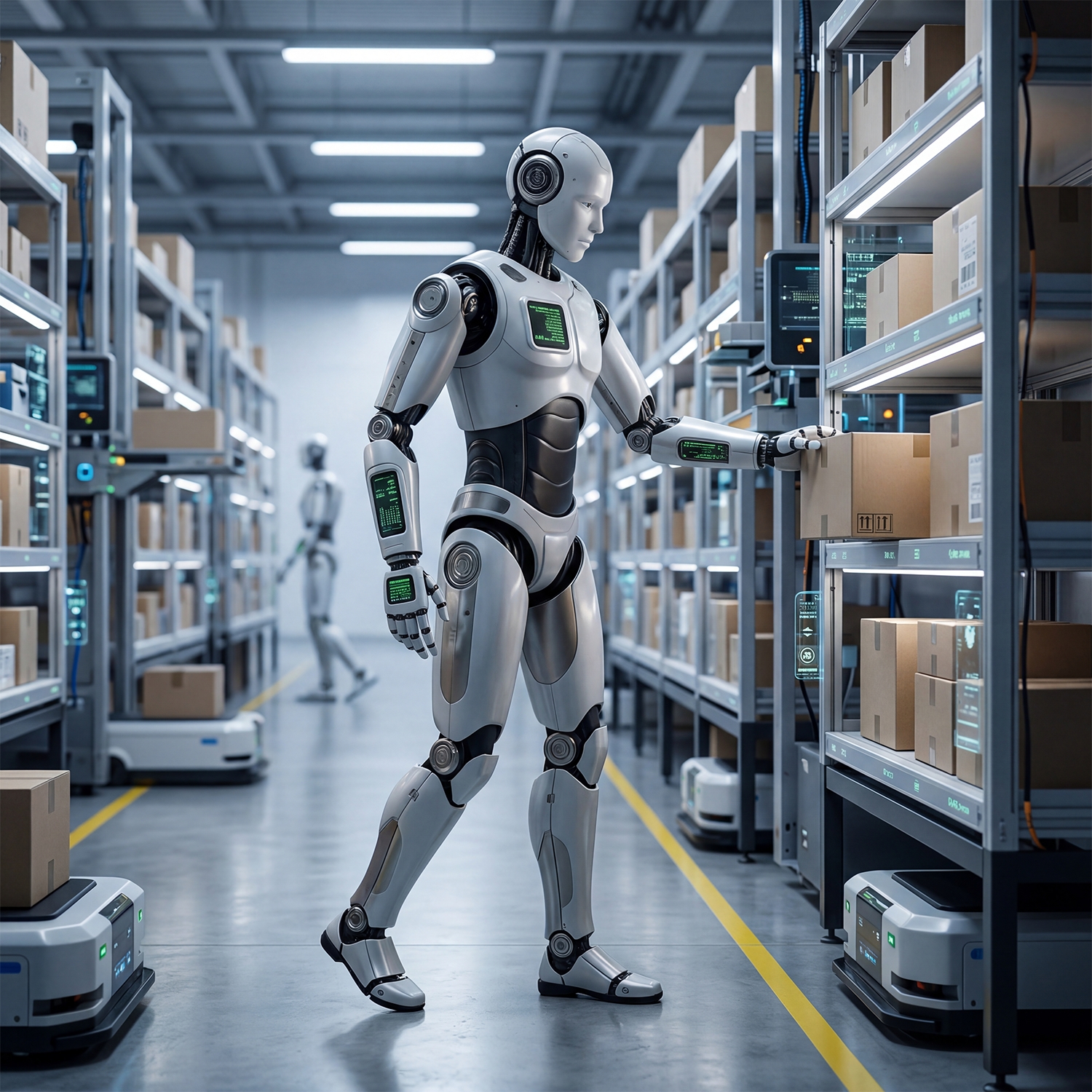
E-commerce fulfillment, parcel sorting, inventory management, and last-mile logistics represent a massive addressable market for humanoid robots — estimated to represent approximately 25% of near-term industrial deployments. Amazon's investment in Agility Robotics reflects this company's strategic commitment to humanoid logistics automation. The combination of bipedal mobility (navigating stairs, uneven surfaces, and varied environments) with dexterous manipulation (handling irregularly shaped packages) makes humanoid robots uniquely suited to logistics environments that defeat both wheeled AMRs and purpose-built fixed systems.
Healthcare and Eldercare
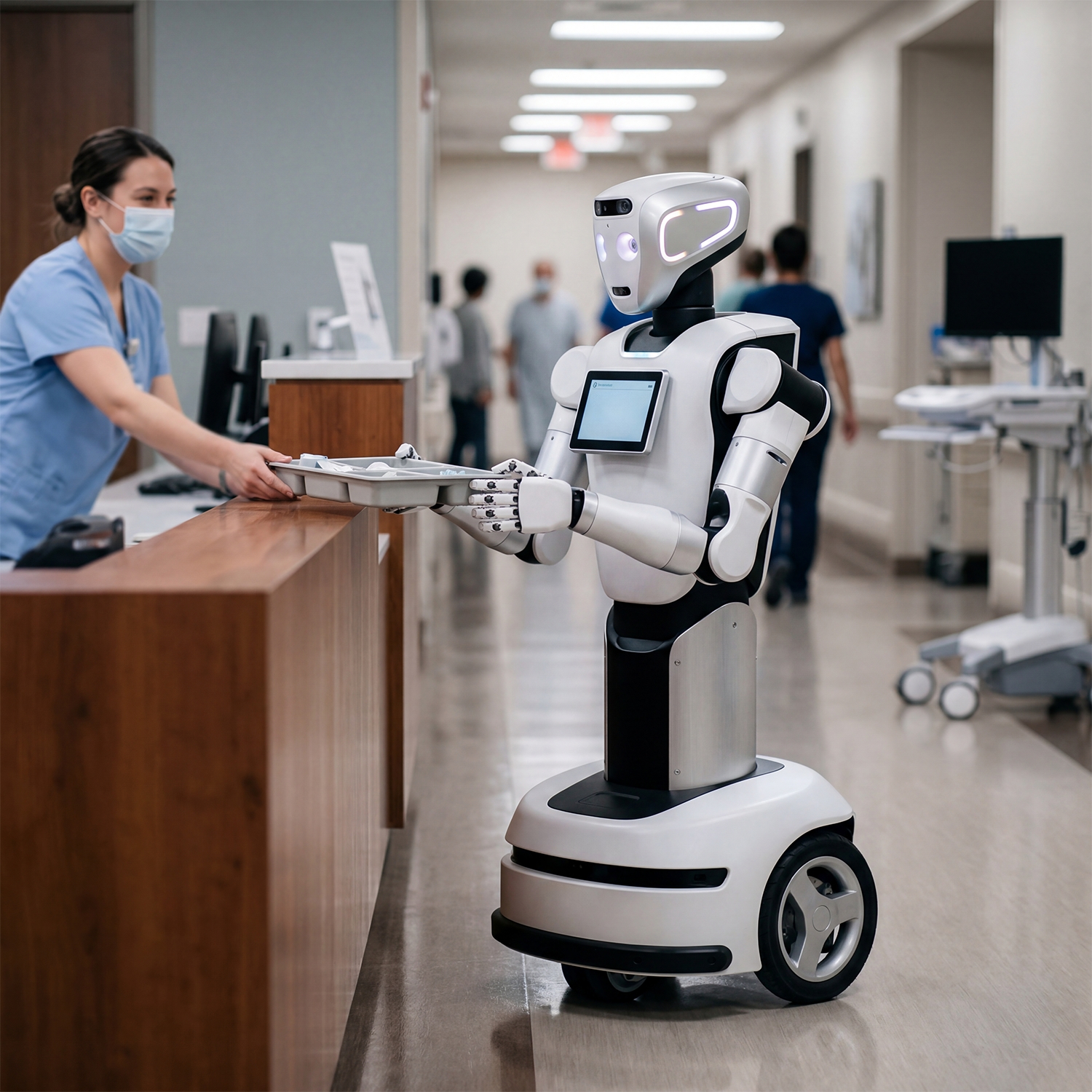
Japan's population aged 65 years and older reached 29.1% in 2024, and healthcare worker deficits may exceed 2.4 million by 2030. Hospitals are turning to humanoids for continuous patient monitoring, medication rounds, and social interaction, trimming operating costs by 30–40% while keeping quality consistent.
Applications include medication delivery, patient monitoring, physical rehabilitation assistance, and social companion roles for elderly individuals with dementia or mobility limitations. Healthcare represents the highest long-term application potential but also the slowest near-term adoption curve, given stringent safety regulations and liability frameworks.
Research and Education
University robotics laboratories, AI research centers, and STEM education programs represent a significant and growing market for compact humanoid platforms. The open-source X1 platform from AgiBot, NAO from SoftBank Robotics, and platforms from Unitree (G1) have established communities of academic developers globally, providing real-world hardware for advancing research in locomotion, manipulation, natural language interaction, and embodied AI.
Military, Defense, and Hazardous Environment Operations
Humanoid robots designed for operation in environments hazardous to humans — disaster response, nuclear facility maintenance, explosive ordnance disposal, and military reconnaissance — represent a distinct application category with specialized hardware requirements (radiation hardening, chemical resistance, operational endurance) and procurement channels. The DARPA Robotics Challenge's focus on nuclear disaster response reflects the policy community's longstanding interest in this application domain.
Commercial Services and Hospitality
In retail, hospitality, and corporate environments, humanoid robots serve as autonomous reception agents, guided tour hosts, brand ambassadors, and interactive customer experience tools. Applications include hotel check-in assistance, museum guide robots, airport passenger assistance, and corporate lobby reception. AgiBot's "Fizzbot" — a customized A2 deployed as a Pepsi brand ambassador alongside David Beckham — represents one of the highest-profile commercial service deployments to date.
Space Exploration
NASA's Valkyrie robot and ISRO's (Indian Space Research Organization) Vyommitra represent humanoid robots specifically designed for space environments — where the ability to operate existing spacecraft controls, perform maintenance tasks on existing equipment, and navigate space station modules designed for human astronauts makes humanoid form factors uniquely advantageous over purpose-built alternatives.
11. Advantages and Benefits
Infrastructure Compatibility Without Modification
The primary economic argument for humanoid robots is the elimination of infrastructure modification costs. A humanoid robot can, in principle, enter an existing factory, warehouse, office, or home and begin operating immediately. A purpose-built automation system requires custom fixtures, dedicated workstations, and significant environmental reconfiguration — costs that often equal or exceed the hardware cost itself.
Flexible Task Reassignment
Unlike fixed automation systems designed for one specific task, humanoid robots can be redeployed across multiple tasks by updating software rather than replacing hardware. An A2 robot performing quality inspection in the morning can, with appropriate programming updates, assist with inventory management in the afternoon. This flexibility fundamentally changes the capital economics of automation investment.
Natural Human-Robot Collaboration
Biped robots offer superior dexterity, human-like interaction, and operational flexibility, making them well-suited for tasks in environments designed for humans. Their expanding role in rehabilitation, elderly care, and workforce augmentation is further accelerating adoption across global markets.
Human form factors also reduce the psychological barrier to human-robot collaboration. Research consistently shows that workers are more comfortable collaborating with robots that have recognizable human form than with purpose-built industrial automation systems.
Addressing Structural Labor Shortages
In economies facing persistent skilled labor shortages — particularly in manufacturing, logistics, healthcare, and eldercare — humanoid robots represent a structurally scalable solution that does not depend on immigration policy, wage competition, or workforce retraining cycles. The robots can be manufactured to meet demand, operate continuously across multiple shifts, and do not require employee benefits, social insurance contributions, or vacation time.
Continuous Learning and Improvement
Foundation model-equipped humanoid robots improve over time through distributed online learning — each deployed unit contributing operational data that refines the shared AI model, improving the performance of the entire fleet. This creates a compounding capability advantage that accelerates with deployment scale.
12. Challenges and Limitations
Cost
Even with rapid price erosion, industrial humanoid robots remain expensive relative to the workers they might replace in lower-wage markets. Entry-level platforms range from $5,000–$30,000; industrial-grade systems range from $75,000–$250,000. Total cost of ownership — including integration, training, maintenance, and support — typically adds 30–50% to hardware acquisition costs.
Battery Life and Power Density
Current lithium-ion battery technology limits most humanoid robots to 90 minutes to 5 hours of operation per charge — a significant constraint for continuous industrial deployment. Hot-swap battery systems partially mitigate this limitation but add complexity and cost.
Dexterity and Manipulation Reliability
Despite significant advances, manipulation reliability remains below human capability for most real-world tasks. Human hands, with their 27 DOF and distributed tactile sensing, can handle objects with shapes, surface textures, and deformability properties that current robotic hands struggle to manage consistently. Task success rates of 99%+ have been documented in structured factory environments; in unstructured settings, current platforms perform substantially less reliably.
Safety in Human-Populated Environments
Deploying powerful, heavy humanoid robots alongside human workers requires sophisticated safety systems — force-limited joints, proximity detection, speed restriction zones, and emergency stop mechanisms. The regulatory framework governing collaborative robot safety (ISO/TS 15066) was designed for stationary robotic arms; its application to mobile humanoid platforms in dynamic environments remains an area of active regulatory development.
Skill Transfer and Programming
Training a humanoid robot to perform a new task — beyond the scope of its pre-trained foundation model — remains time-intensive and requires specialized robotics engineering expertise that most enterprises do not possess internally. Zero-code programming tools (like AgiBot's LinkCraft) and teleoperation-based learning are beginning to address this barrier, but the skill transfer problem has not been fully solved.
13. Humanoid Robots vs. Traditional Industrial Robots
Understanding when humanoid robots are — and are not — the right automation solution requires comparison with established industrial robotics alternatives:
| Feature | Humanoid Robot | Traditional Industrial Robot Arm | Autonomous Mobile Robot (AMR) |
|---|---|---|---|
| Infrastructure Modification | None required | Significant (fixtures, cells) | Minimal (floor mapping) |
| Task Flexibility | High (software-reconfigurable) | Low (task-specific) | Moderate (navigation only) |
| Manipulation Capability | High (dexterous hands) | Very high (specialized end-effectors) | None typically |
| Mobility | Full bipedal / wheeled | Stationary | Wheeled flat-floor only |
| Safety Complexity | High (collaborative, dynamic) | Moderate (caged) | Low (speed-limited) |
| Cost | $5,000–$250,000 | $20,000–$500,000 | $15,000–$100,000 |
| Throughput | Moderate (human-comparable) | Very high (fixed-task) | N/A |
| Programming Complexity | Moderate-High | Moderate | Low |
| Deployment Timeline | Days–Weeks | Months | Days |
Traditional industrial robot arms outperform humanoids in throughput, reliability, and cost-per-unit-operation for fixed, repetitive tasks in structured environments. Humanoids outperform traditional industrial robots in task flexibility, infrastructure compatibility, and collaborative operation in dynamic, unstructured environments.
14. Pricing and Availability
Entry-Level Research and Education Platforms
| Platform | Price (USD) | Availability |
|---|---|---|
| Unitree G1 | $16,000 | Available now (global) |
| AgiBot X2 | $17,889–$21,900 | Available now (France via JoyBuy; global via store.agibot.com) |
| Unitree H2 | ~$40,900 | Available now (global) |
Mid-Range Commercial Platforms
| Platform | Price (USD) | Availability |
|---|---|---|
| Boston Dynamics Spot | $74,500+ | Available now (global, enterprise) |
| AgiBot A2 Standard | ~$90,000–100,000 | Available now (global via store.agibot.com) |
| AgiBot A2-W Industrial | ~$140,000–175,000 | Available now (enterprise) |
Premium Industrial Platforms
| Platform | Price (USD) | Availability |
|---|---|---|
| AgiBot G2 | Enterprise quote | Via Minth Group Europe; store.agibot.com |
| UBTECH Walker S2 | ~$68,000–120,000 | Enterprise procurement |
| Agility Digit | ~$250,000 | Enterprise procurement |
| Figure 02 | Not publicly sold | Not commercially available |
| Tesla Optimus | Not publicly sold | Not commercially available |
| Boston Dynamics Atlas NG | Not publicly sold | Not commercially available |
Robot-as-a-Service (RaaS)
The RaaS model — pioneered in Europe by AgiBot's botsharing.eu platform — enables access to humanoid robots from €899 (~$975) per day without capital purchase commitment. This model is rapidly gaining traction as a low-risk entry point for enterprises evaluating humanoid automation before committing to full fleet investment.
15. The Future of Humanoid Robotics
Near-Term Outlook (2026–2028)
ABI Research forecasts an inflection point for the humanoid market between 2026 and 2027. By this time, regulatory, safety, and ROI issues with the form factor will be mostly addressed. The near-term trajectory is clear: accelerating production volume (100,000+ cumulative units projected by 2027), continued price erosion toward the $20,000–$50,000 range for mid-tier platforms, and expanding deployment across automotive, electronics, logistics, and healthcare sectors.
Long-Term Projections
Goldman Sachs projects the humanoid robot market to reach $38 billion by 2035. Morgan Stanley suggests the sector could ultimately surpass the automotive industry in total value — reaching $5 trillion by 2050 with over 1 billion units in operation, the vast majority performing industrial and commercial tasks.
The market must achieve true high-volume manufacturing, clear return-on-investment playbooks, and safety certification clarity to reach optimistic 2036 projections of $40 billion. Healthcare and eldercare applications show the highest long-term potential but face the slowest near-term adoption due to stringent safety regulations and liability concerns. Industrial and logistics deployments will likely represent 60% of the humanoid robotics market by 2036 as platforms stabilize and spending shifts from experimentation to operational scale.
The Convergence of Embodied AI and Physical Robots
The most consequential long-term development in humanoid robotics is the convergence of large language models, vision-language-action models, and physical embodiment — creating robots that can understand natural language instructions, reason about their environment, and physically execute complex multi-step tasks in unstructured real-world settings. This convergence, already visible in early-generation deployments using models like GO-1, NVIDIA GR00T, and Figure n1, represents the path from tools that execute pre-programmed sequences to agents that understand and pursue goals.
16. Frequently Asked Questions
What is a humanoid robot?
A humanoid robot is a robotic system designed with a body structure resembling the human body — typically including a head, torso, arms, hands, and legs. The defining purpose of this human-like form is to enable the robot to operate in environments, use tools, and interact with objects designed for human beings, without requiring infrastructure modification. Humanoid robots range from compact educational platforms (starting below $20,000) to full-size industrial systems (priced at $75,000–$250,000) capable of continuous deployment on factory floors. In 2025, approximately 16,000–18,000 humanoid robot units were shipped globally — a 508% increase year on year, according to IDC.
How does a humanoid robot work?
A humanoid robot integrates five core subsystems: a mechanical structure of rigid limbs driven by electric actuators at each joint; a sensor suite including cameras, LiDAR, IMUs, and force sensors for environmental perception; onboard computing running real-time locomotion controllers and AI perception systems; a battery power system providing hours of autonomous operation; and an AI software platform that processes sensor data, plans actions, and generates motor commands. Modern humanoid robots use reinforcement learning-trained locomotion policies and foundation AI models that enable generalization to new tasks and environments without full reprogramming.
Why are humanoid robots important?
Humanoid robots are significant for three structural reasons. First, they address the global labor shortage crisis — particularly in manufacturing, logistics, and healthcare — providing a scalable, non-cyclical alternative to human labor in tasks that are dangerous, repetitive, or increasingly unavailable to workers. Second, their human-compatible form factor enables deployment in existing human-built infrastructure without modification costs. Third, the convergence of humanoid hardware with foundation AI models is creating a new class of physical AI agent capable of understanding and executing complex real-world tasks — representing a potential step-change in productivity comparable in scope to the introduction of computers in the 20th century.
Where can I buy a humanoid robot?
Several humanoid robots are commercially available for purchase in 2026. The AgiBot X2 is available in France via JoyBuy from €17,889, and globally via store.agibot.com. Unitree G1 is available globally from $16,000 through Unitree's website and authorized resellers. AgiBot A2 Series and G2 industrial models are available through store.agibot.com and Minth Group in Europe. Boston Dynamics Spot (quadruped, not bipedal) is available from $74,500 via Boston Dynamics. Several premium platforms — including Tesla Optimus, Figure 02, and Boston Dynamics Atlas NG — are not yet commercially available for external purchase. Robot-as-a-Service (RaaS) rental is available via botsharing.eu from €899/day for AgiBot platforms across 17 countries.
How much does a humanoid robot cost?
Humanoid robot prices in 2026 range from approximately $5,566 (Unitree R1, entry-level developer platform) to $250,000+ (Agility Robotics Digit, premium industrial). The most commercially accessible full-featured humanoid robots are the Unitree G1 at $16,000 and AgiBot X2 at $17,889–$21,900. Industrial-grade full-size humanoids (AgiBot A2, UBTECH Walker S2) are priced in the $68,000–$190,000 range. Goldman Sachs and Tesla project that mid-tier humanoids will reach $20,000–$30,000 by the late 2020s as production volumes scale. Robot-as-a-Service models offer access from under $1,000 per day without capital purchase commitment.
What is the difference between a humanoid robot and a traditional industrial robot?
A traditional industrial robot arm is a fixed, stationary device designed for a specific manufacturing task with specialized tooling — such as welding, painting, or pick-and-place operations. It typically requires significant infrastructure modification (protective caging, dedicated workstations, custom fixtures) and cannot be redeployed to different tasks without hardware changes. A humanoid robot is a mobile, bipedal or wheeled system capable of navigating between workstations, using standard human tools, and performing multiple different tasks through software updates rather than hardware replacement. Traditional industrial robots offer higher throughput and lower cost-per-operation for fixed, repetitive tasks in structured environments; humanoid robots offer superior flexibility, infrastructure compatibility, and collaborative capability in dynamic, unstructured environments.
Which company makes the best humanoid robot in 2026?
"Best" depends critically on the intended application. For production volume and commercial track record, AgiBot (5,200+ units shipped in 2025, largest in the world) and Unitree Robotics (5,500+ units) lead. For dynamic locomotion and athletic capability, Boston Dynamics Atlas NG is the recognized benchmark. For industrial manufacturing dexterity and precision, the AgiBot G2 (>99.9% documented task success rate) and UBTECH Walker S2 (52 DOF, world-first autonomous battery swap) are industry leaders. For price accessibility, Unitree G1 ($16,000) and AgiBot X2 ($17,889) offer the lowest entry points for functional bipedal humanoids. For Western enterprise buyers prioritizing domestic-origin supply chains, Agility Digit and Boston Dynamics Spot are the leading commercially available options.
17. Summary
Humanoid robots have completed one of the most consequential transitions in the history of technology: from science fiction to deployed industrial product. The year 2025 marked the point at which global humanoid robot shipments reached 16,000–18,000 units — a 508% year-on-year increase, according to IDC — driven by Chinese manufacturers AgiBot and Unitree, which together account for the majority of global production. A market valued at approximately $2.9–4.89 billion in 2025 is projected to grow at a compound annual rate of 35–50% through the early 2030s, reaching $15–165 billion by 2030–2034 depending on analyst methodology. The technology's most transformative applications — addressing global labor shortages in manufacturing, logistics, healthcare, and eldercare — are now progressing from pilot projects to operational deployments at companies including BYD, Foxconn, Amazon, BMW, Airbus, and Texas Instruments. The convergence of advanced AI foundation models with increasingly capable and affordable hardware is accelerating the path toward humanoid robots that can understand natural language, reason about goals, and physically execute complex tasks in real-world environments — a capability trajectory that Morgan Stanley projects could ultimately produce a market surpassing $5 trillion by 2050. For enterprises, governments, researchers, and individuals seeking to understand the coming transformation of the physical economy, humanoid robots are not a technology to watch — they are a technology to engage with now.