
Unitree H2 Plus ULTIMATE-C Humanoid Robot
In stock
- BRAND:
- UNITREE ROBOTICS
- MODEL:
- H2 PLUS ULTIMATE C
- ORIGIN:
- China
- Warranty:
- 12 MONTHS
- AVAILABILITY:
- ALLOW 2-4 WEEKS FOR DELIVERY
- SKU:
- Unitree-H2-PLUS-ULTIMATE-C
Unitree H2 Plus ULTIMATE-C Humanoid Robot
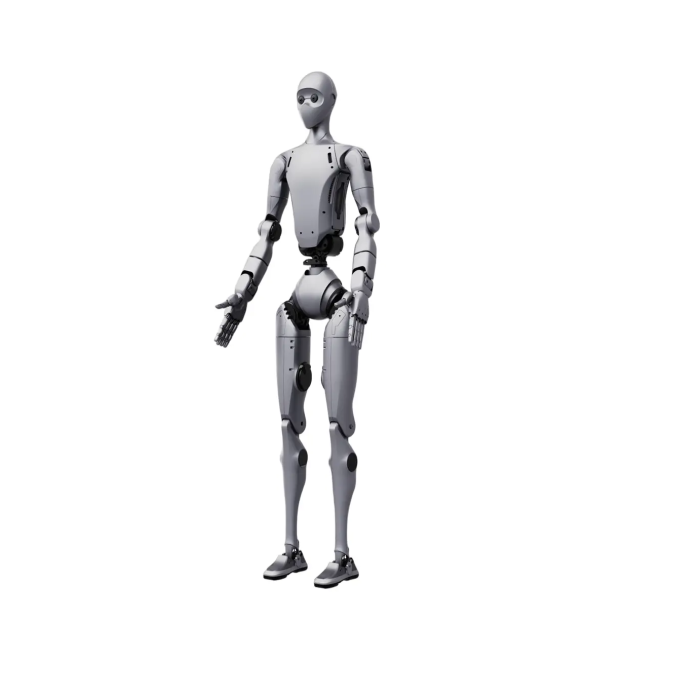
Seven configurations of the H2 Plus share one frame, one battery and one computing stack; what separates them is what happens at the end of each arm. The Unitree H2 Plus ULTIMATE-C Humanoid Robot settles that question with touch. Its two Dex3-1 hands carry tactile sensors across their fingers, so the robot registers contact as it grasps instead of inferring it from a camera image alone. For a laboratory, this shifts the questions worth asking. The issue is no longer simply whether a humanoid can reach an object, but how firmly it holds it, when it begins to slip and how a learned policy ought to respond.
Robots Middle East supplies the Unitree H2 Plus ULTIMATE-C Humanoid Robot to universities, research institutes, system integrators and corporate innovation teams across the Middle East. Robots Middle East prepares each quotation for the exact configuration requested, coordinates delivery to the customer's site and remains the point of contact for technical support once the robot has been commissioned.
Background
Unitree Robotics and the H2 Plus
Unitree Robotics, headquartered in Hangzhou, China, built its reputation on agile legged robots before extending its range to full-size humanoids. The H2 family is the company's tall bipedal platform, intended for research and development work where a human-scale body matters: reaching shelves designed for people, working at benches and moving through spaces laid out for human workers. Unitree announced the H2 Plus on 1 June 2026 as the first humanoid robot reference design built on the NVIDIA Isaac GR00T development platform. That positioning matters to developers, because the robot can be built on Isaac™ GR00T and comes with open models, simulation frameworks and validated reference workflows that run from data collection through to deployment.
A configuration defined by its hands
Unitree offers the H2 Plus in a SMART version and in a series of ULTIMATE versions labelled A, B, C, D, E and N, each named after the hand it carries. The ULTIMATE C is the DEX3-1 Tactile configuration. It is fitted with two tactile Dex3-1 hands, each with three fingers and a wrist-mounted RGB camera, offering seven degrees of freedom per hand and 33 tactile sensors per hand. The combination is aimed at fine manipulation with contact feedback: the wrist camera sees the object at close range, while the tactile sensors report what the fingers actually feel. Everything above the wrist, from the 31 body joint motors to the dual onboard computers, is the shared H2 Plus platform.
Technical Specifications
| Specification | Value |
|---|---|
| Dimensions (standing, H × W × D) | 1820 x 456 x 218mm |
| Weight with battery | About 70kg |
| Body degrees of freedom (joint motors) | 31 |
| Maximum arm joint peak torque | 120N.m |
| Maximum leg joint peak torque | 360N.m |
| Arm payload | Rated 7 kilograms, peak 15 kilograms |
| Battery | 15Ah, 0.972 kWh capacity, approximately 3 hours of battery life |
| Battery voltage | Maximum voltage: 75.6V |
| Onboard AI performance | 2070 TFLOPS (FP4—sparse) |
| Base computing | PC1: Intel Core i5 (Platform Functions); PC2: Intel Core i7 (User Development) |
| Head binocular camera | Horizontal FOV 140°±3; Vertical FOV 102°±3; Aperture 2.0; Focal Length 2.67mm; Depth of Field 0.4m-INF; global shutter |
| Hands (ULTIMATE C) | 2 × tactile Dex3-1 hands with three fingers and wrist RGB cameras |
| Per hand (ULTIMATE C) | 7 DoF • 650 g • 33 tactile sensors |
| Main body materials | Aerospace-grade aluminium, titanium alloy and high-strength engineering plastics |
| Cooling system | Air Cooling |
| Connectivity | Ethernet, Wi‑Fi 6, Bluetooth 5.2 and USB; array microphones and speakers for voice interaction |
| Safety | Remote emergency stop |
| Software platform | Can be built on Isaac™ GR00T, with open models, simulation frameworks and validated reference workflows |
| Included accessories | Smart Battery (Quick Release), Charger, Handheld Remote Controller |
Specifications are as published by the manufacturer and are confirmed against the datasheet at quotation.
The manufacturer has not published the total degrees of freedom of the ULTIMATE C configuration, the top walking speed, the IP rating, the operating system, the charger specifications or the weight with the hands installed; Robots Middle East confirms these at quotation.
What does the ULTIMATE C add over the ULTIMATE B?
The version names tell much of the story. The ULTIMATE B carries Dex3-1 hands; the ULTIMATE C carries the tactile variant of the Dex3-1. Both therefore share the same three-fingered hand architecture, and the decisive difference in the C is the layer of contact sensing: 33 tactile sensors per hand that turn each grasp into a measurable event. A hand without tactile sensing must rely on joint feedback and vision to judge a grip, which works well for rigid, predictable objects. A tactile hand can detect the moment of first contact, the distribution of pressure across the fingers and the onset of slip, which is precisely the information needed when objects are soft, fragile, irregular or partly hidden from the cameras.
For teams training manipulation policies, this matters at the data level. Tactile signals become an additional input stream alongside the head binocular camera and the wrist RGB cameras, and they allow experiments that a vision-only hand cannot support, such as grasp-force regulation, in-hand adjustment and contact-rich assembly. Buyers whose work does not depend on touch may find the ULTIMATE B a better match; buyers whose research questions begin at the fingertip will find the C the more direct route.
Why does the dual-computer design matter for development?
The H2 Plus separates its computing duties. PC1, an Intel Core i5, handles platform functions, while PC2, an Intel Core i7, is reserved for user development. Alongside these, the robot lists onboard AI performance of 2070 TFLOPS (FP4—sparse). In practice, this division lets a research team deploy and iterate on its own software without competing for resources with the robot's core motion and system processes. Combined with the Isaac™ GR00T foundation and its simulation frameworks, the architecture supports a workflow in which policies are trained in simulation, validated, and then moved onto the physical robot with fewer surprises. For tactile manipulation, where sensor streams from both hands and several cameras must be processed together, that headroom is a practical consideration rather than a specification-sheet detail.
Who is the Unitree H2 Plus ULTIMATE-C Humanoid Robot for?
The primary buyers are university laboratories and research institutes studying dexterous manipulation, haptics and embodied AI. Their work benefits directly from hands that report contact, and the human-scale body allows experiments in environments built for people rather than for robots. Corporate research and innovation groups form a second segment: teams evaluating whether humanoids can take on handling tasks that require care, such as working with packaged goods, laboratory consumables or delicate components.
System integrators and software developers building on NVIDIA Isaac GR00T are a third audience. For them, the ULTIMATE C offers a reference platform on which to develop and demonstrate contact-aware applications before proposing them to end customers. Teaching institutions running advanced robotics programmes may also choose it to give students access to a complete sensing stack in a single platform.
Not every buyer needs tactile hands. Groups focused on grasping rigid objects with the same hand family may prefer the Unitree H2 Plus ULTIMATE-B Humanoid Robot, while those wishing to compare a different hand option can review the Unitree H2 Plus ULTIMATE A Humanoid Robot. Teams whose research centres on locomotion and whole-body control rather than dexterity may look at the Unitree H2 Plus SMART Humanoid Robot. The full range is gathered in the Unitree H2 Plus category.
What is the Unitree H2 Plus ULTIMATE-C Humanoid Robot used for?
- Tactile manipulation research — studying grip force, slip detection and contact-rich grasping with sensorised fingers.
- Embodied AI development — training and deploying manipulation policies on the Isaac™ GR00T workflow from simulation to hardware.
- Multimodal data collection — recording synchronised head-camera, wrist-camera and tactile streams for learning datasets.
- Handling of fragile or deformable objects — evaluating whether a humanoid can manage items that rigid grippers tend to damage.
- Human-robot interaction studies — using the array microphones, speakers and human-scale body for voice and collaborative experiments.
- Teaching and demonstration — giving advanced students and visiting partners hands-on access to a complete humanoid sensing stack.
Pricing and Availability
Robots Middle East supplies the Unitree H2 Plus ULTIMATE-C Humanoid Robot by quotation, so that each offer reflects the exact configuration, the included accessories and the support the project requires. Delivery, customs clearance and after-sales support are arranged with the quotation. To begin, please send a short description of your intended application and your site location, and the quotation request form is available on this page.
Frequently Asked Questions
Which hands does the ULTIMATE C configuration include?
It includes two tactile Dex3-1 hands, each with three fingers and a wrist RGB camera. Each hand offers seven degrees of freedom and 33 tactile sensors.
How long does the battery last?
The battery is rated at 15Ah and 0.972 kWh, with approximately 3 hours of battery life. It is a quick-release smart battery, and a charger is included.
What payload can the arms handle?
The arms have a rated payload of 7 kilograms and a peak payload of 15 kilograms. Maximum arm joint peak torque is 120N.m.
Can I develop my own software for the robot?
Yes. A dedicated Intel Core i7 computer is reserved for user development, and the platform can be built on Isaac™ GR00T with open models, simulation frameworks and reference workflows.
What safety features are provided?
The robot supports a remote emergency stop that allows it to be shut down rapidly and safely from a distance. A handheld remote controller is also included.
Is the walking speed or IP rating published?
Neither figure has been published by the manufacturer. Robots Middle East confirms them, together with the other unpublished details, at quotation.
Where can I buy the Unitree H2 Plus ULTIMATE-C Humanoid Robot and what does it cost?
You can buy it from Robots Middle East, which supplies it across the Middle East. The cost depends on configuration and project requirements and is provided in a formal quotation requested through this page.
Summary
Across the H2 Plus range, the body stays the same and the hands define the robot. The Unitree H2 Plus ULTIMATE-C Humanoid Robot chooses touch: tactile Dex3-1 hands with wrist cameras, mounted on a full-size platform with 31 body joint motors, dual onboard computers and a development path built on Isaac™ GR00T. For laboratories and developers whose questions begin where fingers meet objects, it is a direct and well-equipped platform, supplied and supported in the region by Robots Middle East. For a configuration matched to your research, this page is the starting point.