
Unitree H2 Plus ULTIMATE-N Humanoid Robot
In stock
- BRAND:
- UNITREE ROBOTICS
- MODEL:
- H2-PLUS-ULTIMATE-N
- PART #:
- H2-PLUS-ULTIMATE-N
- ORIGIN:
- China
- Warranty:
- 12 MONTHS
- AVAILABILITY:
- SUBJECT TO AVAILABILITY
- SKU:
- Unitree-H2-PLUS-ULTIMATE-N
Unitree H2 Plus ULTIMATE-N Humanoid Robot
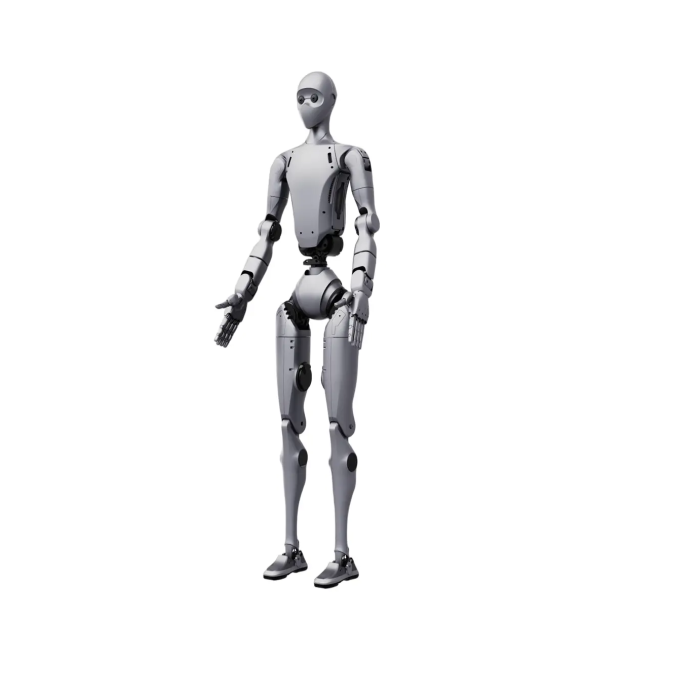
Robot learning runs on data, and most of the data a humanoid gathers is visual: cameras watch a hand close around an object and infer, after the fact, whether the grip held. The Unitree H2 Plus ULTIMATE-N Humanoid Robot changes the ratio. It fits the full-size H2 Plus body with Sharpa Wave hands, each fingertip carrying more than 1,000 tactile pixels, so every grasp produces a record of contact as well as a record of sight. For teams building manipulation skills that must survive outside the laboratory, that second stream of information is often the difference between a policy that works in simulation and one that works on a real workbench.
Robots Middle East sells the Unitree H2 Plus ULTIMATE-N and supplies it to research institutions, universities, integrators and industrial organisations across the Middle East. Robots Middle East prepares each quotation for the exact configuration, arranges delivery to the customer's site and remains the point of contact for technical support after the robot is commissioned.
Background
Unitree Robotics and the H2 Plus line
Unitree Robotics, led by founder and CEO Xingxing Wang, has built its reputation on legged machines that research groups can actually acquire and program. The H2 Plus is the company's full-size humanoid platform, and it is offered in a series of configurations that share one body and differ mainly in the hands fitted to it. The range runs from the H2 PLUS SMART through lettered ULTIMATE packages, each named after its hand option: DEX1-1 Plus, DEX3-1, DEX3-1 Tactile, DEX5-1, DEX5-1P Tactile, Revo 2 Basic, Revo 2 Touch, Inspire DFQ, Inspire E2 Tactile, Revo 3 U21 and, in this version, Sharpa Wave. The full family is gathered in the Unitree H2 Plus category. Xingxing Wang has framed the developer's need directly: "Developers want humanoid robots that are ready to build on."
Sharpa Wave hands and the Isaac workflow
The ULTIMATE-N is defined by its hands. Each Sharpa Wave hand offers 22 DoF, weighs 1.3 kg and combines tactile sensing of 0.005 N sensitivity with a grip force of 150 N and a rated load of up to 30 kg per hand. That pairing of delicacy and strength is unusual: the same hand is designed to register a light touch and to carry a substantial object. On the software side, the robot is built on NVIDIA Isaac GR00T, with a workflow that includes NVIDIA Isaac Teleop, the Isaac GR00T open foundation models for humanoid reasoning, learning and multitask behaviour, Isaac Sim, Isaac Lab and Isaac ROS. Together, the hands and the toolchain are aimed at teams that intend to teach the robot new skills rather than simply operate pre-built routines.
Technical Specifications
| Specification | Value |
|---|---|
| Hand option | Sharpa Wave |
| Standing dimensions | 1820 × 456 × 218 mm |
| Weight with battery | Approximately 70 kg, excluding hand configuration |
| Body degrees of freedom | 31 (6 per leg, 7 per arm, 3 waist, 2 head) |
| Hand degrees of freedom | 22 DoF per hand |
| Total degrees of freedom | 75 total body-and-hand DOF |
| Maximum joint torque | 120 Nm (arms); 360 Nm (legs) |
| Hand weight | 1.3 kg per hand |
| Tactile sensing | More than 1,000 tactile pixels per fingertip; 0.005 N sensitivity |
| Grip force | 150 N |
| Rated load | Up to 30 kg per hand |
| Base computing | Intel Core i5 for platform functions + Intel Core i7 for user development |
| Memory | 128 GB LPDDR5X, 256-bit bus, 273 GB/s |
| Head stereo camera | HFOV 140° ±3°, VFOV 102° ±3°, global shutter, depth of field from 0.4 m to infinity |
| Interfaces | USB 3.0 ×3, USB + DisplayPort ×3, GMSL ×4, Gigabit Ethernet ×4, USB 2.0 ×2, RS-485 ×4, CAN ×2 |
| Wireless connectivity | Wi-Fi 6 and Bluetooth 5.2 |
| Battery | 15 Ah, 0.972 kWh, removable smart battery |
| Runtime | Approximately 3 hours |
| Main materials | Aerospace-grade aluminium, titanium alloy, high-strength engineering plastics |
| Safety | On-remote emergency stop |
| Software platform | NVIDIA Isaac GR00T; Isaac Teleop, Isaac Sim, Isaac Lab, Isaac ROS |
Specifications are as published by the manufacturer and are confirmed against the datasheet at quotation.
The manufacturer has not published the top speed, the IP rating, the charging time, the operating system, any lidar fitment or the package contents for this configuration; Robots Middle East confirms these at quotation.
What does the Sharpa Wave hand add to the H2 Plus?
Every H2 Plus configuration shares the same 31-DoF body, the same joint torque of up to 120 Nm in the arms and 360 Nm in the legs, and the same computing and sensing package. What separates the ULTIMATE-N from its siblings is therefore concentrated at the wrists. With 22 DoF per hand, the Sharpa Wave hands bring the robot to 75 total body-and-hand DOF, which gives a controller far more ways to position fingers around an irregular object than a simpler gripper allows.
The tactile layer matters just as much as the joint count. More than 1,000 tactile pixels per fingertip at 0.005 N sensitivity means the hand can report where and how firmly it is touching, not merely whether it has closed. For a learning system, that information shortens the loop between an action and its consequence: a slip can be detected as it begins, and a fragile part can be held with a force that is measured rather than guessed. At the same time, a grip force of 150 N and a rated load of up to 30 kg per hand keep the hand relevant to practical handling tasks, not only to delicate demonstrations.
How does the ULTIMATE-N support robot learning projects?
A humanoid becomes useful to a development team when data can flow into it and out of it without friction. The ULTIMATE-N separates its computing duties: an Intel Core i5 handles platform functions, while an Intel Core i7 is reserved for user development, so experimental code does not compete with the robot's own control tasks. Memory is specified at 128 GB LPDDR5X on a 256-bit bus at 273 GB/s, which suits the large models that foundation-model workflows involve.
Perception starts with a head stereo camera of HFOV 140° ±3° and VFOV 102° ±3°, with a global shutter and a depth of field from 0.4 m to infinity. For additional sensors and actuators, the interface panel offers USB 3.0, USB with DisplayPort, GMSL, Gigabit Ethernet, USB 2.0, RS-485 and CAN, supplemented by Wi-Fi 6 and Bluetooth 5.2. Through NVIDIA Isaac Teleop, an operator can demonstrate a task; Isaac Sim and Isaac Lab support training at scale in simulation; and Isaac ROS links the results to the robot's runtime. The removable smart battery of 15 Ah and 0.972 kWh, with a runtime of approximately 3 hours, allows sessions to continue by exchanging packs.
Who is the Unitree H2 Plus ULTIMATE-N for?
The first audience is research groups working on dexterous and tactile manipulation: university laboratories, national research centres and corporate AI teams whose central question is how a robot should handle objects it has never seen. The ULTIMATE-N gives them a full-size body and hands that sense contact in fine detail, on a software stack already aligned with NVIDIA's humanoid tools.
The second audience is system integrators and industrial innovation departments evaluating humanoids for assembly, logistics or inspection. For them, the combination of tactile sensing and a rated load of up to 30 kg per hand makes it possible to test both careful and heavier tasks on a single platform. Universities building advanced robotics programmes form a third group, using the robot to teach teleoperation, simulation and policy training in one environment.
Not every project needs this level of hand. Teams whose work centres on locomotion, whole-body control or general interaction may be better served by comparing the Unitree H2 Plus ULTIMATE-B Humanoid Robot with the DEX3-1 hand, the Unitree H2 Plus ULTIMATE A Humanoid Robot with the DEX1-1 Plus hand, or the Unitree H2 Plus SMART Humanoid Robot. Robots Middle East will gladly set out the differences between the hand options for your project.
What is the Unitree H2 Plus ULTIMATE-N used for?
- Tactile manipulation research: studying slip detection, force control and in-hand repositioning with fingertip-level contact data.
- Teleoperated data collection: recording human demonstrations through Isaac Teleop to build training datasets for manipulation policies.
- Simulation-to-reality training: developing skills in Isaac Sim and Isaac Lab before transferring them to the physical robot.
- Foundation-model development: applying Isaac GR00T open foundation models to humanoid reasoning and multitask behaviour.
- Industrial handling trials: testing assembly, kitting and load-carrying tasks with hands rated up to 30 kg each.
- Advanced teaching and demonstration: giving university programmes a full-size humanoid for practical courses in robotics and AI.
Pricing and Availability
The Unitree H2 Plus ULTIMATE-N is supplied on quotation, because the final configuration, software requirements and site conditions vary from one organisation to the next. To begin, please share your intended application, the location of delivery and any integration needs with Robots Middle East. Delivery, customs clearance and technical support are arranged together with the quotation. The quotation request for the Unitree H2 Plus ULTIMATE-N Humanoid Robot is available on this page.
Frequently Asked Questions
How many degrees of freedom does the H2 Plus ULTIMATE-N have?
The robot has 75 total body-and-hand DOF. The body accounts for 31 degrees of freedom, and each Sharpa Wave hand adds 22 DoF.
What can the Sharpa Wave hands sense?
Each fingertip carries more than 1,000 tactile pixels with a sensitivity of 0.005 N. This allows the hand to register light contact and changes in grip during manipulation.
How long does the robot run on one battery?
Runtime is approximately 3 hours on the 15 Ah, 0.972 kWh removable smart battery. Because the battery is removable, packs can be exchanged between sessions.
Which software tools does the robot support?
The robot is built on NVIDIA Isaac GR00T, and its workflow includes Isaac Teleop, Isaac Sim, Isaac Lab and Isaac ROS. These cover teleoperation, simulation, training and deployment.
What safety function does the robot provide?
The robot has an on-remote emergency stop function for quickly disengaging it safely. This allows the operator to halt the robot directly from the remote during testing.
How does the ULTIMATE-N differ from other H2 Plus ULTIMATE versions?
The versions share the H2 Plus body and differ mainly in the hand option. The ULTIMATE-N is the configuration fitted with Sharpa Wave hands.
Where can I buy the Unitree H2 Plus ULTIMATE-N and what does it cost?
Robots Middle East supplies the robot across the Middle East and provides the cost in a written quotation for your exact configuration. Please submit your requirements through this page to receive it.
Summary
A humanoid that only sees its grasps learns slowly; one that also feels them gathers richer evidence with every attempt. The Unitree H2 Plus ULTIMATE-N combines the full-size H2 Plus body, with its 31 degrees of freedom and high joint torque, with Sharpa Wave hands that bring the total to 75 DOF and add dense fingertip sensing, a grip force of 150 N and a rated load of up to 30 kg per hand. Dual computing, generous memory, a wide-angle stereo camera and an NVIDIA Isaac toolchain complete a platform intended for teams that will train it, not merely run it. For organisations in the Middle East ready to discuss configuration, delivery and support with Robots Middle East, this page is the starting point.