
UBTECH WASSI Smart Trainer
In stock
- BRAND:
- UBTECH
- PART #:
- WASSI
- ORIGIN:
- China
- AVAILABILITY:
- SUBJECT TO AVAILABILITY
- SKU:
- UBTECH-WASSI
UBTECH WASSI Smart Trainer
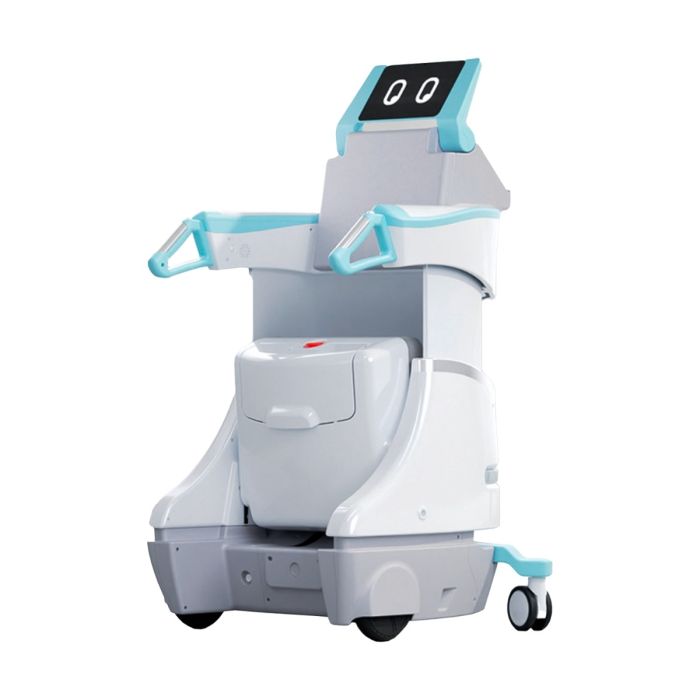
In many care settings, the most valuable part of a walking session (how the person actually moved, at what pace and with how much support) is also the part least likely to be written down. The therapist is busy steadying, encouraging and watching, so the record is often reconstructed afterwards from memory. The UBTECH WASSI Smart Trainer reverses that order of events. It brings itself to the user and adjusts its handles to the person holding them. It coaches the session through its touch screen and spoken instruction, and it collects performance data automatically as the walk takes place. Each session becomes a training report rather than a note added at the end of a shift.
Robots Middle East sells and supplies the UBTECH WASSI Smart Trainer to hospitals, rehabilitation centres, elderly care homes and other healthcare organisations across the Middle East. Our team prepares each quotation, arranges delivery to your facility and provides support once the trainer is in service. Clinical, technical and procurement teams therefore deal with a single regional partner from the first enquiry onwards.
Background
UBTECH and its service robotics lineage
UBTECH Robotics is a Chinese robotics company best known for humanoid robots, educational platforms and commercial service robots. Its portfolio has extended into healthcare, where wards and care homes need robots that can find their way through indoor spaces, communicate through screens and voice, and keep a record of what they do. The WASSI Smart Trainer belongs to this healthcare line and draws on the competences that run through the company's work: autonomous navigation, multi-sensor perception and human–robot interaction. Buyers who wish to compare it with the rest of the range may browse our Healthcare category.
A walking trainer that moves on its own
Conventional walking frames and rollators are passive. They stand where they were last left, and someone has to fetch them, set them up and pace the exercise. WASSI is designed as an intelligent walking trainer instead. Using navigation and obstacle avoidance technology, it delivers itself to the user and returns for recharging afterwards. Its sensor suite combines lidar, an ultrasonic sensor, front and rear infrared sensors, a 3D camera, a top RGB camera, an IMU inertial sensor, an optical sensor and a microphone array. Together these give the trainer the perception to travel through a facility and to interact with the person using it. A built-in intelligent controlling system adjusts the handles to the user's height and preference. The training itself is delivered through touch screen animation and audible exercise instruction.
Technical Specifications
| Specification | Value |
|---|---|
| Dimensions | 750 x 645 x (930-1430, adjustable) mm |
| Weight | 65 kg |
| Seat load bearing | 100 kg |
| Seat height | 0 to 75° (electrically adjustable) |
| Handle height | 660 to 930 mm (electrically adjustable) |
| Screen angle | 0 to 130° (adjustable) |
| Speed | 0 to 0.8 m/s (adjustable) |
| Obstacle crossing height | 15 mm |
| Trench width | 35 mm |
| Climbing slope | 5° |
| Sensors | Lidar, ultrasonic sensor, front and rear infrared sensors, 3D camera, top RGB camera, IMU inertial sensor, optical sensor, and microphone array |
| Accessories | Infusion support can be mounted on the left or right handle |
Specifications are as published by the manufacturer and are confirmed against the datasheet at quotation.
The manufacturer has not published the battery capacity, battery runtime, charging time, connectivity, IP rating, package contents, display size, noise level, which vital signs are measured, or any independent certifications; we confirm these details with you at quotation.
How does the WASSI Smart Trainer differ from a conventional walking frame?
The first difference is who does the fetching. A standard frame relies on a member of staff to bring it to the bedside or day room. WASSI travels to the user by itself, avoiding obstacles on the way, and goes back to recharge once the session is over. In a busy ward, that removes a small but constant task from the therapist's day and lets sessions start when the patient is ready rather than when someone is free.
The second difference is adaptation. The handles adjust electrically across a height range of 660 to 930 mm to suit the user's height and preference. The screen tilts from 0 to 130° so that animations and instructions remain visible. Walking speed can be set anywhere from 0 to 0.8 m/s, and users can choose between different training modes by preference. WASSI also builds a customised library of exercises around each user's gait and limb movement ability, so the programme follows the individual rather than a single fixed routine.
The third difference is the record. WASSI automatically collects user performance data and generates training reports. The reports help with asset management and user scheduling, which is the side of rehabilitation that department managers often find hardest to keep accurate. A frame leaves no trace of a session; WASSI produces a structured account of it.
How does WASSI keep the user safe during a session?
Safety on WASSI comes from several layers that work together. The adjustable speed and clear voice prompts keep the user informed and the pace manageable. Real-time physical monitoring capabilities provide continuous oversight while the person walks. If something goes wrong, the user can press one button to seek help. The seat can also open and close autonomously, so a tired user has somewhere to rest without letting go of the trainer. The seat is rated for a load of 100 kg.
The trainer is also designed for the realities of a clinical building. It crosses obstacles of up to 15 mm and trenches up to 35 mm wide, and it climbs slopes of 5°, which covers the thresholds, floor joints and gentle ramps found in many wards and corridors. For patients who are still on a drip, an infusion support can be mounted on either the left or the right handle. Rehabilitation does not have to wait until the line is removed.
Who is the UBTECH WASSI Smart Trainer for?
The clearest fit is the rehabilitation department of a hospital, where walking practice is a daily part of recovery after surgery, injury or neurological events. Therapists can delegate the routine parts of a session to WASSI, such as arriving, setting up, pacing and recording, while they keep their attention on the clinical judgement that only they can provide.
Elderly care homes and assisted living facilities are a second natural audience. Residents benefit from regular, supervised walking. The combination of handles that adapt to each person, spoken guidance and a one-button call for help suits a setting where staff look after many residents at once.
Dedicated rehabilitation centres and outpatient clinics will value the individual exercise libraries and automatic training reports. These support progress reviews and help scheduling teams plan the use of each trainer. Hospital administrators and innovation teams planning a broader programme of service robotics can see WASSI alongside other clinical solutions in our Hospital Robots category.
What is the UBTECH WASSI Smart Trainer used for?
- Gait rehabilitation: guided walking practice with exercises customised to each user's gait and limb movement ability.
- Post-operative mobilisation: early, supported walking for patients, with an infusion support mounted on either handle where needed.
- Elderly mobility programmes: regular, adaptable walking sessions for residents in care homes and assisted living.
- Self-directed training: sessions led by touch screen animation and audible instruction, with training modes chosen by preference.
- Progress documentation: automatic collection of performance data and generation of training reports for clinical review.
- Resource planning: report data that supports asset management and user scheduling across a department.
Pricing and Availability
Robots Middle East supplies the UBTECH WASSI Smart Trainer on a quotation basis, so that each offer reflects your facility, the number of units and the configuration you require. Delivery, customs and after-sales support are arranged together with your quotation. To begin, please send us your requirements using the quotation request available on this page.
Frequently Asked Questions
Does a member of staff need to bring WASSI to the patient?
No. WASSI uses navigation and obstacle avoidance technology to deliver itself to the user, and it returns for recharging after the session.
Can the trainer be adjusted for users of different heights?
Yes. The handles adjust electrically from 660 to 930 mm to fit the user's height and preference, and the screen angle adjusts from 0 to 130°.
How fast does WASSI move during training?
The speed is adjustable from 0 to 0.8 m/s, and voice prompts keep the user informed during the session.
What happens in an emergency?
The user can press a single button to seek help, and the seat can open and close autonomously so that the user can sit down.
Can WASSI be used by patients on an infusion?
Yes. An infusion support can be mounted on either the left or the right handle.
Can WASSI cope with thresholds and ramps?
WASSI crosses obstacles of up to 15 mm and trenches up to 35 mm wide, and it climbs slopes of 5°.
Where can I buy the UBTECH WASSI Smart Trainer and what does it cost?
You can buy the UBTECH WASSI Smart Trainer from Robots Middle East, which supplies it across the Middle East. The cost depends on your configuration and project, so please request a quotation through this page.
Summary
Walking rehabilitation depends on what happens during each session, yet the details of that session have traditionally been hard to capture while staff are busy keeping the patient safe. The UBTECH WASSI Smart Trainer addresses both sides at once. It navigates to the user and adapts its handles, seat and speed to the person. It guides the exercise with animation and spoken instruction and watches over the user with real-time monitoring and a one-button call for help. It also records the work as it happens and generates training reports that support clinical review and departmental planning. For hospitals, rehabilitation centres and care homes in the Middle East that want walking practice to be both safer and better documented, Robots Middle East quotes, delivers and supports the trainer, and this page is the starting point.