
Unitree H2 EDU PLUS SharpaWave Dexterous Hand — with Sensing SHF3L Camera
In stock
- BRAND:
- UNITREE ROBOTICS
- MODEL:
- H2-EDU-PLUS-SharpaWave-Dextrous-Hand-SHF3L
- PART #:
- H2-EDU-PLUS-SharpaWave-Dextrous-Hand-SHF3L
- ORIGIN:
- China
- Warranty:
- 12 MONTHS
- AVAILABILITY:
- SUBJECT TO AVAILABILITY
- SKU:
- Unitree-H2-EDU-PLUS-SharpaWave-Dextrous-Hand-SHF3L
Unitree H2 EDU PLUS SharpaWave Dexterous Hand — with Sensing SHF3L Camera
A dexterous hand bolted to a test bench answers one question well: can it close around an object? It says far less about what happens when that same hand sits at the end of an arm, on a body that must stand, shift its weight and look at what it is reaching for. The Unitree H2 EDU PLUS SharpaWave Dexterous Hand — with Sensing SHF3L Camera is built for that second, harder question. It joins Unitree's full-size H2 humanoid chassis to a pair of SharpaWave tactile five-finger hands and a set of head and wrist cameras, so that touch, vision and whole-body posture can be studied as one problem rather than as three separate experiments.
Robots Middle East supplies this configuration to universities, research institutes, corporate innovation laboratories and system integrators across the Middle East. Our team prepares the quotation, coordinates delivery to your site and remains your point of contact for technical support once the robot is in service, so that a single, accountable partner stands behind the project from the first enquiry to the first experiment.
Background
Unitree Robotics and the road to the H2
Unitree Robotics built its reputation on legged machines, first with quadruped robots used in research, inspection and education, and then with a growing family of humanoids. The H2 is the full-size member of that humanoid line: a platform designed to operate at human scale, where doorways, tables, shelves and tools are already sized for people. Choosing a human-scale body is a deliberate decision for a laboratory, because results obtained on it transfer more directly to the environments in which humanoids are expected to work. You can explore the wider family on the Unitree H2 category page.
Within that family, EDU configurations are the ones research and teaching groups typically choose, as they are intended for development work rather than for demonstration alone. The PLUS package adds dexterous hands and the sensing needed to use them, turning a walking platform into a manipulation platform. Other EDU builds are gathered on the Unitree H2 EDU category page.
Tactile hands and multi-view sensing
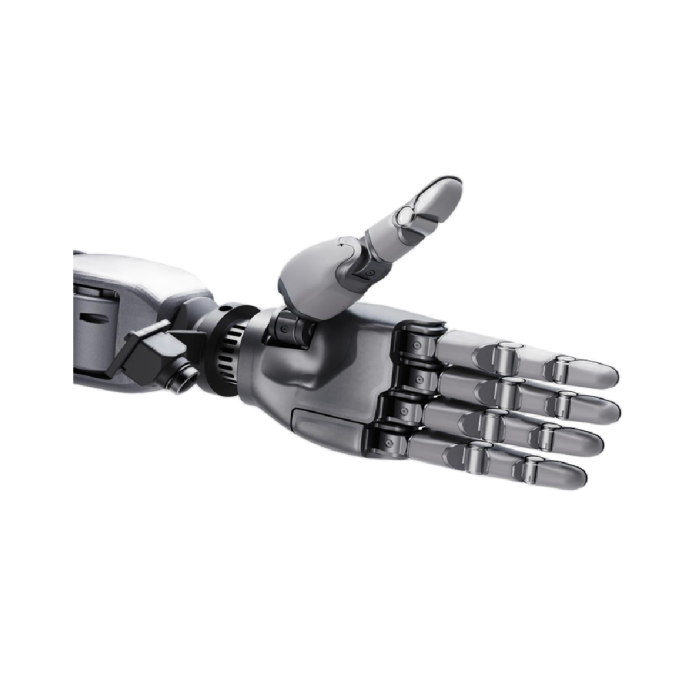
The defining feature of this configuration is its hands. The manufacturer equips the H2 Plus with dual Sharpa Wave tactile five-finger hands, providing 22 active degrees of freedom in the hands and bringing the robot to 75 degrees of freedom across the body and hands. Tactile sensing matters because vision alone cannot tell a robot how firmly it is holding something, whether an object is slipping, or where contact has actually been made.
Perception is designed around the same goal. A head-mounted stereo camera with a wide field of view surveys the scene, wrist cameras supply a close-range view of the hands as they work, and an inertial measurement unit tracks the body's motion. Together, these give researchers several coordinated viewpoints on a single grasp: the overview, the close-up and the body's own sense of balance.
Technical Specifications
| Specification | Value (H2 Plus configuration) |
|---|---|
| Chassis height and weight | Nearly 6 feet tall; 150 pounds |
| Body degrees of freedom | 31 |
| Hand degrees of freedom | 22 active DOF in the hands |
| Total degrees of freedom | 75 across body and hands |
| Hands | Dual Sharpa Wave tactile five-finger hands |
| Head camera | Stereo camera with wide field of view: 140 degrees horizontal, 102 degrees vertical |
| Additional sensing | Wrist cameras for close-range manipulation; IMU for motion tracking |
| Connectivity | Ethernet, Wi-Fi 6, Bluetooth 5.2, USB |
| Audio | Microphone array and speakers for voice interaction |
| Battery | 15Ah, 0.972kWh; about three hours of life |
| Safety | On-remote emergency stop function |
Specifications are as published by the manufacturer and are confirmed against the datasheet at quotation.
The manufacturer has not published the weight, dimensions or IP rating of the hands, the robot's top speed, its operating temperature range or a hand-specific list of what is in the box; each of these is confirmed at quotation.
What do the SharpaWave tactile hands change for manipulation research?
Most humanoid research has, until recently, treated the hand as an end effector that either opens or closes. A hand with 22 active degrees of freedom invites a different kind of experiment: in-hand repositioning of an object, adjusting grip as a load changes, or using individual fingers for tasks such as pressing, pinching and pushing. When those fingers also sense contact, a controller can respond to what it feels rather than relying solely on what it predicted.
The value of this increases when the hands are attached to a body with 31 degrees of freedom of its own. Reaching across a table, lifting an object and carrying it while walking all require the arms, torso and legs to compensate for what the hands are doing. With 75 degrees of freedom in total, the platform lets a team study those interactions directly, instead of simulating the body or fixing the arm to a frame.
The camera arrangement supports this work. The wrist cameras show the hand and object at close range, precisely where the head camera's view is most likely to be blocked by the robot's own arm. The wide stereo field of view of the head camera, in turn, keeps the surrounding scene in sight, which is useful for planning the approach before contact begins.
How should the SharpaWave version be weighed against the BrainCo Revo 3 options?
Robots Middle East also supplies H2 EDU PLUS configurations built around BrainCo Revo 3 hands with the SHF3L sensing camera, including the Unitree H2 EDU PLUS BrainCo Revo 3 U21 Dexterous Hand (NO TACTILE)— with SHF3L Sensing Camera, the Unitree H2 EDU PLUS BrainCo Revo 3 U21T Tactile Dexterous Hand — with SHF3L Camera and the Unitree H2 EDU PLUS BrainCo Revo 3 U21V Visuo-Tactile Hand — with Sensing SHF3L Camera. The decision usually begins with the research question. If your work depends on contact feedback from the fingers, a tactile hand such as the SharpaWave is the natural starting point; if your programme concentrates on locomotion, vision-guided reaching or teleoperation, a non-tactile option may meet the brief.
Because hand specifications differ between suppliers, we recommend comparing the exact datasheets of the shortlisted configurations side by side. Our team prepares that comparison as part of the quotation, so that the choice rests on documented figures rather than on product names.
Who is the Unitree H2 EDU PLUS SharpaWave Dexterous Hand — with Sensing SHF3L Camera for?
The clearest fit is a university or institute laboratory working on dexterous manipulation, embodied artificial intelligence or human-robot interaction, where tactile feedback and a human-scale body are both essential to the research. Groups developing learning-based controllers will value the combination of tactile hands, wrist cameras and head stereo vision as a rich source of multi-modal data for training and evaluation.
Corporate research and development teams exploring humanoids for logistics, manufacturing or service settings form a second audience. For them, the platform offers a way to test handling tasks on a body sized for existing workspaces before committing to a larger programme. System integrators building demonstrators for clients, and advanced engineering courses that want students to work on a complete humanoid rather than isolated components, complete the picture.
Teams whose projects do not require touch sensing, or who wish to compare hand technologies, should review the BrainCo Revo 3 configurations named above alongside this one.
What is the Unitree H2 EDU PLUS SharpaWave Dexterous Hand — with Sensing SHF3L Camera used for?
- Dexterous manipulation research: studying grasping, in-hand repositioning and fine finger control on a full humanoid body.
- Tactile learning: collecting contact-rich data to train and evaluate controllers that respond to touch.
- Whole-body coordination: examining how posture and balance adapt while the hands lift, carry and place objects.
- Teleoperation and demonstration capture: recording human-guided tasks from head and wrist viewpoints for imitation learning.
- Human-robot interaction: exploring voice-driven tasks through the microphone array and speakers.
- Applied evaluation: trialling handling tasks in workspaces designed for people before wider deployment.
Pricing and Availability
This configuration is supplied on quotation, prepared to match the exact build, accessories and software support your project requires. Delivery, customs clearance and technical support are arranged together with your quotation by Robots Middle East. Our team will also confirm the outstanding specifications listed above against the current datasheet, so that your procurement file is complete. Request a tailored quotation for the Unitree H2 EDU PLUS SharpaWave Dexterous Hand — with Sensing SHF3L Camera using the form available on this page.
Frequently Asked Questions
How many degrees of freedom does the robot have?
The manufacturer lists 31 degrees of freedom across the body and 22 active degrees of freedom in the hands, for a total of 75 across body and hands.
Are the hands tactile?
Yes. The H2 Plus is equipped with dual Sharpa Wave tactile five-finger hands designed for dexterous manipulation.
What cameras and sensors are fitted?
The robot carries a head-mounted stereo camera with a field of view of 140 degrees horizontal and 102 degrees vertical, wrist cameras for close-range manipulation and an inertial measurement unit for motion tracking.
How long does the battery last?
The battery has a capacity of 15Ah, 0.972kWh, with about three hours of life.
Which connections does the robot support?
It offers Ethernet, Wi-Fi 6, Bluetooth 5.2 and USB, together with a microphone array and speakers for voice interaction.
Is there an emergency stop?
Yes. An emergency stop function on the remote allows an operator to disengage the robot quickly and safely.
Where can I buy the Unitree H2 EDU PLUS SharpaWave Dexterous Hand — with Sensing SHF3L Camera and what does it cost?
You can purchase it from Robots Middle East, which supplies it across the Middle East. The cost depends on the configuration and support you select, so we provide it through a tailored quotation that you can request on this page.
Summary
A hand tested on a bench proves that it can grip; a hand tested on a humanoid shows whether a robot can actually work. This configuration places SharpaWave tactile hands on Unitree's human-scale H2 body, surrounds them with head, wrist and inertial sensing, and gives research teams 75 degrees of freedom with which to study touch, vision and balance together. For laboratories and development teams that want manipulation results grounded in a complete body, supplied, delivered and supported by Robots Middle East, this page is the starting point.