
Unitree H2 EDU Standard Humanoid Robot
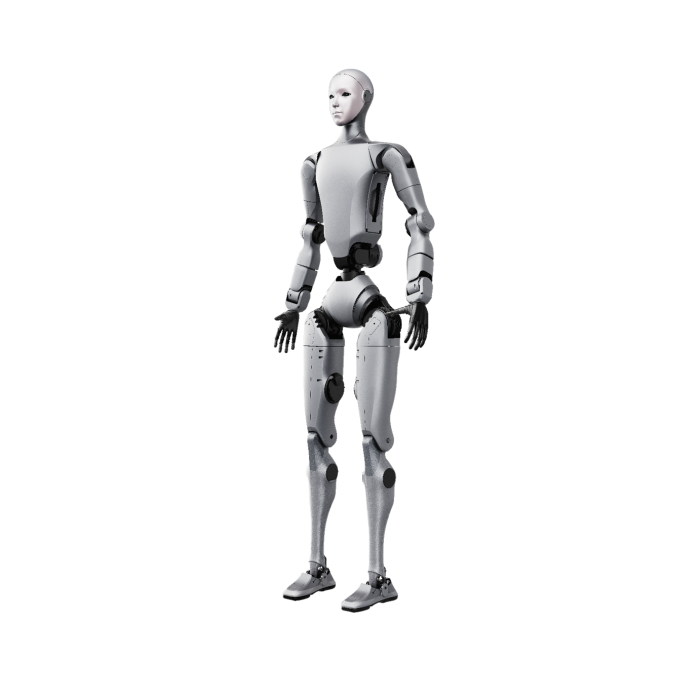
In stock
- BRAND:
- UNITREE ROBOTICS
- MODEL:
- H2-EDU-Standard
- PART #:
- H2-EDU-Standard
- ORIGIN:
- China
- Warranty:
- 12 MONTHS
- AVAILABILITY:
- SUBJECT TO AVAILABILITY
- SKU:
- Unitree-H2-EDU-Standard
Unitree H2 EDU Standard Humanoid Robot
In a shared research laboratory, the scarcest resource is rarely the robot itself; it is the confidence that an experimental piece of code will not bring a full-height machine down with it. The Unitree H2 EDU Standard Humanoid Robot approaches that problem by separating duties. One processor looks after the robot's own functions, while a second, more powerful one is reserved for the user's development work. Your algorithms therefore have room to run without sharing resources with the systems that keep the robot operating. The arms are left without robotic hands, so each team decides what should be attached to them.
Robots Middle East sells the Unitree H2 EDU Standard Humanoid Robot and supplies it to universities, research institutes, integrators and corporate innovation teams across the Middle East. Robots Middle East prepares each quotation, coordinates delivery to the customer's site and provides support after handover. Every enquiry receives a direct, written answer on configuration and scope.
Background
Unitree Robotics and its lineage
Unitree Robotics became widely known for its legged robots, first with quadrupeds used in research, inspection and education, and later with a growing family of humanoid platforms. Over time the company has developed its own actuators, control software and robot bodies, which gives its humanoids a recognisable engineering approach: high-torque joints, compact packaging and a strong orientation towards developers who want to build on the hardware rather than simply operate it. The H2 continues that approach in a full-height bipedal form.
Where the EDU Standard sits in the H2 family
The H2 range comprises several versions: H2 BASIC, H2 EDU STANDARD, H2 EDU SMART and H2 Plus. The EDU versions are aimed at development work. They add a dedicated computer for custom development, support for secondary development and, across the EDU line, a choice of dexterous hand models. Within that line, the EDU Standard is the configuration for teams who want the development computing without hands fitted. It combines a Core i5 for the robot's functions with a Core i7 dedicated to user development, and it ships with no robotic hands. It therefore suits buyers who regard the end effector as part of their own research question rather than a fixed feature.
Technical Specifications
| Specification | Value |
|---|---|
| Configuration | 2 computing units: Core i5 for the robot's functions; Core i7 dedicated to user development |
| Robotic hands | None included |
| Standing dimensions | 1820 x 456 x 218 mm |
| Weight with battery | Approximately 70 kg |
| Total degrees of freedom | 31 |
| Thigh + calf length | 1045 mm |
| Materials | Aerospace-grade aluminium + titanium alloy + high-strength engineering plastics |
| Cooling | Local air cooling |
| Arm peak torque | 120 Nm |
| Leg peak torque | 360 Nm |
| Battery | 15 Ah (0.972 kWh) |
| Battery life | Approximately 3 h |
| Removable smart battery | Yes |
| Computing for custom development | PC2: Intel Core i7 |
| High-performance computing module (H2 EDU line) | Up to Jetson AGX Thor (2070 TOPS) |
| Secondary development | Yes |
| Dexterous hands (H2 EDU line) | Several model options; none fitted to the EDU Standard |
| Vision sensor | Wide-angle humanoid binocular camera |
| Voice interaction | Array microphones + high-power speaker |
| Connectivity | Wi-Fi 6, Bluetooth 5.2 |
| Manual remote controller | Yes |
| Charger | Yes |
Specifications are as published by the manufacturer and are confirmed against the datasheet at quotation.
The manufacturer has not published the top speed, IP rating, charging time, operating temperature, noise level, hand payload or software and SDK version; these are confirmed at quotation.
Why does the H2 EDU Standard ship without hands?
For many development teams, the hand is the part of a humanoid they most want to control. Grasping research, tool use and manipulation studies often depend on a particular gripper, a custom end effector or a specific dexterous hand. A pre-installed hand that does not match the experiment can become an obstacle rather than an advantage. By shipping the EDU Standard with no robotic hands, Unitree leaves that decision to the buyer.
The rest of the EDU line shows that hands are part of the wider family. Several dexterous hand models are offered as options for the H2 EDU line, so a team can begin with the bare arms and choose a hand later, once the requirement is clear. The arms themselves deliver a peak torque of 120 Nm. Together with 31 degrees of freedom across the body, this gives integrators a capable base for whatever they attach. Any manipulation plan should be reviewed with Robots Middle East before an end effector is selected.
What does the second computer change for developers?
On a humanoid, the software that keeps the robot running operates continuously. If user code competes with it for the same processor, every experiment carries extra risk. The EDU Standard divides the work between two computing units. The Core i5 handles the robot's functions, while the Core i7 is dedicated to user development and is designated PC2.
In practice, research groups can run perception pipelines, planning experiments or interaction software on their own computer, with its resources set aside for them. Secondary development is supported, and the platform includes a wide-angle humanoid binocular camera, array microphones, a high-power speaker, Wi-Fi 6 and Bluetooth 5.2. These give the developer's computer vision, audio and connectivity to work with. For heavier workloads, the H2 EDU line offers a high-performance computing module of up to Jetson AGX Thor (2070 TOPS). Robots Middle East advises on whether such a module suits a given project.
Who is the Unitree H2 EDU Standard Humanoid Robot for?
The clearest fit is the university laboratory or research institute working on locomotion, whole-body control, perception or human-robot interaction. These teams need a full-height bipedal platform and want their own code on dedicated hardware. Their end-effector requirements may still be open, or they may already have a hand or gripper of their own in mind.
System integrators form a second segment. A company developing a bespoke manipulation solution can use the EDU Standard as a base and fit the hand its application demands, rather than first removing or working around a standard one. Corporate innovation teams and technology centres evaluating humanoids for future workflows can also use the platform. Its removable smart battery, manual remote controller and charger are included, so trials can begin without a separate search for basic accessories.
Teaching programmes in robotics and artificial intelligence are a further audience. The separation between the robot's own computer and the development computer makes it easier to give students meaningful access to a real humanoid.
Buyers who already know they want hands fitted from the start should compare the other versions in the Unitree H2 EDU category. The SMART configurations, such as the Unitree H2 EDU SMART A Humanoid Robot and the Unitree H2 EDU SMART B Humanoid Robot, are listed separately, and Robots Middle East will set out the differences in writing on request.
What is the Unitree H2 EDU Standard Humanoid Robot used for?
- Locomotion research: studying bipedal walking and balance on a full-height body with high-torque legs.
- Whole-body control: developing controllers that coordinate many joints across the arms, torso and legs.
- End-effector development: testing custom grippers or chosen dexterous hands on arms delivered without hands.
- Perception and embodied AI: running vision and learning workloads on the dedicated development computer using the binocular camera.
- Human-robot interaction: building speech and dialogue applications with the array microphones and high-power speaker.
- Teaching and demonstration: giving students and visitors supervised, hands-on contact with a working humanoid platform.
Pricing and Availability
The Unitree H2 EDU Standard Humanoid Robot is offered by quotation, because the final scope depends on the configuration, any optional hand or computing module, and the services each project needs. Robots Middle East reviews your intended use, agrees the configuration with you and returns a written proposal. Delivery, customs clearance and after-sales support are arranged together with the quotation, so the full scope is agreed in one place. To begin, send your requirements using the quotation request available on this page.
Frequently Asked Questions
Does the H2 EDU Standard come with robotic hands?
No. The EDU Standard ships with no robotic hands. Several dexterous hand models are available as options for the H2 EDU line.
How is computing divided on this version?
The robot has two computing units. A Core i5 runs the robot's functions, and a Core i7 is dedicated to user development.
Is secondary development supported?
Yes. Secondary development is supported on the H2 EDU, and the Core i7 is set aside for that work.
How tall and heavy is the robot?
The standing dimensions are 1820 x 456 x 218 mm, and the weight with battery is approximately 70 kg.
What battery does it use and how long does it run?
It uses a removable smart battery rated at 15 Ah (0.972 kWh), with a battery life of approximately 3 h.
What is included in the package?
The package includes the removable smart battery, a manual remote controller and a charger.
Where can I buy the Unitree H2 EDU Standard Humanoid Robot and what does it cost?
You can buy it from Robots Middle East, which supplies the robot across the Middle East. The cost is set out in a written quotation based on your configuration, and you can request one through this page.
Summary
The Unitree H2 EDU Standard Humanoid Robot is designed for laboratories where experimental work should not compete with the systems that keep the robot operating. It combines a full-height bipedal body, 31 degrees of freedom and high-torque arms and legs with a clear division of computing: a Core i5 for the robot's functions and a Core i7 reserved for the user. By shipping without hands, it leaves the most research-sensitive component to the buyer, with the dexterous hand options of the H2 EDU line available if they are needed. Robots Middle East quotes, delivers and supports the robot across the region. For any team that wants a humanoid to develop on rather than simply operate, this page is the starting point.