
Unitree H1-2 Universal Humanoid Robot
In stock
- BRAND:
- UNITREE ROBOTICS
- PART #:
- H1-2
- ORIGIN:
- China
- AVAILABILITY:
- SUBJECT TO AVAILABILITY
- SKU:
- Unitree-H1-2
Unitree H1-2 Universal Humanoid Robot
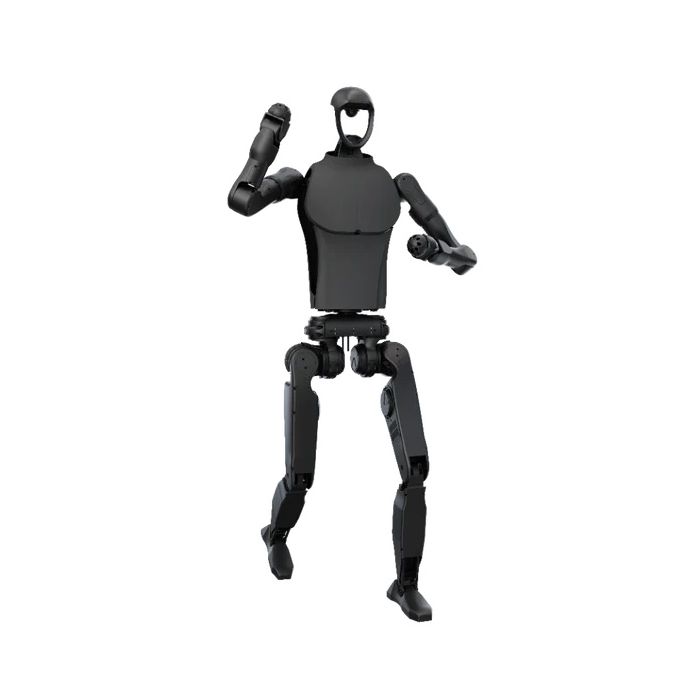
Two humanoids can look almost identical on a stage and behave quite differently after a month in a working laboratory. The difference lies where a photograph cannot reach: the bearings at each joint output, the torque each actuator delivers for its own mass, and whether the software keeps improving after the crate has been opened. The Unitree H1-2 Universal Humanoid Robot is best understood from the inside out. It is a full-size universal humanoid robot standing about 178CM tall and weighing about 70kg. Its joints turn on industrial grade crossed roller bearings, its peak torque density reaches 189N.m/Kg, and its software is kept current through continuous OTA upgrades and updates. The outward shape is human. The engineering choices beneath it are what make it a long-term research and development platform rather than a showpiece.
Robots Middle East supplies the Unitree H1-2 to universities, research institutes, system integrators and industrial innovation teams across the Middle East. Robots Middle East prepares each quotation around the configuration you request, including the choice of dexterous hand, and arranges delivery, customs formalities and after-sales support for projects throughout the region.
Background
Unitree Robotics and its lineage
The H1-2 is manufactured by Yushu Technology Co., Ltd., which trades internationally as Unitree Robotics. The company is widely associated with legged robots, and its humanoid range extends that experience in dynamic locomotion from four legs to two. The sources name two versions in this line: the original H1 and the H1-2 described on this page. Buyers who wish to see both side by side may browse the Unitree H1 / H1-2 category, and the wider field of two-legged platforms is gathered under Bipedal Humanoids. Every figure in this article belongs to the H1-2 alone; none is carried over from its sibling.
Positioning: a universal, full-size platform
Unitree describes the H1-2 as a universal humanoid robot, and the word is chosen with care. Rather than being tailored to a single task, the robot offers a complete human-scale body: legs with six degrees of freedom each, arms with seven degrees of freedom each, a perception system combining 3D LIDAR with a depth camera, and the option of a Dex5-1 or another ambidextrous hand at the end of each arm. That combination places it among platforms intended for development work, where research groups and integrators write their own behaviours on top of a capable mechanical and sensing base. Full-size humanoids of this kind are generally used where a robot must operate in spaces, and with tools, that were designed for people.
Technical Specifications
| Specification | Unitree H1-2 |
|---|---|
| Product type | Full-size universal humanoid robot |
| Height | About 178CM |
| Weight | About 70kg |
| Key dimensions | (1503+285)mm × 510mm × 287mm |
| Thigh and calf length | 400mm × 2 |
| DOF of each leg | 6 (Hip x 3 + Knee x 1 + Ankle x 2) |
| DOF of each arm | 7 (Shoulder x 3 + Elbow x 1 + Wrist x 3) |
| Arm load | Peak: About 21Kg; Rated: About 7Kg |
| Moving speed | <2m/s |
| Battery | Battery capacity 15Ah (0.864KWh), Max Voltage 67.2V |
| Sensor configuration | 3D LIDAR + Depth Camera |
| Joint output bearing | Industrial grade crossed roller bearings (high precision, high load capacity) |
| Peak torque density | 189N.m/Kg |
| Dexterous hand | Optional Dex5-1 or other ambidextrous hands |
| Software updates | Continuous OTA Software Upgrade and Update |
Specifications are as published by the manufacturer and are confirmed against the datasheet at quotation.
The manufacturer has not published the runtime per charge, the IP rating, the operating system, the contents of the box, the wireless connectivity or the operating temperature range; these are confirmed at quotation.
What do crossed roller bearings and torque density mean for the H1-2?
A humanoid joint is asked to do something few industrial mechanisms must: carry loads from several directions at once while moving quickly and precisely. When the robot steps forward, the hip joint bears the weight of the upper body, resists the twisting of the stride and must still hold its position accurately enough for the controller to keep balance. Unitree addresses this at the joint output with industrial grade crossed roller bearings, a bearing type valued for high precision and high load capacity in a compact package. For a research team, that matters because a joint which stays precise under load gives control algorithms consistent behaviour to work against, experiment after experiment.
The second figure, peak torque density of 189N.m/Kg, describes how much torque the actuators deliver relative to their own mass. In a walking machine, every gram in the legs has to be accelerated and decelerated with each step, so actuators that deliver strong torque without adding bulk free the robot to move dynamically and leave headroom for the arms and hands. Combined with a moving speed of <2m/s and legs built from a 400mm thigh and a 400mm calf, the H1-2 is designed to cover ground with a natural human proportion rather than a cautious shuffle.
The third element is invisible but equally important: continuous OTA software upgrades and updates. A platform whose locomotion and control software is refreshed over the air continues to develop during its service life, which suits organisations planning multi-year programmes rather than a single demonstration.
How much can the arms of the H1-2 carry and manipulate?
Each arm of the H1-2 has seven degrees of freedom: three at the shoulder, one at the elbow and three at the wrist. That arrangement mirrors the human arm closely, and the three-axis wrist in particular allows the hand to be oriented independently of the arm's position, which is what makes tasks such as turning a component, presenting an object or reaching around an obstacle possible. Unitree publishes an arm load of about 7Kg rated and about 21Kg at peak. The rated figure is the meaningful one for planning continuous work; the peak figure describes the margin available for short efforts.
At the end of the arm, buyers may specify the Dex5-1 or another ambidextrous hand. The choice of hand shapes the robot's role more than almost any other configuration decision: a platform for grasping research has different requirements from one used for locomotion studies, where hands may be secondary. Robots Middle East discusses the hand options with each buyer, so that the configuration delivered matches the programme it is intended to serve.
Who is the Unitree H1-2 Universal Humanoid Robot for?
University robotics departments form a natural first group. A full-size platform with leg and arm kinematics close to human proportions supports teaching and research in bipedal locomotion, whole-body control, manipulation and human-robot interaction, and the 3D LIDAR and depth camera provide the perception inputs that navigation and grasping research require.
Research institutes and corporate laboratories are a second group, particularly those working on embodied artificial intelligence, where software must learn to act through a physical body. Here the precision of the joints and the continuous software updates support long experimental campaigns.
System integrators and industrial innovation teams form a third group. They use humanoids to evaluate whether tasks in existing facilities, designed around human workers, can be addressed by a robot without rebuilding the workspace. Innovation centres, museums and exhibition organisers, meanwhile, use full-size humanoids to show visitors the current state of robotics.
Buyers who are weighing the H1-2 against the original Unitree H1 are welcome to compare both pages and to ask Robots Middle East for a side-by-side quotation, so that the choice rests on the specifications of each version.
What is the Unitree H1-2 Universal Humanoid Robot used for?
- Locomotion research: developing and testing walking, balance and recovery algorithms on legs with six degrees of freedom each.
- Manipulation studies: exploring grasping and dexterous handling with seven-degree-of-freedom arms and an optional Dex5-1 or other ambidextrous hand.
- Embodied AI development: training and validating models that must perceive and act through a full human-scale body.
- Perception and navigation: mapping and moving through indoor environments using the combined 3D LIDAR and depth camera.
- Industrial feasibility trials: evaluating whether tasks in facilities built for people can be carried out by a humanoid robot.
- Education and public engagement: teaching robotics at university level and demonstrating advanced humanoid technology to visitors.
Pricing and Availability
The Unitree H1-2 is supplied on quotation, because the final configuration, above all the choice of dexterous hand and any development accessories, determines what is delivered. Robots Middle East prepares a written quotation for each request. Delivery, customs clearance and technical support are arranged together with the quotation. To begin, please submit your requirements using the quotation request available on this page.
Frequently Asked Questions
How tall and heavy is the Unitree H1-2?
The H1-2 stands about 178CM tall and weighs about 70kg. Its key dimensions are (1503+285)mm × 510mm × 287mm.
How many degrees of freedom does the H1-2 have?
Each leg has six degrees of freedom: three at the hip, one at the knee and two at the ankle. Each arm has seven: three at the shoulder, one at the elbow and three at the wrist.
What sensors does the H1-2 use?
The H1-2 combines a 3D LIDAR with a depth camera. Together they give the robot a three-dimensional view of its surroundings for navigation and manipulation.
What load can the arms carry?
Each arm has a rated load of about 7Kg and a peak load of about 21Kg. The rated figure is the appropriate basis for planning sustained tasks.
Which dexterous hands are available?
The H1-2 can be fitted with the optional Dex5-1 or other ambidextrous hands. Robots Middle East includes the hand of your choice in the quotation.
What battery does the H1-2 use and how fast can it move?
The battery has a capacity of 15Ah (0.864KWh) with a maximum voltage of 67.2V. The robot's moving speed is <2m/s.
Where can I buy the Unitree H1-2 Universal Humanoid Robot and what does it cost?
You can buy the Unitree H1-2 from Robots Middle East, which supplies it across the Middle East. The cost depends on the configuration chosen, so please request a quotation on this page.
Summary
The Unitree H1-2 rewards the buyer who looks beneath the surface. Its human outline, about 178CM tall with legs and arms proportioned like our own, is what first catches the eye, but its long-term value rests on less visible choices: industrial grade crossed roller bearings at the joint outputs, a peak torque density of 189N.m/Kg, seven-degree-of-freedom arms ready for a Dex5-1 or other ambidextrous hand, a 3D LIDAR and depth camera for perception, and software that continues to evolve through OTA updates. For universities, research institutes and integrators in the Middle East planning serious humanoid programmes, Robots Middle East provides the configuration, delivery and support around it. To specify your H1-2 and receive a quotation, this page is the starting point.
Specifications
General
Physical
Mobility
Performance
Computing
Software
What's included
Related Products
Out of stock