
Unitree H1 Battery (H1-BATTERY)
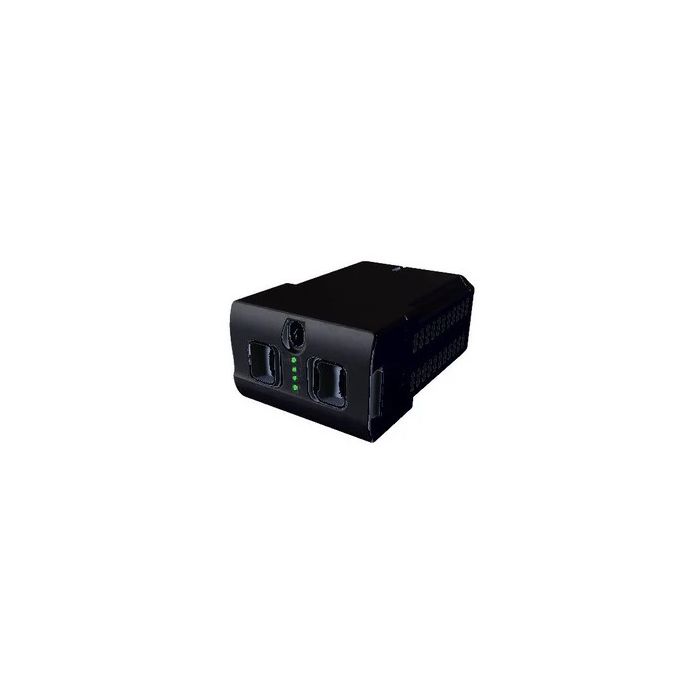
In stock
- BRAND:
- UNITREE ROBOTICS
- PART #:
- H1-BATTERY
- ORIGIN:
- China
- AVAILABILITY:
- SUBJECT TO AVAILABILITY
- SKU:
- Unitree-H1-BATTERY
Unitree H1 Battery (H1-BATTERY)
Every robotics schedule is, underneath, an energy schedule. The demonstration booked for the morning, the gait trial after lunch and the student session at the end of the day all draw on the same store of charge, and the humanoid on the floor can only keep the appointments its battery allows. The Unitree H1 Battery (H1-BATTERY) sets that budget for the Unitree H1. It is a DC 28.8V pack rated at 15000mAh, or 432Wh, and it is governed by Unitree's self-developed battery management system. With a second pack on hand, charging becomes a routine that runs alongside the work rather than a pause that stops it.
Robots Middle East supplies the Unitree H1 Battery (H1-BATTERY) to research institutes, universities, system integrators and corporate innovation teams across the Middle East. We quote each order against the buyer's own H1 configuration, arrange delivery and customs clearance to the destination, and remain the point of contact for support once the pack has arrived. The battery belongs to our Unitree Batteries range and to the wider Humanoid Accessories category, where the other consumables and add-ons for Unitree humanoids are gathered.
Background
Unitree Robotics and the H1 lineage
Unitree Robotics, based in Hangzhou, China, built its reputation on legged robots, first with quadrupeds and then with humanoid platforms aimed at research, education and applied development. The H1 is the company's full-size humanoid, and it has become a familiar platform in laboratories that study locomotion, whole-body control and human–robot interaction. The family includes two versions, the H1 and the H1-2. Because a battery is a system component rather than a stand-alone product, the pack is best understood as part of that platform: it is the item an H1 team replaces, rotates and keeps in reserve, while the robot itself stays in service.
A pack built around its own management system
The defining technical choice in this pack is that Unitree developed its battery management system in-house. In any rechargeable pack of this class, the BMS is the layer that watches over the cells, governs charging and discharging and communicates the state of the pack to the equipment it powers. Keeping that layer within the manufacturer's own engineering means the battery is designed as part of the H1 ecosystem rather than adapted to it. For a buyer, the practical consequence is simple: the pack that Robots Middle East supplies is the manufacturer's own battery for the platform, not a third-party substitute that has to be validated separately.
Technical Specifications
| Specification | Value |
|---|---|
| Product size | 120mm * 80mm * 182mm |
| Rated voltage | DC 28.8V |
| Rated capacity | 15000mAh, 432Wh |
| Charging current | 9A |
| Battery management system | Self developed battery management system (BMS) |
| Package contents | Unitree H1 Battery 15000mAh |
Specifications are as published by the manufacturer and are confirmed against the datasheet at quotation.
The manufacturer has not published the weight, the cell chemistry, the cycle life, the operating temperature range, the IP rating, the connector type or the charging time; they are confirmed at quotation.
What does a 432Wh rating mean for an H1 programme?
The rated capacity of the Unitree H1 Battery is 15000mAh at a rated voltage of DC 28.8V, which the manufacturer expresses as 432Wh. The watt-hour figure is the more useful of the two for planning, because it describes the energy the pack holds rather than the charge alone, and it allows a team to compare the battery with other equipment on the same basis.
What that energy delivers in practice depends on how the robot is used. A humanoid standing for a perception demonstration draws very differently from one walking, balancing or carrying out dynamic manoeuvres. Experienced H1 teams therefore plan around their own workload: they observe how a typical session consumes the pack, then decide how many batteries keep the robot available for the length of their working day.
The charging current of 9A belongs in the same planning exercise, because it governs how the pack is replenished between sessions. Where the robot must remain available across a long day of trials or an exhibition, a rotation of two or more packs settles the matter: one battery works while another charges, and the robot's timetable no longer depends on the charger.
Why does the self-developed BMS matter to buyers?
Battery management is the part of a pack that buyers rarely see but always depend upon. In general terms, a BMS supervises the condition of the cells, protects them from operating outside safe limits and keeps charging orderly. When the manufacturer designs that system itself, as Unitree has done for this pack, the battery and the robot are engineered by the same hands, which simplifies questions of fit and behaviour within the platform.
This also shapes how the purchase should be approached. Since the pack is a managed component of the H1 system, buyers are well advised to source the manufacturer's own battery through an authorised channel, keep packs within the same fleet consistent, and record which batteries serve which robot. Robots Middle East can advise on rotation and storage practice when the order is placed, so that the packs remain in good order between projects.
Who is the Unitree H1 Battery for?
The first group is the research laboratory that already operates an H1 and needs more working time from it. Locomotion and control experiments tend to run in repeated trials, and a spare pack lets researchers continue while the first one charges. The second group is the university department that uses the H1 in teaching, where a session cannot wait for a battery and several cohorts may share the same robot during a term.
System integrators form the third group. When an H1 is part of a pilot installation or a proof of concept for a client, the battery becomes a maintenance item, and keeping a replacement on site protects the schedule. The fourth group is the events and demonstration team: exhibitions, trade fairs and visitor programmes ask a humanoid to perform reliably for hours, and a battery rotation is the simplest way to deliver that.
Owners of the H1-2 are asked to state their version when requesting a quotation, so that Robots Middle East can match the order to their unit. Teams working with other Unitree humanoids need the pack designed for their own robot instead: the Unitree H2 Battery — Single Unit serves the H2, and the Unitree G1 Rechargable Lithium-ion Battery (BT2-36) serves the G1.
What is the Unitree H1 Battery used for?
- Replacement pack: restoring an H1 to service when its existing battery reaches the end of its useful life.
- Spare for extended trials: keeping locomotion and control experiments running while a second pack charges.
- Teaching sessions: ensuring that a shared H1 is ready for each class without waiting on a recharge.
- Exhibitions and demonstrations: sustaining a humanoid on show through a full programme of visitor appearances.
- Integration pilots: holding a maintenance stock on site for H1 units deployed in client proof-of-concept projects.
- Fleet rotation: balancing use across several packs so that a laboratory's H1 platforms remain consistently available.
Pricing and Availability
Robots Middle East supplies the Unitree H1 Battery (H1-BATTERY) on quotation, so that each order reflects the buyer's H1 version, the number of packs required and the destination. Delivery, customs clearance and after-sales support are arranged together with the quotation. When you request it, please tell us which H1 version you operate and how many batteries your programme needs, and we will prepare the quotation accordingly. A personalised quotation for the Unitree H1 Battery is available on this page.
Frequently Asked Questions
Which robot is the Unitree H1 Battery designed for?
It is the manufacturer's battery for the Unitree H1 humanoid family, which includes the H1 and the H1-2. Please state your version when you request a quotation.
What are the rated voltage and capacity?
The pack has a rated voltage of DC 28.8V and a rated capacity of 15000mAh, which the manufacturer gives as 432Wh.
What is included in the package?
The package contains the Unitree H1 Battery 15000mAh. Any additional items, such as charging equipment, can be raised when you request a quotation.
What charging current does the pack use?
The charging current is 9A. Teams that need the robot available all day usually keep a second pack charging while the first is in use.
What are the dimensions of the battery?
The product size is 120mm * 80mm * 182mm.
Does the pack have its own battery management system?
Yes. The battery uses Unitree's self-developed battery management system (BMS), designed as part of the H1 platform.
Where can I buy the Unitree H1 Battery (H1-BATTERY) and what does it cost?
You can buy it from Robots Middle East, which supplies it across the Middle East. The cost depends on quantity, configuration and destination, and is set out in a personalised quotation that you can request on this page.
Summary
A humanoid programme runs to a timetable, and that timetable is written in energy. The Unitree H1 Battery (H1-BATTERY) gives the H1 its working budget: a DC 28.8V pack rated at 15000mAh, or 432Wh, in a 120mm * 80mm * 182mm body, charged at 9A and supervised by Unitree's own battery management system. Its value lies less in any single figure than in what it allows a team to plan: replacement when a pack is worn, rotation when the day is long, and reserve stock when a robot is deployed away from the laboratory. Robots Middle East quotes the pack against your configuration and arranges delivery, customs and support. For laboratories, universities and integrators that want their H1 ready whenever the schedule calls, this page is the starting point.
Specifications
General
What's included
Related Products
Out of stock