
Unitree L1 Pm Lidar (Precision Measurement) (LIDAR-L1-PM)
In stock
- BRAND:
- UNITREE ROBOTICS
- PART #:
- LIDAR-L1-PM
- ORIGIN:
- China
- AVAILABILITY:
- SUBJECT TO AVAILABILITY
- SKU:
- Unitree-LIDAR-L1-PM
Unitree L1 Pm Lidar (Precision Measurement) (LIDAR-L1-PM)
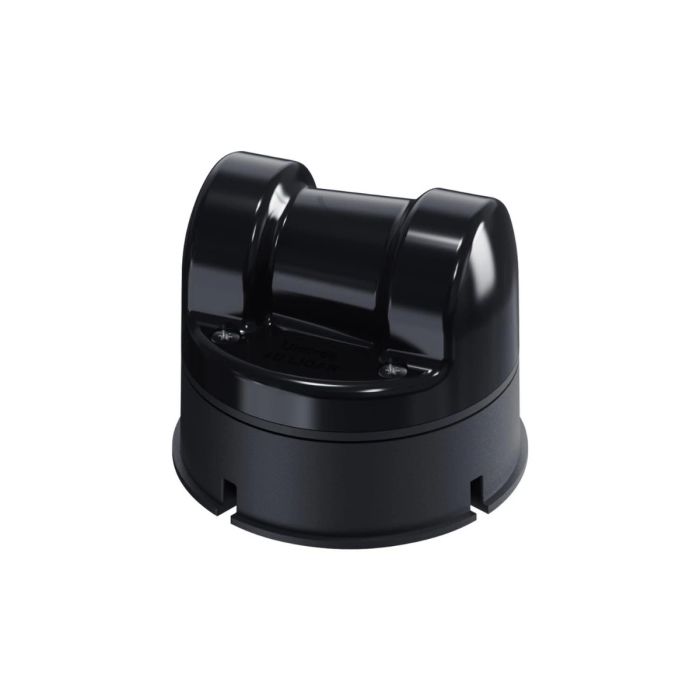
Every mapping project eventually asks the same question, and it is rarely “what is out there?” It is “exactly where is it?” A robot that recognises a doorway but misjudges its edge will still scrape the frame, and a map that drifts by a little on every pass soon stops being useful. The Unitree L1 Pm Lidar (Precision Measurement) (LIDAR-L1-PM) is built for platforms that must know where things are, not merely that they exist. It is a 4D LiDAR that pairs three-dimensional position with a grayscale channel and sweeps a 360° × 90° field of view. Its measurement accuracy is ±2.0cm, and the housing is small enough for a compact robot to carry without a structural redesign.
Robots Middle East supplies the L1 PM to universities, research institutes, system integrators and industrial engineering teams across the Middle East. Each quotation is prepared for the specific project. Robots Middle East then arranges delivery to the customer’s site and remains the point of contact for technical support once the sensor is in service, so the LiDAR arrives as part of a planned robotic system rather than as a loose component.
Background
Unitree Robotics and its sensing line
Unitree Robotics is best known for its legged robots, the quadrupeds and humanoids that have become familiar sights in research laboratories and engineering demonstrations. Machines of that kind depend on perception: a walking robot must judge terrain, obstacles and its own position continuously. Unitree therefore developed its own LiDAR range alongside its robots and offers it as a standalone sensor. The L1 series is the result, and it is sold to developers whether or not their platform carries the Unitree name. It sits in the wider Unitree Lidar category, which also includes third-party scanners supplied for specific Unitree robots.
Precision Measurement within the L1 family
The L1 comes in two versions: the L1 PM (Precision Measurement), described on this page, and the L1 RM (Remote Measurement). The names state the design intent of each. The PM is positioned for work in which the accuracy of each measured point matters most: building a reliable map, localising a robot within it and judging clearances close to the machine. Its defining technology is the 4D output. Every return carries a 3D position and a 1D grayscale value, so the sensor delivers geometry and surface information in a single stream.
Technical Specifications
| Specification | Value |
|---|---|
| Data type | 4D LiDAR (3D position + 1D grayscale) |
| Field of view | 360° × 90° |
| Sampling frequency | 43200 points/s |
| Effective frequency | 21600 points/s |
| Measurement accuracy | ±2.0cm |
| Vertical scanning frequency | 180Hz |
| Laser wavelength | 905nm |
| Communication interface | TTL UART |
| Eye safety | Class 1 (IEC60825-1:2014) |
| Weight | 230g |
| Size | 75×75×65mm |
Specifications are as published by the manufacturer and are confirmed against the datasheet at quotation.
Unitree has not published a payload compatibility list, details of the point cloud output format, the cable length or a shock and vibration rating; Robots Middle East confirms these at quotation.
What does “4D” mean on the Unitree L1 PM?
A conventional 3D LiDAR reports where each point lies in space and nothing more. The L1 PM adds a fourth value to every point, a grayscale reading. Two surfaces at the same distance, such as a painted line on a floor and the floor itself, can look identical in geometry alone. With an intensity value attached, they can be told apart. For mapping and localisation software, this extra channel offers more to match against when the robot revisits a space. For a researcher, it means one sensor can supply both a shape and a texture of the environment.
The L1 PM has a sampling frequency of 43200 points/s and an effective frequency of 21600 points/s. The effective figure describes the points delivered for use, so integrators normally size processing, storage and bandwidth around it. The vertical scanning frequency of 180Hz describes how quickly the sensor sweeps through its vertical field. Together with the 360° × 90° coverage, it explains how the L1 PM builds up a dense view of a hemisphere around the robot rather than a single horizontal slice.
Why do size and weight matter for a robot-mounted LiDAR?
On a mobile robot, every gram of sensor weighs against battery life, payload and balance. This is felt most on legged platforms and small wheeled vehicles. At 230g and 75×75×65mm, the L1 PM can be mounted on a compact chassis, a mast or the back of a research quadruped without dominating the design. A small housing also makes the sensor easier to place where its view is least obstructed, which often matters more to map quality than any single figure in the table.
Two further specifications ease integration. The TTL UART communication interface is common on embedded controllers and development boards, so the sensor can connect to the kind of computer already found on many research robots. The Class 1 eye safety rating under IEC60825-1:2014 matters wherever the robot works near people. That includes laboratories, classrooms, offices and shared industrial floors, where an eye-safe laser removes one item from the risk assessment.
Who is the Unitree L1 PM for?
The L1 PM suits buyers who need accurate surround perception on a modest platform. University laboratories use sensors of this class to teach and research simultaneous localisation and mapping, path planning and sensor fusion. Robotics developers use them to give prototype vehicles a full view of their surroundings early in a project, before the final hardware is fixed. System integrators building autonomous mobile robots for warehouses, hospitals or campuses need dependable obstacle detection close to the machine, and so do teams adding perception to an existing Unitree robot.
Projects whose brief centres on remote rather than precision measurement should compare the Unitree L1 Rm Lidar (Remote Measurement) (LIDAR-L1-PM-RM). Every figure on this page belongs to the PM alone. Robots Middle East sets out the differences between the two versions when preparing a quotation. Buyers fitting a sensor to a particular Unitree robot can also review the platform-specific scanners in the Unitree Lidar category and the wider Accessories range.
What is the Unitree L1 PM used for?
- Mapping and localisation: building maps of indoor spaces and keeping a robot located within them as it moves.
- Obstacle detection: spotting objects above, beside and below a robot’s path across a wide vertical field.
- Teaching and research: giving students and researchers a compact 4D sensor for SLAM, perception and fusion experiments.
- Robot prototyping: adding surround perception to new wheeled or legged platforms during early development.
- Indoor scanning: capturing the geometry and surface intensity of rooms, corridors and facilities for digital records.
- Autonomous service robots: supporting navigation for delivery, inspection and guidance robots working near people.
Pricing and Availability
Robots Middle East supplies the L1 PM by quotation, so each offer reflects the exact configuration, the accessories and the integration support a project requires. Delivery, customs clearance and after-sales support are arranged as part of the quotation. Please tell us the target platform, the intended application and the delivery location, and Robots Middle East will confirm the technical details alongside the commercial offer. To begin, the quotation request is available on this page.
Frequently Asked Questions
What does the PM in the product name stand for?
PM stands for Precision Measurement. It distinguishes this version from its sibling, the L1 RM (Remote Measurement).
What field of view does the L1 PM cover?
The L1 PM covers a field of view of 360° × 90°. The sensor therefore sees all the way around the robot and across a wide vertical arc.
How accurate are its measurements?
The measurement accuracy is ±2.0cm.
How does the sensor connect to a robot’s computer?
The L1 PM uses a TTL UART communication interface. Robots Middle East confirms the cable length and the point cloud output format at quotation.
Is the laser safe to use around people?
The sensor carries a Class 1 eye safety rating under IEC60825-1:2014 and uses a 905nm laser wavelength.
Will it fit my robot?
At 230g and 75×75×65mm, the L1 PM is compact. Robots Middle East checks the fit with your specific platform before quoting.
Where can I buy the Unitree L1 Pm Lidar (Precision Measurement) (LIDAR-L1-PM) and what does it cost?
Robots Middle East supplies it across the Middle East by quotation. The cost depends on configuration, delivery and support, and is confirmed in a written offer prepared for your project.
Summary
A map is only as useful as the accuracy of the points behind it, and the L1 PM is built around that idea. It answers “exactly where?” with a measurement accuracy of ±2.0cm, a 360° × 90° field of view and a grayscale value attached to every 3D point. It does so in a 230g housing that a compact robot can carry and with a Class 1 eye-safe laser for shared spaces. For laboratories, developers and integrators who need precise surround perception without redesigning their machine, the sensor is a measured, practical choice. Robots Middle East quotes, delivers and supports it across the region, and for any project that depends on knowing exactly where things are, this page is the starting point.
Specifications
General
What's included
Related Products
Out of stock