
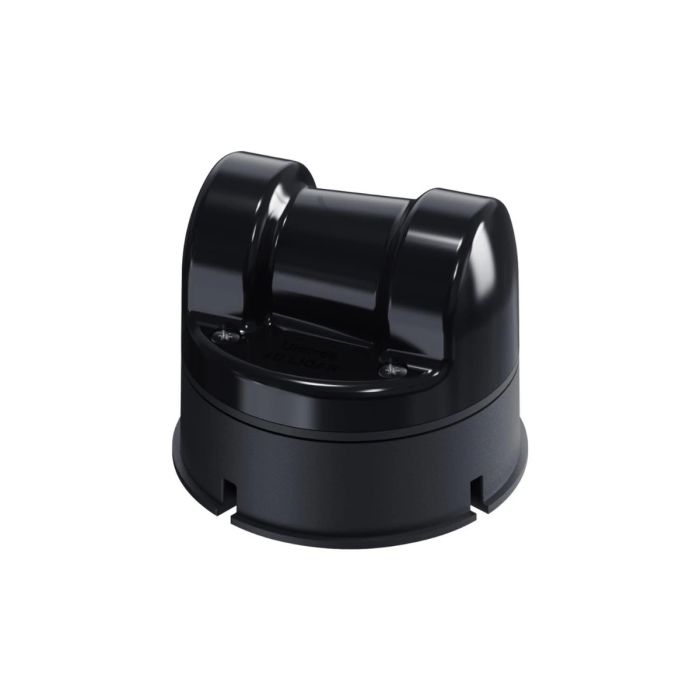
Unitree L1 Rm Lidar (Remote Measurement) (LIDAR-L1-PM-RM)
In stock
- BRAND:
- UNITREE ROBOTICS
- PART #:
- LIDAR-L1-PM-RM
- ORIGIN:
- China
- AVAILABILITY:
- SUBJECT TO AVAILABILITY
- SKU:
- Unitree-LIDAR-L1-PM-RM
Unitree L1 Rm Lidar (Remote Measurement) (LIDAR-L1-PM-RM)
Daylight is the quiet adversary of many laser rangefinders. A sensor that maps a laboratory corridor faultlessly can lose its footing on a sunlit forecourt, where ambient light floods the receiver and the point cloud thins to a scatter. The Unitree L1 Rm Lidar (Remote Measurement) (LIDAR-L1-PM-RM) is designed with that outdoor moment in mind. It holds stable ranging under 100Klux of outdoor light, reaches 30M on surfaces of 90% reflectivity, and houses its scanner and inertial sensor in a 230 gram body that a small mobile robot can carry without any change to its frame.
Robots Middle East supplies the Unitree L1 Rm Lidar (Remote Measurement) (LIDAR-L1-PM-RM) to universities, research laboratories, system integrators and industrial development teams across the Middle East. Robots Middle East prepares each quotation, arranges delivery to your site and remains your point of contact after installation, from the first connection to the sensor through to questions about integrating it with your robot and software.
Background
Unitree Robotics and its perception hardware
Unitree Robotics is best known for its legged robots, from quadrupeds used in research and inspection to humanoid platforms built for development work. Machines of that kind depend on reliable perception, and the company has developed its own sensing hardware alongside its robots. The L1 family is part of that effort: a compact lidar line intended not only for Unitree platforms but for robot builders in general, offered in two versions that share the same housing and interface.
Robots Middle East also lists the wider range of sensors in the Unitree Lidar category, which is a useful reference when you wish to place the L1 among the other perception options the brand offers.
The remote measurement version and how it scans
The two members of the L1 family are the L1 PM, for precision measurement, and the L1 RM, for remote measurement. The RM version described on this page is the one tuned for reach. It scans at an azimuthal frequency of 11Hz and a vertical frequency of 180Hz, giving an effective sampling rate of 21,600 points per second. Because the beam sweeps both around and up and down, the sensor builds a volumetric picture of its surroundings rather than a single flat slice.
That picture is paired with motion data. A built-in IMU with a 3-axis accelerometer and a 3-axis gyroscope pushes readings at 250Hz, so the scan can be related to how the sensor is moving, which is what simultaneous localisation and mapping requires. Unitree makes an open-source SLAM solution available for the L1, and its Unilidar software runs on Windows® (64-bit) for visualising and checking the data.
Technical Specifications
| Specification | Value |
|---|---|
| Maximum range at 90% reflectivity (L1 RM) | 30M |
| Maximum range at 10% reflectivity (L1 RM) | 15M |
| Minimum detection distance | As low as 0.05m |
| Azimuthal scanning frequency | 11Hz |
| Vertical scanning frequency | 180Hz |
| Effective sampling frequency | 21,600 points/second |
| IMU | 3-axis accelerometer and 3-axis gyroscope, 250Hz push frequency |
| Laser wavelength | 905nm |
| Eye safety | Class 1 (IEC60825-1:2014) |
| Ambient light resistance | Stable ranging under 100Klux outdoor light |
| Weight | 230 grams |
| Size | 75×75×65mm |
| Mounting | Four M3 mounting holes, 6mm deep, on the base |
| Connector | GH1.25mm 4PIN serial port socket |
| Storage temperature | -20℃~60℃ |
| Software | Unilidar, Windows® (64-bit) |
| SLAM | Open-source SLAM solution available |
| Included in the package | Adapter module, power adapter, data cable |
Specifications are as published by the manufacturer and are confirmed against the datasheet at quotation.
The manufacturer has not published the cable length, a shock and vibration rating, a point cloud output rate in frames or an RM-specific connector pinout beyond the series manual; these details are confirmed at quotation.
How does the L1 RM differ from the L1 PM?
Both versions share the same compact body, the same mounting pattern, the same serial connector and the same inertial sensor, so a robot designed around one can physically accept the other. The difference lies in what each is optimised to measure. The RM version is the remote measurement model, and it carries the longer published reach of the two: 30M on bright, 90% reflective surfaces and 15M on dark, 10% reflective ones. That margin matters when a robot must recognise walls, vehicles or people across an open yard or a warehouse aisle, rather than only in a confined room.
The PM version, by contrast, is positioned for precision measurement, and its figures are listed on its own page. If your application is defined more by close, careful measurement than by distance, it is worth comparing the two before you decide. Robots Middle East can set out both versions side by side in a single quotation so that the choice rests on your task rather than on the product name.
Can the L1 RM be used outdoors in bright sunlight?
Strong sunlight is one of the conditions in which this sensor sets itself apart. Unitree states that the L1 achieves stable ranging and high-accuracy map building under 100Klux of outdoor light, a level associated with direct daylight. For robots that move between a shaded building and an exposed courtyard, this means the map does not have to be abandoned at the doorway.
The laser operates at 905nm and carries a Class 1 eye safety rating under IEC60825-1:2014, which allows the sensor to be used around people in shared spaces such as campuses, logistics areas and public demonstrations. Its near blind zone is small as well: objects can be detected from as little as 0.05m, so the robot keeps track of what is immediately beside it while looking far ahead. For storage between deployments, the published range is -20℃~60℃.
Who is the Unitree L1 Rm Lidar (Remote Measurement) (LIDAR-L1-PM-RM) for?
University departments and research laboratories form a natural audience. The open-source SLAM solution and the Windows® software give students and researchers a direct route from unboxing to a working map, and the sensor is light enough for small experimental platforms. Educators who teach mobile robotics can use it to demonstrate scanning, localisation and mapping with real hardware rather than simulation alone.
System integrators and product developers building compact autonomous vehicles, service robots or legged platforms will value the small footprint, the standard M3 mounting and the simple serial interface, which make the sensor straightforward to fit into a new design. Teams whose robots operate partly or wholly outdoors, or across large indoor spaces, are best served by the RM version because of its longer reach and its tolerance of bright light.
Teams whose work centres on close, exacting measurement rather than distance may find the Unitree L1 Pm Lidar (Precision Measurement) (LIDAR-L1-PM) the more suitable choice. Those assembling a complete robot system can also review the Accessories category for supporting hardware.
What is the Unitree L1 Rm Lidar (Remote Measurement) (LIDAR-L1-PM-RM) used for?
- Mapping: building maps of buildings, yards and facilities with the open-source SLAM solution.
- Navigation: guiding autonomous robots along routes across open indoor and outdoor spaces.
- Obstacle avoidance: detecting objects both far ahead and close to the robot body.
- Positioning: localising a robot within a known map using combined scan and IMU data.
- Environment scanning: capturing the surroundings of a general-purpose robot for perception research.
- Teaching and prototyping: giving robotics courses and development teams a compact, real-world sensor to work with.
Pricing and Availability
Robots Middle East supplies the Unitree L1 Rm Lidar (Remote Measurement) (LIDAR-L1-PM-RM) on a quotation basis, so that the offer reflects the configuration and the destination you specify. Delivery, customs clearance and after-sales support are arranged with the quotation. Please tell us about your robot platform, your intended application and whether you would like the L1 PM included for comparison, and our team will prepare a tailored offer. A quotation request form is available on this page.
Frequently Asked Questions
What is the maximum range of the L1 RM?
The L1 RM reaches 30M on surfaces of 90% reflectivity and 15M on surfaces of 10% reflectivity.
How close can the sensor detect objects?
The minimum detection distance is as low as 0.05m, which allows close detection and recognition around the robot.
Does the sensor include an IMU?
Yes. It has a built-in IMU with a 3-axis accelerometer and a 3-axis gyroscope, pushing data at 250Hz.
Is the laser safe to use around people?
The sensor uses a 905nm laser and is rated Class 1 for eye safety under IEC60825-1:2014.
What software is available?
Unitree's Unilidar software supports Windows® (64-bit), and an open-source SLAM solution is available for the L1.
What comes in the package?
The package contains an adapter module, a power adapter and a data cable, which together handle power supply, control signal transmission and data transmission.
Where can I buy the Unitree L1 Rm Lidar (Remote Measurement) (LIDAR-L1-PM-RM) and what does it cost?
You can buy it from Robots Middle East, which supplies it across the Middle East. The cost depends on your configuration and destination, and you receive it in a personalised quotation once you submit a request.
Summary
Many compact lidars perform well until they meet the sun. The Unitree L1 Rm Lidar (Remote Measurement) (LIDAR-L1-PM-RM) is built for the stretch of a project where a robot leaves the controlled lab and enters open, bright space: it keeps ranging under 100Klux of outdoor light, reads bright surfaces out to 30M, still notices objects at 0.05m, and combines its scan with inertial data for mapping and navigation, all within a 230 gram housing. With open-source SLAM, standard mounting and a simple serial interface, it moves quickly from the box to a working robot. For quotation, delivery and support from Robots Middle East, this page is the starting point.
Specifications
General
What's included
Related Products
Out of stock